Burano Island
Venice, Italy
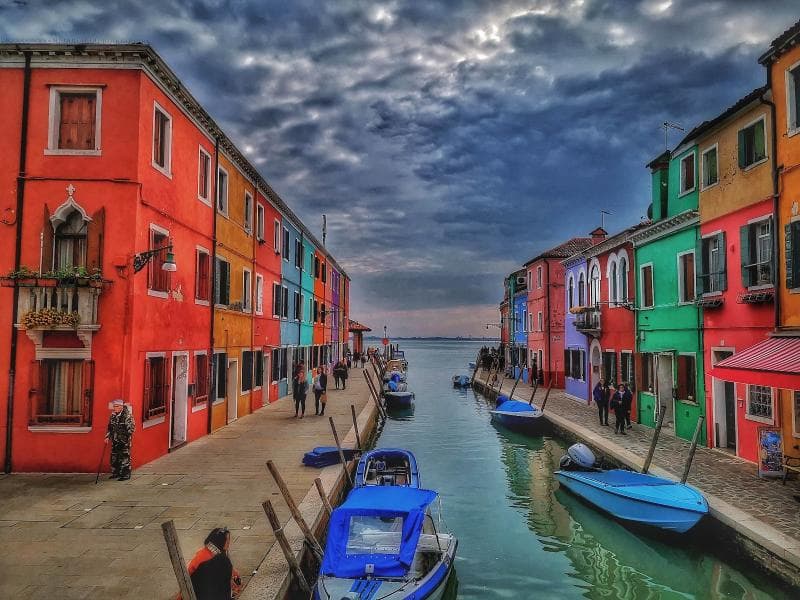
Discover Burano Island, Venice, Italy's vibrant fishing village famous for its rainbow-colored houses and exquisite traditional lacemaking.
Overview
Burano Island, a captivating gem nestled within the Venetian Lagoon, distinguishes itself with a vibrant tapestry of brightly painted houses and an enduring legacy of delicate lacemaking. Located a short boat ride from Venice, Italy, this tranquil fishing village offers a striking contrast to its more famous neighbor. Its canals are lined with homes in every hue, reflecting brilliantly on the water's surface and creating a picturesque scene that feels almost dreamlike. The island's unique charm draws visitors seeking a glimpse into a distinctive Venetian culture, far removed from the bustling crowds of the mainland.
History & Cultural Background
The origins of Burano date back to the 5th or 6th century, when it served as a refuge for Roman settlers and mainlanders fleeing barbarian invasions, particularly from Altino. These early inhabitants adapted ingeniously to the marshy environment, building homes on wooden stilts. For centuries, Burano developed as a resilient fishing community, administered from the nearby island of Torcello. Its true prominence emerged in the 16th century with the rise of its celebrated lacemaking tradition. The women of Burano developed exceptional skill in crafting intricate needle lace, known as 'Punto di Burano', which quickly gained fame across European royal courts and became a highly sought-after luxury item. This craft brought significant economic prosperity and a sense of pride to the island. Burano also holds cultural significance as the birthplace of Baldassare Galuppi, an 18th-century composer affectionately known as 'Il Buranello', whose works contributed to the Venetian musical tradition.
What Makes It Special
What truly sets Burano apart is its stunning kaleidoscope of colorful houses. While there are several theories, a popular belief suggests fishermen painted their homes in vivid shades to easily spot them through the dense lagoon fog upon returning from sea. Today, this tradition continues, with a specific system in place: residents must request permission from the local government, which then advises on the permitted colors for their specific lot, ensuring the island's unique palette is maintained. Beyond its visual splendor, Burano is renowned for its exquisite hand-made lace. Though the industry faced a decline, a lacemaking school was established in 1872 to revive this intricate art form, solidifying Burano's reputation as one of the last remaining centers of hand lacemaking. The island's leaning bell tower, belonging to the Church of San Martino, adds another distinctive architectural feature, visible from across the lagoon.
Stories, Fun Facts & Local Details
The tale of Burano's colorful houses is steeped in local lore, with the most cherished story attributing their bright hues to fishermen who needed to distinguish their homes during foggy conditions. Another legend suggests different colors corresponded to different families, a visual representation of community ties. The lacemaking tradition also has its own enchanting narratives; one popular legend claims that a young sailor, resisting a mermaid's song, was rewarded with a veil of sea foam, which his beloved then recreated in thread, giving birth to Burano lace. Historically, Dogaressa Morosina Morosini played a significant role in boosting the popularity of Venetian lacemaking in the 1500s. Even Leonardo da Vinci is said to have visited in 1481 to procure Burano lace for the altar of Milan Cathedral. Visitors can seek out 'Casa di Bepi Suà', or Bepi's House, the most famous multi-colored house on the island, adorned with geometric shapes. For a taste of local flavor, look for 'bussolai' and 'essi', traditional ring-shaped or 'S'-shaped cookies that were once provisions for fishermen.
Visitor Perspective
A visit to Burano offers a refreshing escape and a sensory delight. The island's compact size, comprising four islets connected by bridges, makes it easily walkable, allowing for leisurely exploration of its narrow streets and canals. As you wander, you'll encounter a serene atmosphere, a stark contrast to the more frenetic pace of central Venice. The vibrant facades of the houses, often adorned with flower boxes and shuttered windows, provide endless opportunities for photography. Key attractions include the Lace Museum in Piazza Galuppi, where you can learn about the history and artistry of Burano lace, and sometimes even observe artisans at work. To experience Burano at its most tranquil, consider visiting in the early morning or late afternoon, when the day-trip crowds have thinned, allowing for a more intimate connection with its local rhythm. Beyond the visual spectacle, Burano provides a genuine glimpse into an enduring community focused on fishing and traditional crafts, offering a truly unique and meaningful travel experience in the Venetian Lagoon.
Coordinates: 12.417, 45.486
View on Google Maps💬 How Travelers Describe This Place
Based on community votes
Photogenic
846Must See
564Beautiful
201Unique
121Interesting
87
Traveler Stories
Discover memorable experiences shared by travelers who have visited this place.
No traveler stories yet.
Be the first traveler to share what made this place memorable.
Things to see at Burano Island



Tour
By
Spot
Discover amazing places around the world. Your journey starts here.
Explore
© 2026 TourBySpot. All rights reserved.