Leaning Bell Tower
Venice, Italy
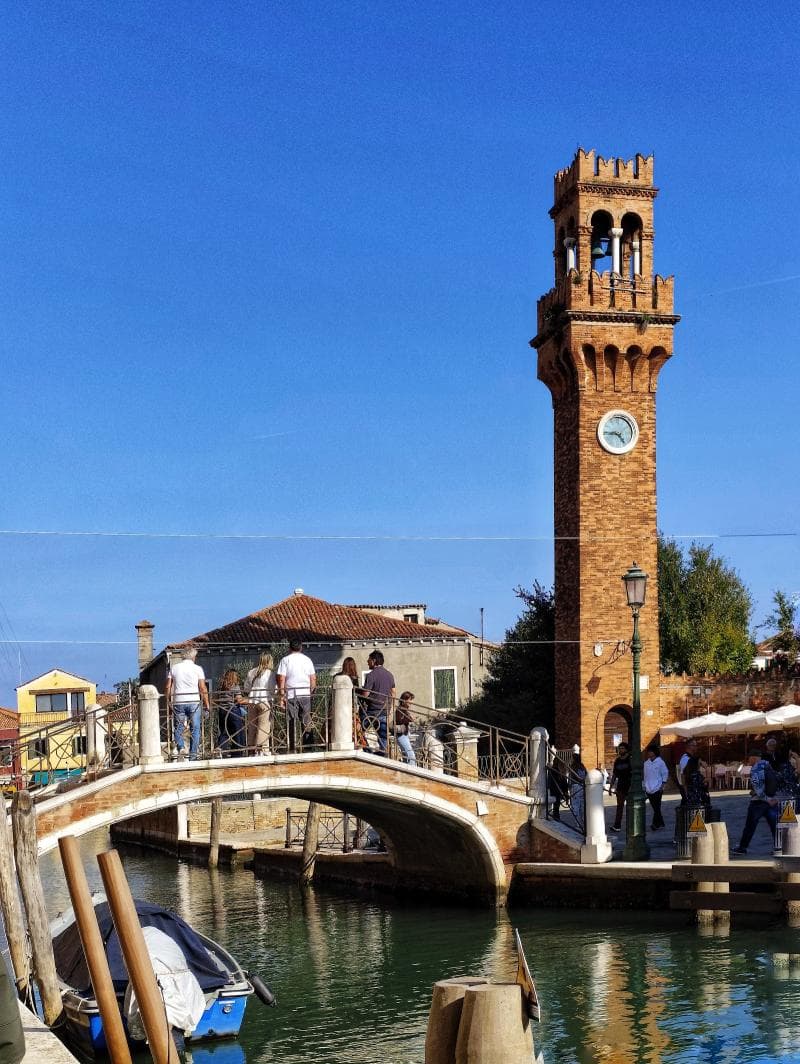
Discover Burano's Leaning Bell Tower (Campanile Storto), a unique architectural marvel in Venice, Italy, leaning more than Pisa's. Explore its history and charm.
Overview
The Leaning Bell Tower, or 'Campanile Storto' as it's known locally, stands as an iconic and charming landmark on Burano Island, a colorful gem nestled within the Venetian Lagoon, Italy. This distinctive campanile belongs to the Church of San Martino Vescovo and is instantly recognizable for its significant tilt, a curious architectural anomaly that has captivated visitors for centuries. Unlike its more famous counterpart in Pisa, Burano's leaning tower often surprises travelers who stumble upon its quaint beauty, offering a unique photographic opportunity and a testament to the island's enduring character. Visible from various points across the lagoon, it serves as a silent guardian over Burano's vibrant, pastel-colored houses, embodying the island's blend of history, resilience, and unique charm. [23]
History & Cultural Background
The story of Burano's Leaning Bell Tower is deeply intertwined with the island's history and the challenges of building on the soft, marshy grounds of the Venetian Lagoon. While the Church of San Martino Vescovo itself dates back to the 16th century, the bell tower, replacing an earlier medieval structure, was largely constructed or significantly restored between 1703 and 1714. [19, 20, 23, 25] These extensive works are attributed to the architect Andrea Tirali. [20, 27] The tower's inclination began early in its construction due to the unstable subsoil, a common issue for structures in this aquatic environment. [20, 22] Over time, the land subsidence progressively caused the tower to lean further. Originally, the top of the tower was adorned with a bronze angel, which tragically fell during a storm in 1867. [18, 20] It was subsequently replaced by the iron cross that crowns the tower today. [18, 20] Faced with increasing instability, static consolidation works were carried out in the 1970s by the City of Venice to stabilize the structure and prevent further leaning. [20, 23, 27]
What Makes It Special
What truly sets Burano's Leaning Bell Tower apart is its pronounced tilt, which measures approximately 1.83 meters (or about 6 feet) off its vertical axis. [18, 23, 25] Many sources suggest this lean is even more dramatic than that of the world-renowned Leaning Tower of Pisa, making it a compelling, albeit lesser-known, architectural marvel. [21, 26] Rising to a height of 53 meters (around 174 feet) with a square base of 6.20 meters, the tower exhibits a blend of Renaissance and neoclassical architectural features, constructed from Istrian stone and brick. [18, 20, 23, 27] Its design includes a square base that transitions into an octagonal belfry. The fact that this structure has stood for centuries, despite its precarious angle and the challenging lagoon environment, speaks to the ingenuity of its builders and the subsequent restoration efforts that have ensured its continued presence. Its enduring stability, thanks to the 1970s reinforcements, allows visitors to appreciate its unique aesthetic without concern. [23]
Stories, Fun Facts & Local Details
The Leaning Bell Tower of Burano is more than just an architectural curiosity; it's woven into the cultural fabric of the island, inspiring local tales and traditions. One popular local legend humorously suggests that the bell tower's lean is due to the municipal government's miscalculation during an earlier restoration. They supposedly forgot to account for the additional weight of the large iron cross intended for the top, causing the tower to begin its tilt during the makeover. [19] While the true scientific reason points to the unstable marshy soil, this anecdote adds a charming, human touch to the tower's history. For centuries, the tower's distinct shadow was reportedly used by local fishermen as a makeshift sundial, helping them track tides and time in an era before modern timekeeping was widespread. [23] Locals view the tower's slant not as a flaw, but as a beloved quirk, a unique characteristic that reflects their island's proud and resilient spirit. It symbolizes how imperfections can become defining features, cherished as part of Burano's unique identity. [22, 23]
Visitor Perspective
For any traveler to Burano, the Leaning Bell Tower is an unmissable sight, effortlessly integrating into the island's picturesque landscape. As your 'vaporetto' (water bus) approaches the island, the tower's distinctive silhouette can be seen rising above the vivid rooftops, acting as a welcoming beacon. [23] Upon arrival, the tower is easily accessible, located behind the Church of San Martino Bishop in Piazza Baldassarre Galuppi, the island's main square. [18, 27] To fully appreciate its impressive lean and capture stunning photographs, visitors are often advised to view it from specific vantage points. The Terranova's marble bridge or Giudecca street (the one on Burano, not Venice) offer some of the best perspectives, allowing for dramatic shots that highlight its inclination against the backdrop of colorful houses and canals. [18, 28] Experiencing the tower isn't just about seeing its tilt; it's about feeling the pulse of Burano, a place where history, art, and daily life converge in a charming, slightly askew, and utterly unforgettable way.
Coordinates: 12.41878, 45.484177
View on Google Maps💬 How Travelers Describe This Place
Based on community votes
Photogenic
836Must See
287Interesting
255Beautiful
231Unique
86
Traveler Stories
Discover memorable experiences shared by travelers who have visited this place.
No traveler stories yet.
Be the first traveler to share what made this place memorable.

Tour
By
Spot
Discover amazing places around the world. Your journey starts here.
Explore
© 2026 TourBySpot. All rights reserved.