Canals
Venice, Italy
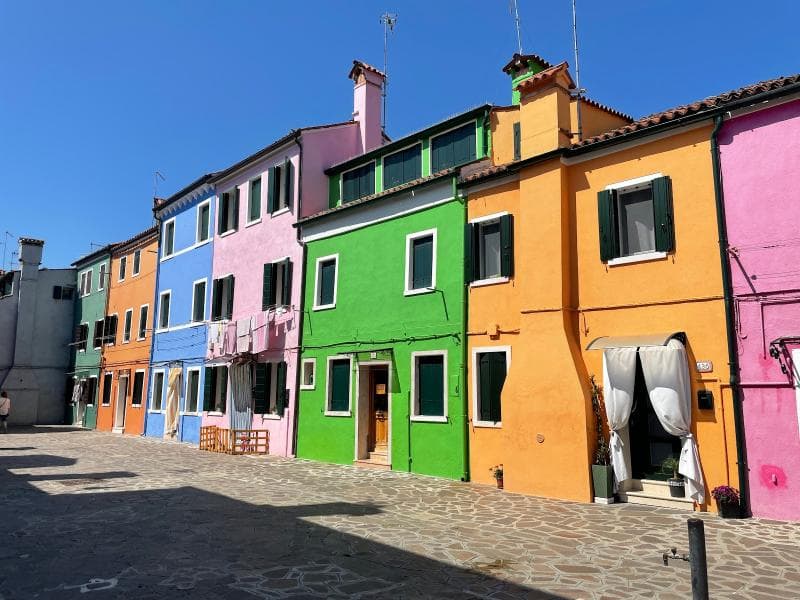
Discover the vibrant canals of Burano Island, Venice, Italy. Explore colorful reflections, rich history, and unique fishing and lacemaking traditions.
Overview
Burano Island, a captivating gem nestled within the Venetian Lagoon, is characterized by its charming network of canals. These waterways, while smaller than Venice's famed Grand Canal, are integral to the island's unique identity, dividing it into several distinct islets. The colorful houses lining the canals create a breathtaking spectacle, a vibrant reflection dancing on the green waters that define this historic fishing village. Visitors often find themselves drawn to the picturesque scenes where fishing boats are moored, and quaint bridges arch gracefully over the calm canals, offering endless photographic opportunities. Burano is not just a visual delight; its canals are the very arteries that have sustained its community for centuries, connecting homes and lives in a way only possible in a water-based city.
History & Cultural Background
The origins of Burano date back to the 6th century when Roman settlers and refugees from Altino sought refuge from barbarian invasions, finding safety in the isolation of the marshy Venetian Lagoon. Adapting to this challenging environment, these early inhabitants constructed their homes on wooden stilts, giving rise to Burano's distinctive urban landscape with its interconnected waterways. Historically, Burano was an archipelago composed of four islets, which have since been joined by bridges. The canals were essential for transport and daily life, much like in larger Venice. The island's rich heritage is deeply tied to its status as a fishing community, where the canals facilitated livelihoods and connectivity.
While the canals provided a practical backbone, Burano gained international renown in the 16th century for its exquisite needle lace. This intricate craft, cultivated by the island's women, flourished alongside the fishing traditions, adding a delicate artistry to the robust maritime culture. The canals witnessed the daily rhythm of fishermen departing and returning, and lacemakers diligently working by their windows.
What Makes It Special
The canals of Burano are uniquely special due to the vibrant tapestry of houses that border them. Unlike many other canal cities, Burano's waterways are framed by structures painted in a riot of bright, contrasting colors. This tradition transforms the canals into living art, where every turn presents a fresh, captivating panorama. The small scale of Burano's canals, compared to Venice, offers a more intimate and tranquil experience, allowing visitors to appreciate the subtleties of island life. The arched stone and wooden bridges that span these canals are not merely functional; they are romantic vantage points, perfect for observing the interplay of light and color on the water.
The island is effectively an archipelago of several small islands linked by these very bridges over its canals. While Burano consists of three main canals, a fourth was historically filled in to create what is now Piazza Baldassare Galuppi, the island's main square, linking two formerly separate islets. This clever urban planning highlights the historical adaptation of the community to its aquatic environment.
Stories, Fun Facts & Local Details
One of the most enduring and charming legends surrounding Burano's colorful houses, which so vividly reflect in its canals, suggests they were painted in bright hues to help fishermen spot their homes through the dense fog of the lagoon when returning from sea. Another theory posits that different colors marked the boundaries of various families' properties. Whatever the true origin, this vibrant tradition has been meticulously maintained, often requiring residents to obtain approval for their chosen color palette.
A fun fact for curious travelers is that the island is so compact that it can be explored end-to-end in just a few hours on foot. Despite its small size, around 2,800 to 3,000 residents call Burano home, many from families who have lived there for generations. The locals still navigate the canals in small boats, reinforcing the island's deep connection to its waterways and fishing heritage. You'll often see nets drying in the sun and fresh seafood proudly displayed, a testament to the enduring fishing culture that thrives alongside the tourism.
Visitor Perspective
For visitors, exploring the canals of Burano is an experience of tranquility and visual splendor, a stark yet refreshing contrast to the bustling canals of Venice. The absence of cars on the island means that exploring is best done on foot, allowing for leisurely strolls along the canal-side promenades. The Fondamenta dei Pescatori, for instance, offers a delightful walk where the colorful houses and fishing boats create an idyllic scene.
The Tre Ponte, a bridge at the intersection of three canals (Rio Giudecca, Rio Cao Moleca, and Rio Cavenella), provides a particularly unique perspective of the waterways and the surrounding kaleidoscope of houses. Many visitors find joy in simply wandering, allowing the canals to guide them through the island's charming squares and residential areas. Burano offers a peaceful respite, inviting travelers to immerse themselves in a slower pace of life, capture stunning photographs, and appreciate a culture inextricably linked to its luminous canals.
Coordinates: 12.41689, 45.48664
View on Google Maps💬 How Travelers Describe This Place
Based on community votes
Beautiful
836Unique
797Photogenic
396Interesting
286Must See
255
Traveler Stories
Discover memorable experiences shared by travelers who have visited this place.
No traveler stories yet.
Be the first traveler to share what made this place memorable.

Tour
By
Spot
Discover amazing places around the world. Your journey starts here.
Explore
© 2026 TourBySpot. All rights reserved.