Borghese Gallery
Rome, Italy
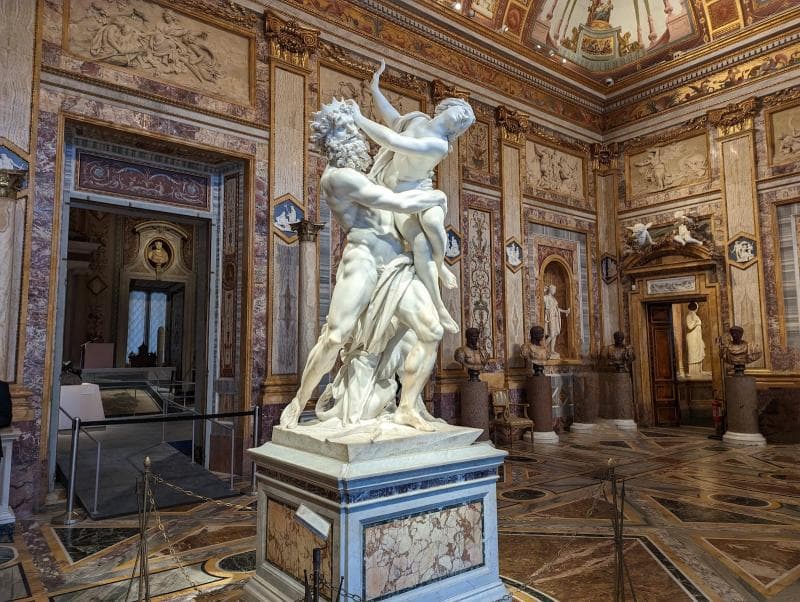
Explore Rome's Borghese Gallery, an exquisite museum in Italy housing masterpieces by Bernini, Caravaggio, Raphael, and Titian within a stunning Baroque villa.
Overview
The Borghese Gallery, or Galleria Borghese, is an exquisite art museum nestled within the lush Villa Borghese gardens in Rome, Italy. Housed in the former Villa Borghese Pinciana, this prestigious institution presents a substantial portion of the Borghese Collection, a treasure trove of paintings, sculptures, and antiquities. Conceived by Cardinal Scipione Borghese in the early 17th century, the gallery offers an intimate journey through the works of artistic titans such as Gian Lorenzo Bernini, Michelangelo Merisi da Caravaggio, Raphael, and Titian. Unlike vast, sprawling museums, the Borghese Gallery maintains the feel of a private residence, allowing for a focused and intensely personal encounter with some of Western art's most iconic masterpieces.
Visitors to the Borghese Gallery experience a uniquely structured visit, with strictly controlled entry times and a two-hour limit, ensuring an uncrowded and immersive appreciation of its extraordinary holdings. This careful management underscores the gallery's commitment to preserving its collections and enhancing the visitor experience.
History & Cultural Background
The story of the Borghese Gallery begins with Cardinal Scipione Borghese (1577-1633), the influential nephew of Pope Paul V. A passionate and discerning art collector, Scipione Borghese leveraged his immense wealth and power to amass an unparalleled collection.
Construction of the villa, originally known as Villa Borghese Pinciana, commenced in 1607. Architect Flaminio Ponzio laid the groundwork, with Giovanni Vasanzio completing the project after Ponzio's death in 1613. The villa was designed as a 'villa suburbana'—a country retreat at the edge of Rome—and specifically intended to house and showcase the Cardinal's burgeoning art collection, functioning as a semi-public museum from its inception. Its Baroque design, characterized by grandeur and ornate decoration, was intrinsically linked to its purpose as a setting for art. The Borghese family, originally from Siena, rose to prominence in Rome, with Pope Paul V's election solidifying their status and enabling Scipione's ambitious artistic endeavors.
Over the centuries, the collection underwent various changes, including the forced sale of some archaeological sculptures to Napoleon Bonaparte in 1808, which are now housed in the Louvre. In 1902, the Italian state purchased the villa and its remaining collections, transforming it into the public museum we know today, dedicated to preserving and displaying its rich artistic legacy.
What Makes It Special
The Borghese Gallery stands apart due to its unique fusion of art, architecture, and atmosphere. Rather than merely a display space, the villa itself is an integral part of the artistic experience. The artworks are often situated in the very rooms for which they were originally created, fostering a dialogue between the art and its Baroque setting. Marble floors, frescoed ceilings, and abundant natural light create a theatrical backdrop for the masterpieces within.
Central to its renown is the extraordinary concentration of works by Gian Lorenzo Bernini and Caravaggio. Bernini's sculptures, such as 'Apollo and Daphne', 'The Rape of Proserpina', and 'David', are celebrated for their dramatic movement, emotional intensity, and unparalleled technical mastery, capturing fleeting moments in stone. Caravaggio's paintings, including 'Boy with a Basket of Fruit' and 'David with the Head of Goliath', showcase his revolutionary use of chiaroscuro—dramatic contrasts of light and shadow—to imbue his subjects with profound psychological depth and raw realism. The limited entry policy further enhances its special appeal, offering visitors a rare sense of intimacy and proximity to these masterpieces without the overwhelming crowds found in many other major institutions.
Stories, Fun Facts & Local Details
Cardinal Scipione Borghese was not just a collector; he was a dedicated patron, especially to the young Gian Lorenzo Bernini. Many of Bernini's iconic sculptures housed here were commissioned directly by the Cardinal, solidifying a relationship that defined early Roman Baroque art. For instance, the captivating 'Apollo and Daphne' depicts the precise moment of Daphne's transformation into a laurel tree as she tries to escape Apollo's pursuit, a dramatic narrative frozen in marble that showcases Bernini's genius for depicting movement and emotion.
Caravaggio's presence is equally significant. His innovative style, often controversial in its time for its intense realism and dramatic lighting, left an indelible mark on art history. 'Boy with a Basket of Fruit', one of his early works, demonstrates his mastery of still life alongside human form. Another compelling piece, 'David with the Head of Goliath', is believed by some art historians to contain a self-portrait of Caravaggio as the severed head of Goliath, reflecting personal struggles and remorse.
Adding to the gallery's charm are works by Raphael, like 'The Deposition', and Titian's enigmatic 'Sacred and Profane Love', offering a broader scope of Renaissance and Venetian mastery. The two-hour time slot for visits is a unique aspect, encouraging visitors to plan their route and focus on their preferred masterpieces, making each visit a curated experience.
Visitor Perspective
Visiting the Borghese Gallery requires careful planning due to its stringent entry system. Tickets must be booked well in advance, often weeks ahead, as only a limited number of visitors are allowed in during each two-hour session. Arriving 15-20 minutes before your scheduled entry time is crucial to allow for check-in and bag storage, as large bags and umbrellas are not permitted inside.
Many visitors recommend planning your route beforehand to prioritize the artworks you most wish to see, given the strict time limit. Opting for an audio guide or a guided tour can significantly enrich the experience, providing deeper insights into the historical context and artistic techniques. Photography is generally allowed without flash, but 'selfie sticks' are prohibited, and respect for other visitors and the artworks is paramount.
After immersing yourself in the gallery's artistic wonders, the surrounding Villa Borghese gardens offer a beautiful space for a leisurely stroll, a picnic, or simply to relax and reflect on the masterpieces you've encountered. The combination of world-class art within a stunning historical villa, set in an expansive park, creates an unforgettable cultural experience in the heart of Rome.
Coordinates: 12.4922, 41.9142
View on Google Maps💬 How Travelers Describe This Place
Based on community votes
Unique
995Photogenic
839Beautiful
603Must See
581Interesting
388
Traveler Stories
Discover memorable experiences shared by travelers who have visited this place.
No traveler stories yet.
Be the first traveler to share what made this place memorable.
Things to see at Borghese Gallery



Tour
By
Spot
Discover amazing places around the world. Your journey starts here.
Explore
© 2026 TourBySpot. All rights reserved.