Ceiling Frescoes
Rome, Italy
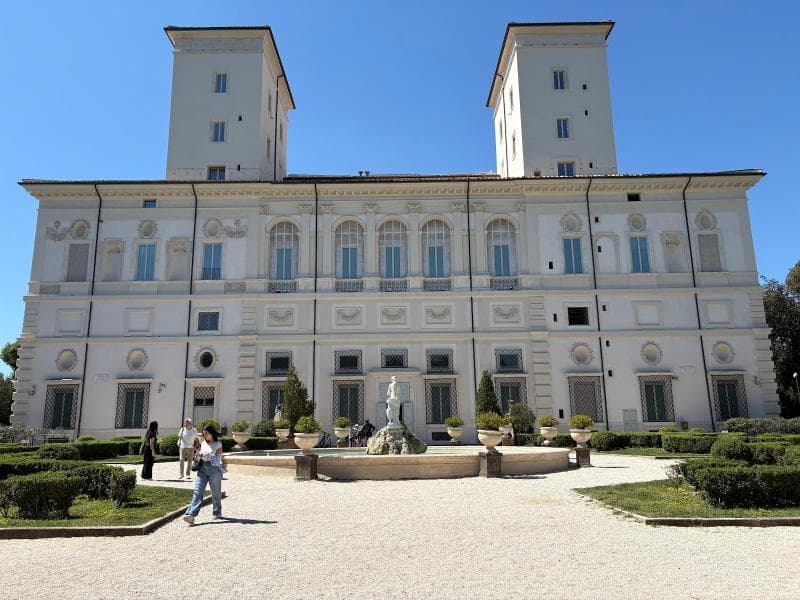
Discover the awe-inspiring ceiling frescoes of the Borghese Gallery in Rome, Italy. Explore masterful trompe-l'œil art, rich history, and mythical tales above iconic sculptures.
Overview
Stepping into Rome's illustrious Borghese Gallery, visitors are often captivated not just by the legendary sculptures and paintings at eye level, but also by the breathtaking artistry adorning the ceilings. These magnificent ceiling frescoes are an integral part of the gallery's immersive experience, transforming each room into a grand narrative space. They are not merely decorative elements but elaborate masterpieces that extend the thematic richness of the collections below, inviting the eye upward into realms of myth, history, and allegorical splendor. The most famous among them is undoubtedly the grand trompe-l'œil fresco in the entrance hall, a testament to late Baroque artistic prowess.
History & Cultural Background
The Borghese Gallery itself was conceived in the early 17th century by Cardinal Scipione Borghese, nephew of Pope Paul V, as a 'villa suburbana'—a country villa designed to house his vast and growing art collection. While the initial construction and early decorations set a tone of opulent grandeur, many of the most striking ceiling frescoes we see today were added or significantly updated during extensive renovations in the late 18th century.
Commissioned by Prince Marcantonio IV Borghese and directed by architect Antonio Asprucci, these later additions aimed to create a harmonious dialogue between the ancient and modern artworks and the architectural space. The technique of fresco painting, 'affresco' meaning 'fresh' in Italian, involves applying pigments onto wet lime plaster. As the plaster dries, the paint becomes an enduring part of the wall or ceiling, a method that demands speed and precision from the artists. This ancient technique, perfected during the Renaissance, allowed for vibrant, long-lasting murals that became characteristic of grand Italian villas and churches.
What Makes It Special
What makes the Borghese Gallery's ceiling frescoes truly special is their extraordinary ability to transport the viewer into another dimension. The grand Salone, or Entrance Hall, exemplifies this with Mariano Rossi's spectacular trompe-l'œil fresco, 'The Apotheosis of Romulus,' painted between 1775 and 1779. This masterpiece utilizes foreshortening so skillfully that the painted figures and architectural elements appear to leap from the ceiling, creating an illusion of depth and movement that defies the flat surface. It's a celebration of Roman glory, depicting Romulus's ascent to Olympus and Furius Camillus's victorious battle against the Gauls, weaving together foundational myths with allegorical praise.
Beyond the main hall, other rooms feature frescoes that are equally compelling, though perhaps on a smaller scale. In the Paolina Hall, dedicated to Pauline Borghese, the ceiling illustrates 'Stories of Venus and Aeneas,' directly complementing Antonio Canova's iconic sculpture of Pauline as Venus Victrix below. Similarly, the Sala del Sole (Room of the Sun) features Francesco Caccianiga's 'The Fall of Phaeton,' a dramatic mythological scene that adds to the room's intense atmosphere. These frescoes are more than mere decorations; they are narrative extensions, offering contextual depth and enhancing the emotional impact of the sculptures and paintings beneath them.
Stories, Fun Facts & Local Details
The narratives embedded within the Borghese frescoes are rich with classical mythology and Roman history. Mariano Rossi's 'Apotheosis of Romulus' (also known as 'Romulus Being Welcomed by Jupiter to Olympus') in the Salone is a prime example. Romulus, the mythical founder of Rome, is shown achieving divinity, while Furius Camillus, hailed as the 'Second Romulus' for his heroism, battles Brennus, king of the Gauls. This fresco held a special significance, as it was completed shortly after the birth of Marcantonio IV Borghese's first son, Camillo, serving as a dynastic celebration that linked the family's lineage to Rome's legendary founders.
Another fascinating detail can be found in the Lanfranco Gallery, which was originally an open loggia. It preserves Giovanni Lanfranco's 'Council of the Gods' fresco, showcasing the artistic evolution of the villa's spaces. These works not only reflect the aesthetic trends of their time but also the intellectual and political aspirations of the Borghese family, intertwining their personal history with the grander narrative of Rome itself. The sheer scale and intricate details of these frescoes required teams of artists and years of meticulous work, a testament to the patronage and ambition that shaped the gallery.
Visitor Perspective
For the curious traveler, gazing up at the ceiling frescoes of the Borghese Gallery is an unforgettable experience. It's an invitation to pause, to lean back, and to let your gaze wander across vast painted skies filled with gods, heroes, and allegories. The trompe-l'œil effects, in particular, create a sense of wonder and illusion, making the architectural space feel limitless and dynamic. You might find yourself searching for the edges of the painted world, or trying to discern how the artists achieved such convincing three-dimensional effects on a flat surface.
These frescoes enhance the appreciation of the entire collection, offering a celestial backdrop to the earthly masterpieces of Bernini and Caravaggio. They remind us that art in this period was often an all-encompassing experience, designed to immerse the viewer in a curated world of beauty, history, and myth. Taking the time to explore these elevated artworks provides a deeper understanding of the gallery's historical context and the boundless creativity that flourished within its walls. It's a visual feast that completes the rich tapestry of the Borghese Gallery's artistic treasures.
Coordinates: 12.4922, 41.9142
View on Google Maps💬 How Travelers Describe This Place
Based on community votes
Beautiful
839Photogenic
445Must See
388Unique
289Interesting
141
Traveler Stories
Discover memorable experiences shared by travelers who have visited this place.
No traveler stories yet.
Be the first traveler to share what made this place memorable.

Tour
By
Spot
Discover amazing places around the world. Your journey starts here.
Explore
© 2026 TourBySpot. All rights reserved.