Berlin Cathedral
Berlin, Germany
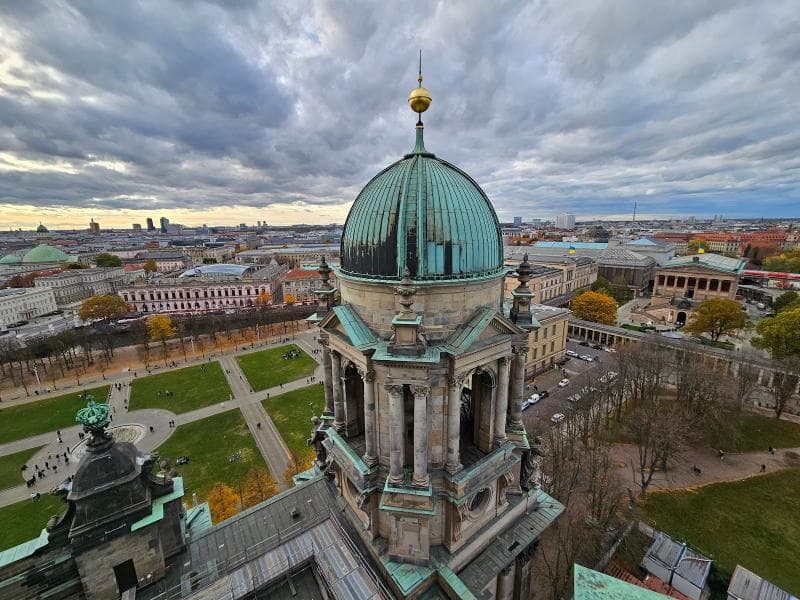
Explore Berlin Cathedral (Berliner Dom), Germany's largest Protestant church. Discover its history, Hohenzollern Crypt, stunning architecture, and panoramic city views from its iconic dome.
Overview
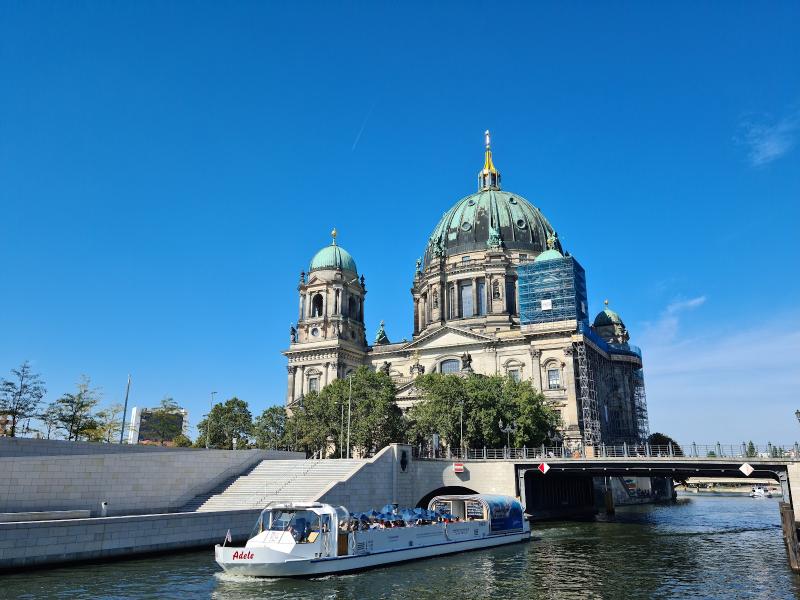
Rising majestically on Museum Island in the heart of Berlin, the Berlin Cathedral, or Berliner Dom, stands as an iconic landmark and a testament to German history and architectural grandeur. This monumental Evangelical Supreme Parish and Collegiate Church, with its distinctive monumental dome crowned by a golden cross, captivates visitors with its opulent Neo-Renaissance and Baroque Revival styles. More than just a place of worship, it serves as a significant cultural institution and the most important dynastic burial site in Germany, holding centuries of Hohenzollern family history within its walls.
Its prominent location makes it a focal point in Berlin's cityscape, visible from afar. The cathedral offers a rich tapestry of art, history, and spirituality, inviting exploration from its lavishly decorated interior to the panoramic views from its dome.
History & Cultural Background
The history of the Berlin Cathedral traces back to the 15th century, with predecessor buildings originally serving as a castle chapel for the Berlin City Palace. Over the centuries, the church underwent several transformations.
In the early 19th century, Karl Friedrich Schinkel, a leading Prussian architect, reimagined an earlier court church in a neoclassical style. However, by the late 19th century, Emperor Wilhelm II deemed the existing structure too modest for the burgeoning German Empire. He envisioned a new, grander cathedral that would rival iconic structures like St. Peter's Basilica in Rome and St. Paul's Cathedral in London.
The current building, designed by Julius Carl Raschdorff, was constructed between 1894 and 1905, embodying the imperial monarchy's power and prestige. This monumental endeavor took eleven years to complete before its consecration.
The cathedral suffered severe damage during the Second World War, particularly from a liquid fire bomb that devastated its main nave and the Hohenzollern Crypt. Following the division of Germany, reconstruction efforts began in 1975 in East Berlin, initially in a simplified form. The full restoration was a lengthy process, finally completed in 1993, with interior work extending until 2002.
What Makes It Special
The Berlin Cathedral is special for several compelling reasons. Architecturally, it is an exquisite example of Neo-Renaissance and Baroque Revival styles, characterized by its opulent ornamentation, intricate mosaics, and golden features. Its majestic dome, standing at 98 meters, is a prominent feature of the Berlin skyline.
Spiritually, it stands as the largest Protestant church in Germany, serving as the High Parish and Cathedral Church for the Protestant community in Berlin and the surrounding regions.
Historically, it houses the Hohenzollern Crypt, recognized as the most important dynastic burial site in Germany and one of the most significant in Europe. This crypt is the final resting place for nearly 100 members of the Hohenzollern dynasty, including kings and electors, dating from the late 16th to the early 20th century.
The cathedral's interior is equally breathtaking, featuring the magnificent Sauer Organ with over 7,000 pipes, considered a masterpiece of Late Romantic Period instrumentation. The elaborate marble and onyx altar and the richly decorated Imperial Staircase, once reserved for the German Emperor, further enhance its unique allure.
Stories, Fun Facts & Local Details
One fascinating aspect of the Berlin Cathedral is its strong connection to the Hohenzollern dynasty. Emperor Wilhelm II, who commissioned the current building, sought to create a monument that reflected the grandeur of his imperial reign, aspiring for it to surpass other great cathedrals in Europe.
The Hohenzollern Crypt tells a compelling story of German royalty, with sarcophagi ranging from simple to magnificently decorated, including those of Frederick I and Queen Sophie Charlotte, the first King and Queen of Prussia. The crypt also contains a surprisingly large number of burials of royal children, offering a poignant glimpse into the lives and losses of the ruling family.
The cathedral's journey through reconstruction after WWII is a powerful symbol of Berlin's resilience. The fact that its restoration took longer than its original construction period highlights the immense effort to preserve this historical treasure.
For music lovers, the Berlin Cathedral is a renowned venue, hosting over one hundred concerts and events annually, often featuring its historic Sauer Organ.
Visitor Perspective
Visiting the Berlin Cathedral offers an immersive experience into history, art, and stunning architecture. Visitors can explore the main sanctuary, ascend the 267-270 steps to the dome's outdoor walkway for unparalleled panoramic views of Berlin, including Museum Island and the Spree River, and delve into the fascinating Hohenzollern Crypt.
Since March 1, 2026, the Hohenzollern Crypt has reopened to the public after extensive renovation, ensuring that this significant historical site is fully accessible. The cathedral is committed to accessibility, with barrier-free access now available for most areas.
Audio guides and guided tours are available to enrich the experience, providing deeper insights into the cathedral's rich past and its artistic details. It is recommended to allow approximately 1.5 hours for a comprehensive visit. Visitors should be aware of security procedures, such as restrictions on bag sizes, with lockers provided for convenience.
Coordinates: 13.40111, 52.51917
View on Google Maps💬 How Travelers Describe This Place
Based on community votes
Unique
848Beautiful
830Interesting
797Must See
410Photogenic
100
Traveler Stories
Discover memorable experiences shared by travelers who have visited this place.
No traveler stories yet.
Be the first traveler to share what made this place memorable.
Things to see at Berlin Cathedral





Tour
By
Spot
Discover amazing places around the world. Your journey starts here.
Explore
© 2026 TourBySpot. All rights reserved.