Belém Tower
Lisbon, Portugal
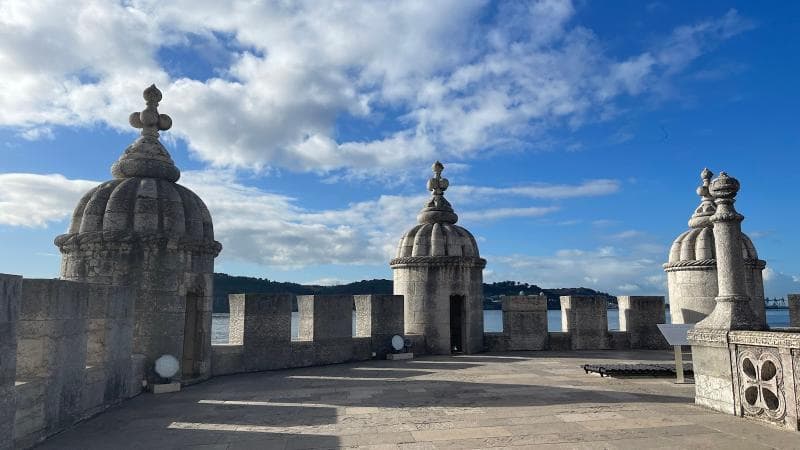
Explore Belém Tower in Lisbon, Portugal, a 16th-century Manueline marvel and UNESCO World Heritage site. Discover its rich history as a fortress and gateway to the Age of Discoveries.
Overview
Standing majestically on the northern bank of the Tagus River in Lisbon, Portugal, the Belém Tower, officially known as the Torre de São Vicente, is an iconic 16th-century fortification. This architectural marvel served not only as a crucial defensive outpost but also as a ceremonial gateway for Portuguese explorers during the Age of Discoveries. Its distinctive Manueline style, characterized by intricate maritime motifs and elaborate stonework, makes it a powerful symbol of Portugal's rich maritime heritage and Renaissance-era influence. Designated a UNESCO World Heritage site in 1983, the tower continues to captivate visitors with its beauty and historical significance, offering a tangible link to a golden era of exploration and empire.
History & Cultural Background
The vision for a defensive structure at the mouth of the Tagus River dates back to the reign of King John II. However, it was under King Manuel I, during Portugal's prosperous Age of Discoveries, that the Belém Tower was finally brought to life. Designed by the military architect Francisco de Arruda, construction commenced around 1514 and was completed by 1519 or 1520.
Originally, the tower was strategically positioned on a small basaltic island in the Tagus, a short distance from the riverbank, guarding the entrance to Lisbon's harbor. Over centuries, due to changes in the river's course, it now appears closer to the shore.
The tower's primary role was to protect Lisbon from maritime threats, working in conjunction with other fortifications. Beyond its military function, it served as a symbolic embarkation and disembarkation point for countless Portuguese navigators, including legendary figures like Vasco da Gama, as they ventured into the unknown or returned with new riches.
Over its long history, the Belém Tower adapted to various roles. It functioned as a customs checkpoint, a lighthouse guiding ships, and even a state prison, with its lower levels serving as dungeons.
What Makes It Special
The Belém Tower is an exquisite example of Manueline architecture, a distinctly Portuguese Late Gothic style that flourished during the reign of King Manuel I. This style is a fascinating blend of Gothic, Renaissance, and Moorish influences, reflecting Portugal's global connections during its maritime expansion.
Crafted from local lioz limestone, the tower is adorned with a wealth of decorative elements that tell a story of exploration and royal power. Visitors can observe intricately carved armillary spheres, a personal emblem of King Manuel I symbolizing Portugal's scientific advancements in navigation, and the Cross of the Order of Christ, which was associated with the king's military-religious ties and the Age of Discoveries.
Twisted rope motifs, delicate balconies, and Moorish-inspired watchtowers with ribbed cupolas further enhance its unique aesthetic. The tower's design, combining a medieval-style keep with a modern bulwark, showcases a transitional phase in defensive architecture, making it both a formidable fortress and a work of art.
Stories, Fun Facts & Local Details
Among the Belém Tower's many captivating details is a curious rhinoceros gargoyle on its western façade. This is believed to be the first stone sculpture of a rhinoceros in Western European art, commemorating a real rhinoceros that King Manuel I received as a gift from the Sultan of Gujarat in 1515 and later sent to the Pope.
While commonly known as the Belém Tower, its official, more formal name is the Torre de São Vicente, or the Tower of Saint Vincent.
The tower was not only a grand defensive structure but also served as a symbol of welcome and farewell. For sailors departing on epic voyages, it was the last sight of home; for those returning, it was the first reassuring glimpse of Lisbon.
Its dungeons, located beneath the bastion, had a grim history, serving as a prison, particularly during the period of Spanish rule in Portugal.
In 2007, the Belém Tower was recognized as one of the Seven Wonders of Portugal, further solidifying its status as a national treasure.
Visitor Perspective
A visit to the Belém Tower offers a journey through time and stunning panoramic views of the Tagus River and Lisbon's waterfront. While the exterior's intricate beauty is immediately apparent, venturing inside allows for a deeper appreciation of its historical layers.
The interior features several chambers across its five floors, including the Governor's Hall, the Kings' Hall, the Audience Hall, and a small Chapel, each accessible via narrow, spiral staircases. Climbing to the roof terrace is a highlight, rewarding visitors with breathtaking vistas that stretch across the river.
Due to the tower's compact size and the nature of its internal staircases, it can become quite crowded, especially during peak seasons. Travelers often find that visiting early in the morning or late in the afternoon helps in avoiding longer queues and allows for a more tranquil experience.
The Belém Tower is conveniently located near other significant landmarks, such as the Jerónimos Monastery and the Monument to the Discoveries, making it an ideal part of a comprehensive exploration of Lisbon's Belém district.
Coordinates: -9.21611, 38.69167
View on Google Maps💬 How Travelers Describe This Place
Based on community votes
Must See
961Interesting
710Beautiful
448Unique
156Photogenic
87
Traveler Stories
Discover memorable experiences shared by travelers who have visited this place.
No traveler stories yet.
Be the first traveler to share what made this place memorable.
Things to see at Belém Tower



Tour
By
Spot
Discover amazing places around the world. Your journey starts here.
Explore
© 2026 TourBySpot. All rights reserved.