Basilique Notre-Dame De La Garde
Marseille, France
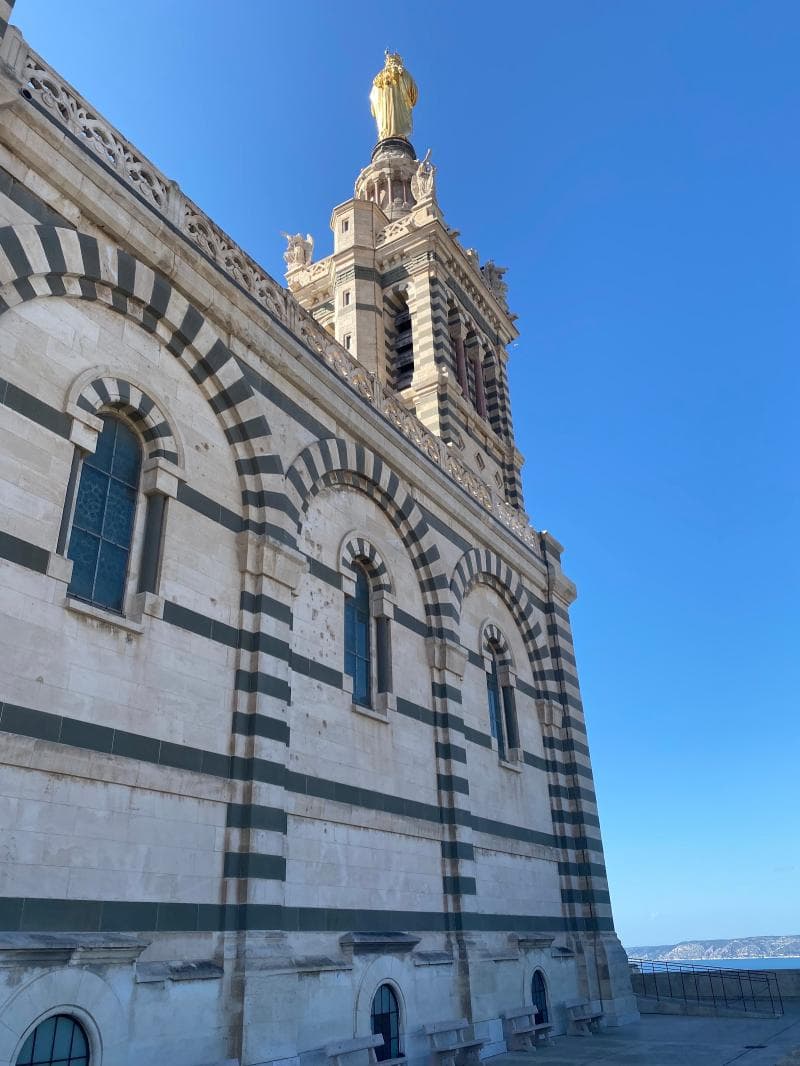
Discover Basilique Notre-Dame De La Garde in Marseille, France. Explore its rich history, stunning Neo-Byzantine architecture, and panoramic views of the city and Mediterranean.
Overview
Perched majestically atop Marseille's highest natural point, the Basilique Notre-Dame De La Garde stands as an iconic symbol of the city. Affectionately known by locals as 'la Bonne Mère,' or 'the Good Mother,' this Catholic basilica guards the vibrant port city and its inhabitants, including sailors and fishermen. Its imposing Neo-Byzantine architecture, characterized by a striking blend of Romanesque and Byzantine styles, commands attention from all corners of Marseille. From its elevated position, approximately 149 to 157 meters high, the basilica offers breathtaking 360-degree panoramic views that sweep across the Old Port, the bustling cityscape, the azure Mediterranean Sea, and the distant Frioul Islands. It is not only a profound place of worship and pilgrimage but also Marseille's most visited monument, drawing countless visitors who come to admire its beauty and unparalleled vistas.
History & Cultural Background
The history of Notre-Dame De La Garde is deeply interwoven with Marseille's past, reflecting centuries of religious devotion and strategic importance. The hill itself has long served as a crucial observation post, functioning as a watchtower from the 15th century right up until 1978. The site's religious significance dates back to 1214 when a priest named Pierre built a small chapel dedicated to the Virgin Mary on this very spot. Over the centuries, several chapels succeeded one another, but the foundation of the current basilica also rests upon a 16th-century fort. This fort was constructed in 1524 by King Francis I to defend Marseille against the armies of Charles V, highlighting the hill's military importance.
The construction of the present-day basilica began in 1853, under the visionary design of architect Henri-Jacques Espérandieu. Though consecrated on June 5, 1864, the monumental undertaking of its construction spanned over 40 years, with final touches, including the installation of magnificent mosaics, continuing until 1897. The enduring affection for 'la Bonne Mère' by the people of Marseille stems from her perceived protective role over the city and its maritime community, a sentiment that has resonated for generations.
What Makes It Special
The Basilique Notre-Dame De La Garde stands out for its distinctive Neo-Byzantine architectural style, which captivates with its rich ornamentation. The structure uniquely comprises a lower Romanesque-style crypt, carved directly into the rock, and an upper church that exemplifies the Neo-Byzantine aesthetic. Inside, visitors are greeted by a dazzling display of multicolored stones, intricate mosaics, and gold leaf that adorn the walls and vaults, creating an atmosphere of spiritual grandeur. This opulent interior provides a striking contrast to the basilica's more rugged exterior.
A deeply moving feature of the basilica is its collection of maritime ex-votos. These offerings, including paintings, model ships, and plaques, line the walls and were presented by sailors and fishermen as prayers for safe voyages or tokens of gratitude for surviving perils at sea. Crowning the 41-meter high bell tower is a monumental gilded statue of the Virgin Mary holding the infant Jesus. This impressive statue, standing 11.2 meters tall and weighing nearly 9,796 kilograms, serves as a beacon visible from miles around and is a cherished symbol of protection for the city. Beyond its architectural and artistic marvels, what truly makes the basilica special are the unparalleled panoramic views it offers, providing an unforgettable perspective of Marseille and its stunning coastal landscape.
Stories, Fun Facts & Local Details
The affectionate nickname 'la Bonne Mère' is more than just a name; it embodies the deep spiritual connection and belief in the Virgin Mary's protective gaze over Marseille's citizens, especially those who brave the sea. This protective role is celebrated annually with a significant pilgrimage on Assumption Day, August 15th, when crowds gather to honor her. A fascinating historical detail hidden in plain sight is the salamander emblem of King Francis I, which can still be discerned above the north porch, a testament to the site's earlier military fortifications.
During the tumultuous years of World War II, the basilica miraculously escaped significant bombing, an event that many Marseillais interpreted as a direct sign of divine protection from 'la Bonne Mère.' The iconic gilded statue of the Virgin Mary herself holds a unique story; it was crafted in 1869 using electroplating, a groundbreaking technology for its time. Intriguingly, the statue is hollow, and a metal staircase within once allowed fortunate individuals to ascend and view the city through the Virgin's 'eyes,' offering an unparalleled and intimate perspective of Marseille. Furthermore, the basilica's grand restoration between 2001 and 2008 saw the meticulous repair of its damaged mosaics, with a local Marseillais mosaicist, Michel Patrizio, entrusted with this delicate task, bringing its interior splendor back to life.
Visitor Perspective
Visiting the Basilique Notre-Dame De La Garde offers a truly enriching experience that combines spiritual reflection with breathtaking scenic beauty. Entry to the basilica itself is free, making it accessible to all who wish to explore its wonders. It is open daily, year-round, though visitors should note that the basilica and crypt may be inaccessible during Mass or other services. When inside, a respectful silence is encouraged in areas designated for prayer, and modest clothing is requested to honor the sacred nature of the site.
Reaching the basilica is part of the adventure. Options include a vigorous walk from the Old Port, taking approximately 45 minutes up a winding path, or a more relaxed journey via bus line 60. The charming little tourist train also offers a scenic route from the Old Port directly to the basilica. For those preferring to drive, parking is available nearby. Most visitors find that allocating one to two hours allows ample time to leisurely tour the upper church, visit the crypt, and, crucially, to fully absorb the spectacular panoramic views from the observation deck. To best avoid crowds and enjoy a more tranquil experience, it is often recommended to visit early in the morning or later in the afternoon.
Coordinates: 5.37124, 43.28395
View on Google Maps💬 How Travelers Describe This Place
Based on community votes
Interesting
836Photogenic
797Unique
255Must See
231Beautiful
86
Traveler Stories
Discover memorable experiences shared by travelers who have visited this place.
No traveler stories yet.
Be the first traveler to share what made this place memorable.
Things to see at Basilique Notre-Dame De La Garde



Tour
By
Spot
Discover amazing places around the world. Your journey starts here.
Explore
© 2026 TourBySpot. All rights reserved.