Golden Statue
Marseille, France
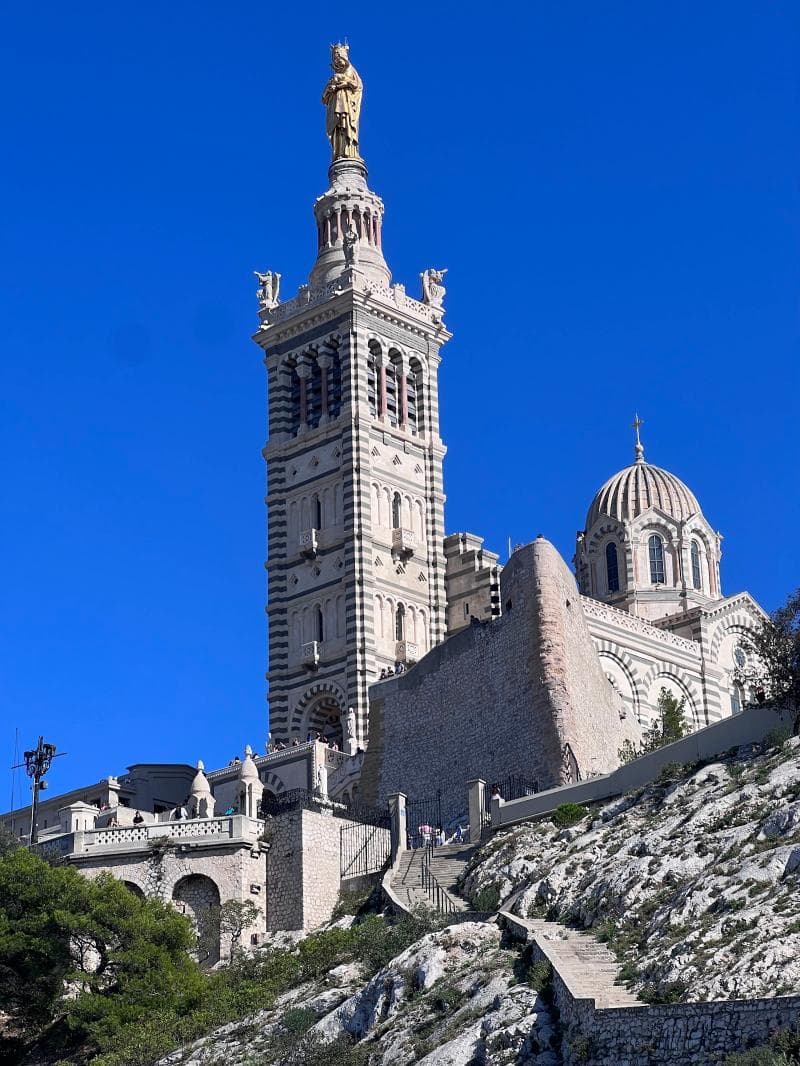
Discover the iconic Golden Statue of the Virgin and Child atop Basilique Notre-Dame de la Garde in Marseille, France, a beacon watching over the city.
Overview
Perched majestically atop Marseille's highest natural point, the Basilique Notre-Dame de la Garde stands as an iconic symbol, affectionately known by locals as 'La Bonne Mère' or 'The Good Mother'. Visible from nearly every corner of the city, this magnificent basilica is instantly recognizable by its gleaming golden statue, which crowns its bell tower and watches over Marseille, its sailors, and its inhabitants. The golden statue, depicting the Virgin Mary holding the Child Jesus, is not merely an artistic embellishment but a profound cultural and religious beacon. Visitors are drawn to this sacred site not only for its spiritual significance but also for the unparalleled 360-degree panoramic views it offers of the sprawling city, the historic Old Port, the distant Frioul Islands, and the vast expanse of the Mediterranean Sea. The basilica itself is a marvel of Neo-Byzantine architecture, characterized by its distinctive domes, rich mosaics, and the use of multi-coloured stones that contribute to its striking appearance.
History & Cultural Background
The history of the Garde hill as a place of spiritual and strategic importance dates back centuries. The site, a 149-meter (489 ft) limestone outcropping, served as a natural lookout point for defensive purposes since at least the 15th century. Its religious significance began in 1214 when a small chapel dedicated to the Virgin Mary was first established here. Over the centuries, this modest sanctuary grew in importance, particularly for sailors seeking divine protection before embarking on perilous journeys.
The present-day Basilique Notre-Dame de la Garde, a grand structure in the Roman-Byzantine style, was constructed to replace an earlier, smaller chapel that could no longer accommodate the increasing number of pilgrims. The foundation stone was laid in 1853, with the new basilica being consecrated in 1864, though its completion with the monumental golden statue atop its bell tower would extend into 1897. Designed by architect Henri-Jacques Espérandieu, the basilica's architectural grandeur reflects the thriving spirit of Marseille in the 19th century.
What Makes It Special
The golden statue itself, representing the Virgin and Child, is undoubtedly what makes this landmark truly special. Standing at an impressive 11.2 meters (37 ft) tall and weighing nearly 9,796 kg, it is crafted from copper and meticulously gilded with gold leaf. The statue was designed by sculptor Eugène Lequesne and cast by the Christofle workshops, finally installed in September 1870. Its prominent position makes it a guiding light for ships entering and leaving Marseille's harbour, embodying hope and protection. The statue undergoes periodic regilding to maintain its radiant glow against the elements, a testament to its enduring significance. A recent, extensive restoration effort, completed in December 2025, involved applying approximately 30,000 gold leaves to revive its brilliance, underscoring the community's dedication to this cherished symbol.
Stories, Fun Facts & Local Details
Locally, the golden statue and the basilica it adorns are universally referred to as 'La Bonne Mère'. This affectionate nickname highlights the deep bond and reverence the people of Marseille hold for their protector. She is seen as a maternal figure, watching over everyone from fishermen to city dwellers. For generations, it has been a tradition for sailors to salute 'La Bonne Mère' when departing from or returning to port, a gesture of prayer and gratitude. Inside the basilica, the walls are adorned with numerous ex-votos—offerings such as model ships, plaques, and other tokens left by those who sought or received her intercession, particularly from the maritime community. These heartfelt offerings tell countless stories of survival, hope, and faith. An interesting tidbit from the past notes a hidden spiral staircase within the statue that once allowed access to the Virgin's head, reportedly offering a unique perspective 'through the eyes of the Bonne Mère' to those fortunate enough to ascend it.
Visitor Perspective
Visiting the Basilique Notre-Dame de la Garde and its golden statue is an immersive experience for any traveler. While reaching the summit involves a climb, the journey is considered rewarding. The basilica welcomes visitors free of charge, inviting them to explore its richly decorated interior, which boasts stunning mosaics and intricate details. The stark contrast between the vibrant, gold-filled upper church and the more austere, rock-carved Romanesque crypt provides a fascinating architectural journey. However, the true highlight for many is stepping onto the terraces that encircle the basilica. From this elevated vantage point, visitors are treated to breathtaking panoramic views that stretch across the city, capturing its vibrant pulse and its serene relationship with the sea. It's a moment of reflection and awe, connecting the spiritual guardian with the city it protects. Planning about one to two hours allows ample time to appreciate both the religious artistry within and the expansive beauty without.
Coordinates: 5.371, 43.2841
View on Google Maps💬 How Travelers Describe This Place
Based on community votes
Photogenic
989Must See
791Interesting
613Beautiful
514Unique
207
Traveler Stories
Discover memorable experiences shared by travelers who have visited this place.
No traveler stories yet.
Be the first traveler to share what made this place memorable.

Tour
By
Spot
Discover amazing places around the world. Your journey starts here.
Explore
© 2026 TourBySpot. All rights reserved.