Mosaic Interiors
Marseille, France
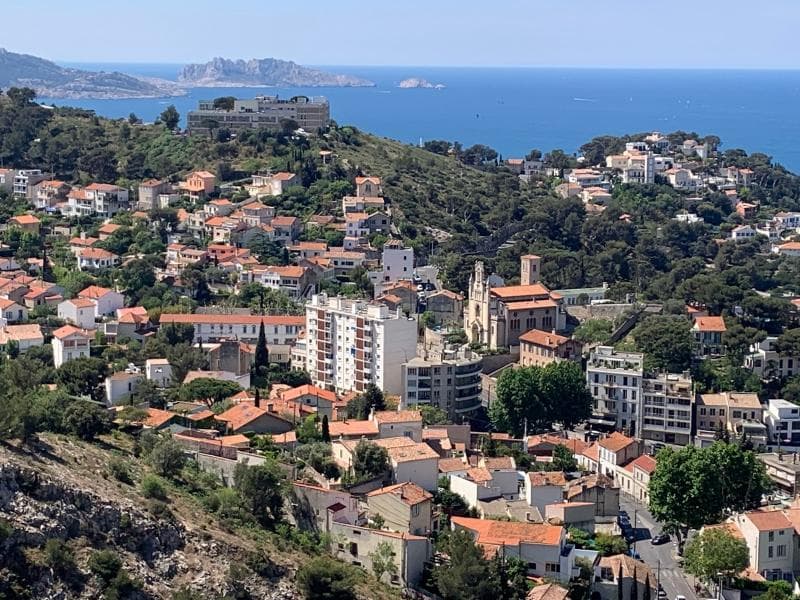
Discover the stunning Neo-Byzantine mosaic interiors of Basilique Notre-Dame de la Garde in Marseille, France, a dazzling display of art and history.
Overview
Perched majestically atop Marseille's highest natural point, the Basilique Notre-Dame de la Garde, affectionately known as 'La Bonne Mère' (the Good Mother), watches over the vibrant city and the Mediterranean Sea. While its commanding exterior and the gleaming golden statue of the Virgin Mary are iconic, it is within the basilica's luminous interior that one discovers a breathtaking artistic treasure: its mosaic adornments. These 'Mosaic Interiors' transform the basilica into a radiant sanctuary, a symphony of light and color that tells stories of faith, history, and Marseille's deep connection to the sea. They are an integral part of the basilica's Neo-Byzantine style, inviting visitors into a world of intricate detail and profound symbolism.
History & Cultural Background
The construction of the Basilique Notre-Dame de la Garde began in 1853, with its consecration occurring in 1864, though work continued for decades. The decision to adorn the interior with mosaics came later, largely defining its distinctive Neo-Byzantine character. The mosaics were meticulously laid between 1872 and 1892, transforming the basilica's aesthetic. This period marked a revival of Byzantine art in Western Europe, and the basilica's architect, Henri-Jacques Espérandieu, embraced this opulent style to create an interior that contrasted vividly with the more austere Romanesque crypt below. The tesserae, tiny pieces of glass and stone that form the mosaics, were imported from Venice, a city with a long and rich tradition of mosaic art. This choice underscored the desire for exceptional quality and an authentic Byzantine feel, despite being created in France. The mosaics were crafted in Nîmes, with each panel containing roughly 10,000 mosaic blocks per ten square feet, totaling about 12 million small tiles across the basilica's surfaces.
What Makes It Special
The Mosaic Interiors of Notre-Dame de la Garde are special due to their sheer scale, intricate craftsmanship, and profound symbolism. Covering approximately 13,000 square feet, they envelop the visitor in a dazzling display of artistry. Unlike the simple geometric patterns of the stone floor mosaics, the wall and ceiling mosaics are crafted from vibrant glass tesserae, creating complex and colorful designs in the Byzantine style. These aren't just decorative elements; they are visual narratives steeped in Christian iconography. One of the most striking examples is the mosaic in the apse's semi-dome, which depicts a ship. This ship serves as a powerful symbol of the Church, navigating the tumultuous seas of the world, protected by the Virgin Mary, whose monogram and a star 'M' are incorporated into the design, referring to her as the 'star of the seas.' Elsewhere, the dome above the transept crossing features four angels on a field of gold, while the side chapels are adorned with mosaics that reflect the names and coats of arms of their financers.
Stories, Fun Facts & Local Details
During a significant restoration project from 2001 to 2008, the mosaics, which had suffered damage from candle smoke over the decades, underwent careful conservation. This delicate work was entrusted to Marseille artist Michel Patrizio, whose team received specialized training in Friuli, north of Venice, a region renowned for its mosaic heritage. Importantly, the replacement tiles were sourced from the very same Venetian workshop that had produced the originals in the 19th century, ensuring historical accuracy and continuity. This continuity speaks to the enduring legacy of traditional craftsmanship. The basilica itself, overlooking Marseille from 162 meters above sea level, has long been a place of pilgrimage and a focal point for the city's seafaring community. The mosaics, with their maritime motifs and dedication to the Virgin Mary, resonate deeply with Marseille's identity as a port city, where sailors traditionally sought the 'Good Mother's' protection before embarking on perilous journeys.
Visitor Perspective
Stepping inside Notre-Dame de la Garde, visitors are immediately struck by the warmth and richness of the mosaic work. The gold tesserae catch the ambient light, creating a shimmering, almost ethereal atmosphere. The detailed imagery, from biblical scenes to symbolic representations, invites contemplation and discovery. Each chapel, each archway, and especially the grand domes, offers a unique artistic experience. The mosaics are not merely decorations but an integral part of the spiritual and cultural narrative of the basilica, offering a deeper understanding of Marseille's history and its devotion to the Virgin Mary. They provide a captivating contrast to the more robust exterior, revealing an unexpected world of beauty and intricate storytelling within this landmark. The meticulous detail and vibrant colors ensure that the Mosaic Interiors remain a highlight of any visit to this iconic Marseille landmark.
Coordinates: 5.371, 43.2841
View on Google Maps💬 How Travelers Describe This Place
Based on community votes
Unique
953Must See
695Interesting
658Photogenic
69Beautiful
22
Traveler Stories
Discover memorable experiences shared by travelers who have visited this place.
No traveler stories yet.
Be the first traveler to share what made this place memorable.

Tour
By
Spot
Discover amazing places around the world. Your journey starts here.
Explore
© 2026 TourBySpot. All rights reserved.