Main Basilica
Marseille, France
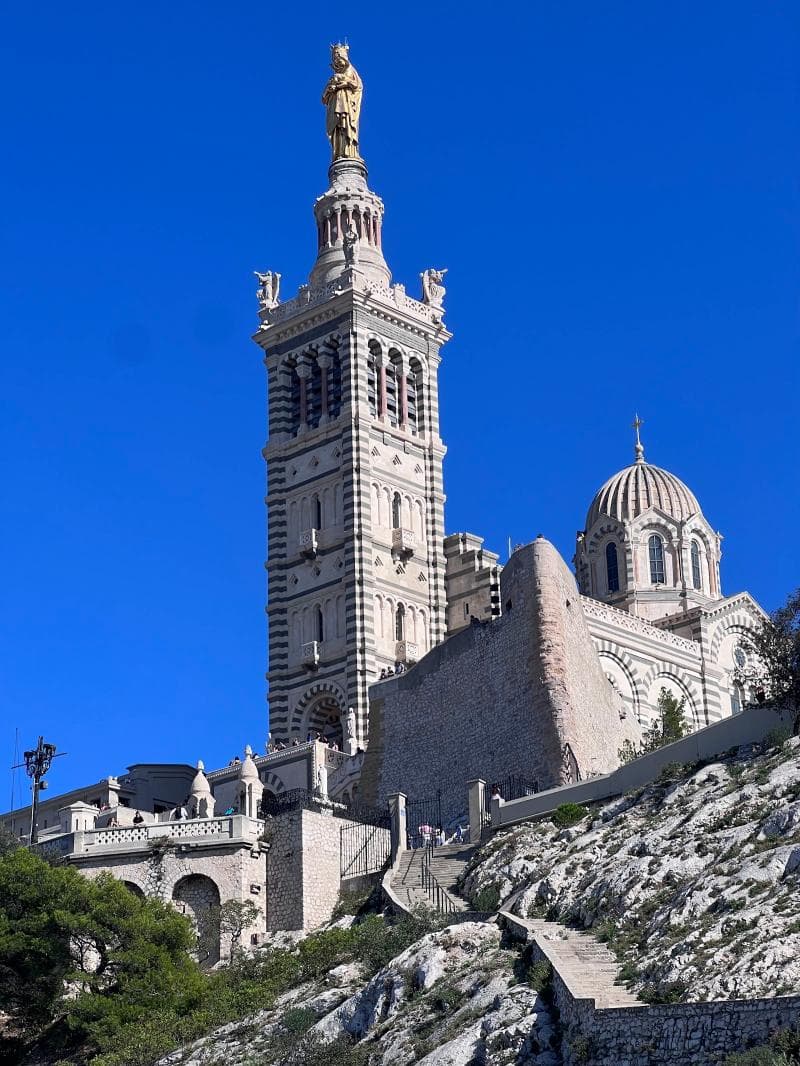
Explore the Main Basilica of Notre-Dame de la Garde in Marseille, France. Discover its rich history, stunning Byzantine art, and cultural significance as 'La Bonne Mère'.
Overview
Perched majestically atop a limestone outcropping, the Basilique Notre-Dame de la Garde, affectionately known as 'La Bonne Mère' (The Good Mother) by locals, stands as an enduring symbol of Marseille, France. While the entire edifice commands attention from afar, it is within its 'Main Basilica' – the grand upper church – that visitors truly immerse themselves in a sanctuary of breathtaking artistry and profound spiritual resonance. This primary worship space, consecrated in 1864, is a masterpiece of Neo-Byzantine architecture, characterized by an opulent interior designed to inspire awe and devotion.
The Main Basilica, with its soaring nave, intricate mosaics, and richly adorned main altar, serves as the spiritual heart of this iconic landmark. It is here that pilgrims and curious travelers alike discover a vibrant tapestry of religious art, centuries of maritime heritage, and an atmosphere imbued with faith. The harmonious blend of Romanesque and Byzantine influences creates a unique visual narrative, inviting contemplation and offering a glimpse into Marseille's deep connection with its celestial protector.
History & Cultural Background
The story of Notre-Dame de la Garde's Main Basilica is deeply intertwined with Marseille's long and storied past, tracing its origins back to a small chapel built on La Garde hill in 1214. For centuries, this elevated site served not only as a place of worship dedicated to the Virgin Mary but also as a crucial watchtower and military fortification, guarding the city and its seafarers.
By the mid-19th century, the existing chapel proved too small for the growing number of pilgrims. Thus, the vision for the current, grand basilica was born. Construction began in 1853 under the direction of architect Henri-Jacques Espérandieu, replacing the earlier structures with a monumental design. Consecrated in 1864, though still unfinished, the basilica evolved over four decades, becoming a beacon of faith and protection for the people of Marseille, especially its sailors and fishermen. It stands as a testament to persistent devotion, built on foundations that witnessed historical sieges and played a role even during events like World War II.
What Makes It Special
The Main Basilica's unique allure lies in its dazzling interior, a vibrant spectacle of Neo-Byzantine design. The nave, measuring approximately 32.7 meters long and 14 meters wide, captivates with its rich, multicoloured decorations. A distinguishing feature is the extensive use of mosaics, adorning the walls, vaults, and ceilings with shimmering gold and intricate patterns. These mosaics, created by the Mora company from Nimes between 1886 and 1892, were later meticulously restored, with tiles supplied by the same Venetian workshop that made the originals.
Central to the Main Basilica is its exquisite main altar, crafted from Golfolina stone with columns of Spanish marble. Behind the main altar stands a poignant statue of the Madonna holding a bouquet, known as the 'Vierge au Bouquet'. The central dome above the crossing is particularly striking, featuring a mosaic depicting four angels against a golden background, holding a crown of roses offered to the Virgin Mary. In the semi-dome of the apse, another extraordinary mosaic displays a ship, symbolizing the Virgin's protection and guidance for sailors, a theme deeply rooted in Marseille's maritime identity.
Stories, Fun Facts & Local Details
The Main Basilica is not merely an architectural marvel; it is a repository of stories and popular devotion. The nickname 'La Bonne Mère' stems from the deep-seated belief that the Virgin Mary, whose monumental gilded statue crowns the basilica's bell tower, watches over and protects the city and its inhabitants, especially those at sea. Many ex-votos, ranging from plaques to model ships suspended from the ceiling, bear witness to prayers answered and dangers averted, reflecting centuries of gratitude from sailors and their families.
A fun detail often noted by visitors is that the gilded statue of the Virgin and Child, standing at 11.2 meters tall atop the bell tower, faces the sea, presenting her child to the world rather than looking directly at him. Inside, the Main Basilica's side chapels often bear plaques acknowledging donors, subtly weaving the community's history into the sacred space. The immense bell, 'Marie-Joséphine', weighing over eight tons, adds another layer to the basilica's sensory experience, its deep resonance echoing through the city.
Visitor Perspective
Stepping into the Main Basilica offers a serene yet awe-inspiring experience. The contrasting colours of the layered stonework, using white Calissane limestone and green Golfolina sandstone, create a visually engaging interior. The play of light on the golden mosaics creates a luminous, ethereal atmosphere, inviting quiet reflection and reverence. While exploring the elaborate details of the nave, visitors can appreciate the craftsmanship of the various artworks and decorations, including the marble statues and columns.
It is important for visitors to remember that the Main Basilica remains an active place of worship and pilgrimage. Observing silence, particularly in designated prayer areas, and dressing modestly are signs of respect that enhance the experience for all. The spiritual significance is palpable, with many visitors lighting candles or simply taking a moment for quiet contemplation amidst the grandeur. Exploring this sacred space provides a profound connection to Marseille's cultural and spiritual heart, offering both artistic wonder and a sense of enduring faith.
Coordinates: 5.371, 43.2841
View on Google Maps💬 How Travelers Describe This Place
Based on community votes
Must See
797Interesting
695Unique
396Beautiful
286Photogenic
22
Traveler Stories
Discover memorable experiences shared by travelers who have visited this place.
No traveler stories yet.
Be the first traveler to share what made this place memorable.

Tour
By
Spot
Discover amazing places around the world. Your journey starts here.
Explore
© 2026 TourBySpot. All rights reserved.