Aspendos Theatre
Antalya, Turkey
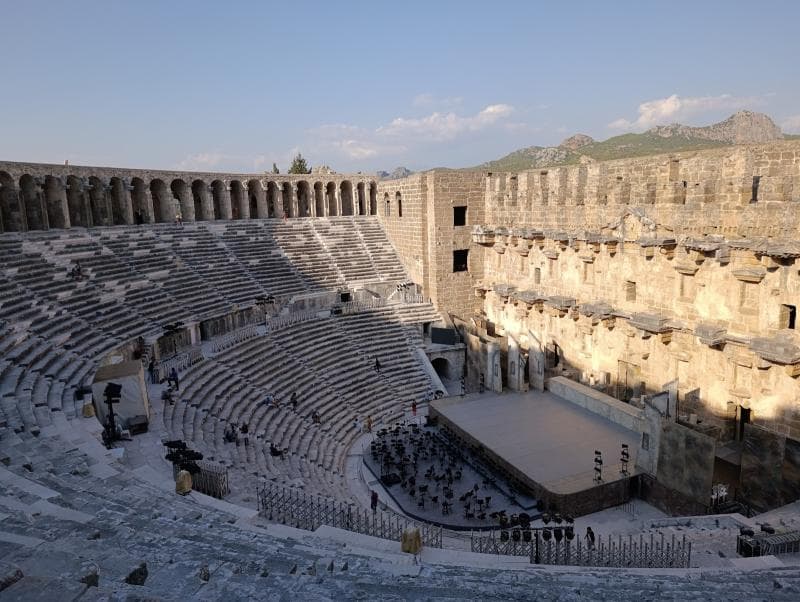
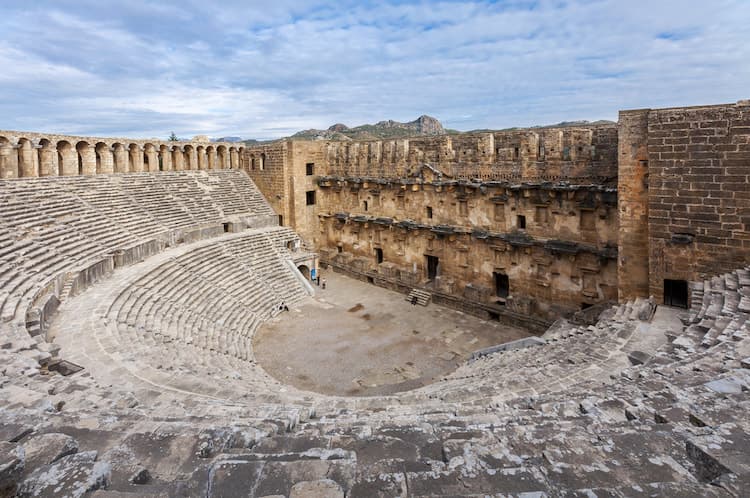
Explore Aspendos Theatre in Antalya, Turkey, one of the best-preserved Roman theatres. Discover its history, incredible acoustics, and unique charm.
Overview
Nestled in the sun-drenched region of Antalya, Turkey, the Aspendos Theatre stands as a magnificent testament to Roman engineering and architectural prowess. Widely regarded as one of the best-preserved ancient theaters in the world, it continues to captivate visitors with its nearly intact structure and remarkable acoustics. Located in the village of Belkıs in the Serik district, approximately 45 kilometers east of Antalya city center, this iconic landmark offers a profound glimpse into a bygone era. Unlike many ancient ruins that require significant imagination to reconstruct, Aspendos presents a clear and imposing picture of 2nd-century urban life and entertainment.
The theatre is the crown jewel of the ancient city of Aspendos, which once flourished as a major hub for trade and the arts in the Pamphylia region. Beyond the theatre itself, the broader archaeological site includes remnants of an agora, basilica, nymphaeum, stadium, and impressive aqueducts, all offering further insights into the city's rich past. Today, the Aspendos Theatre is not merely a relic; it remains a living venue, annually hosting events such as the International Aspendos Opera and Ballet Festival, allowing modern audiences to experience its grandeur as spectators did nearly two millennia ago.
History & Cultural Background
The history of Aspendos dates back to the 10th century BC, making it one of Anatolia's oldest settlements. Originally founded by the Achaeans, it later came under the control of various empires including the Lydians, Persians, Hellenistic kingdoms, and eventually the Romans. The city prospered significantly during the Roman period, particularly in the 2nd and 3rd centuries AD.
The theatre itself was constructed in the 2nd century AD, specifically between 161 and 180 AD, during the reign of Roman Emperor Marcus Aurelius. It was designed by a Greek architect named Zenon, the son of Theodorus, who was a native of Aspendos. Inscriptions on its walls indicate that the project was funded by two wealthy brothers, A. Curtius Crispinus Arruntianus and A. Curtius Crispinus, who gifted the theatre to the city. Despite being built during Roman rule, the design incorporates many Greek characteristics, such as the spectator tribune being partly dug out of the eastern slope of the acropolis. The theatre's remarkable preservation is partly due to its continuous use and adaptation over centuries. During the Seljuk period in the 13th century, it was converted into a caravanserai (a roadside inn for travelers) and even functioned as a palace, a repurposing that inadvertently protected the structure from decay.
What Makes It Special
The Aspendos Theatre is renowned worldwide for several exceptional features. Its most celebrated attribute is its extraordinary state of preservation; the stage building, seating tiers, and decorative reliefs remain astonishingly intact, providing an unparalleled example of Roman theatre architecture.
Another distinguishing characteristic is its phenomenal acoustics. A whisper spoken on the stage can be heard clearly even in the uppermost rows, a remarkable feat of ancient engineering. This acoustic perfection is attributed not only to Zenon's genius design but also, in part, to the specific limestone used in its construction, which possesses sound-reflecting properties. The theatre's sheer scale is also impressive, with an overall width of 96 meters and a seating capacity estimated between 7,000 and 15,000 spectators, depending on the source. The two-story stage building, or scaenae frons, is particularly elaborate, adorned with intricate columns and niches that once housed statues, contributing to its grand aesthetic. The presence of post holes for 58 masts in the upper level indicates that a *velarium*, a massive awning, could be extended to provide shade to the audience, further showcasing the advanced practical considerations of its builders.
Stories, Fun Facts & Local Details
Legends often swirl around structures of such grandeur, and Aspendos is no exception. One popular tale recounts a competition held by a king who promised his daughter's hand in marriage to the man who would provide the most useful gift to the city. Two contenders emerged: one built a sophisticated system of aqueducts, while the other, the architect Zenon, built the magnificent theatre. The king was initially swayed by the aqueducts but was so impressed by the theatre's perfect acoustics—when he heard a voice whispering, 'Your daughter must be mine!' from the stage while standing in the highest seat—that he awarded Zenon his daughter's hand. Though the legend ends with a twist of unrequited love, it highlights the theatre's enduring acoustic marvel.
Another significant historical detail is that in the 1930s, Mustafa Kemal Atatürk, the founder of modern Turkey, visited Aspendos and, impressed by its condition, ordered its preservation, declaring that such a magnificent structure must not be wasted. The theatre also served a propagandist role for the Roman Empire, designed not just for entertainment but to demonstrate imperial might and reinforce social order through its magnificent decorations and ability to gather large crowds.
Visitor Perspective
Visiting the Aspendos Theatre offers an immersive journey back in time. As you ascend the semi-circular rows of limestone seats, you can truly appreciate the clear visibility from every angle and imagine the spectacles that once unfolded here. Walking around, you might even test the famous acoustics yourself by having someone whisper on stage while you stand in the upper tiers. The site is located approximately 45 minutes from Antalya city center, easily accessible by car, public transport (minibus/bus to Serik then taxi), or guided tours.
Beyond the theatre, exploring the surrounding ancient city reveals additional historical layers, including the impressive ruins of the aqueducts that once supplied water to Aspendos. The ideal times to visit are during spring (April-June) or autumn (September-October) when the weather is most pleasant, though early mornings or late afternoons are recommended during summer to avoid the heat. Wearing comfortable shoes is advisable for navigating the stone steps and uneven terrain. For those interested in seeing the theatre in action, checking the schedule for the annual International Aspendos Opera and Ballet Festival offers a unique opportunity to experience its timeless grandeur.
Coordinates: 31.17251, 36.93903
View on Google Maps💬 How Travelers Describe This Place
Based on community votes
Beautiful
716Interesting
566Photogenic
314Unique
302Must See
203
Traveler Stories
Discover memorable experiences shared by travelers who have visited this place.
No traveler stories yet.
Be the first traveler to share what made this place memorable.
Things to see at Aspendos Theatre



Tour
By
Spot
Discover amazing places around the world. Your journey starts here.
Explore
© 2026 TourBySpot. All rights reserved.