Asakusa & Senso-ji
Tokyo, Japan
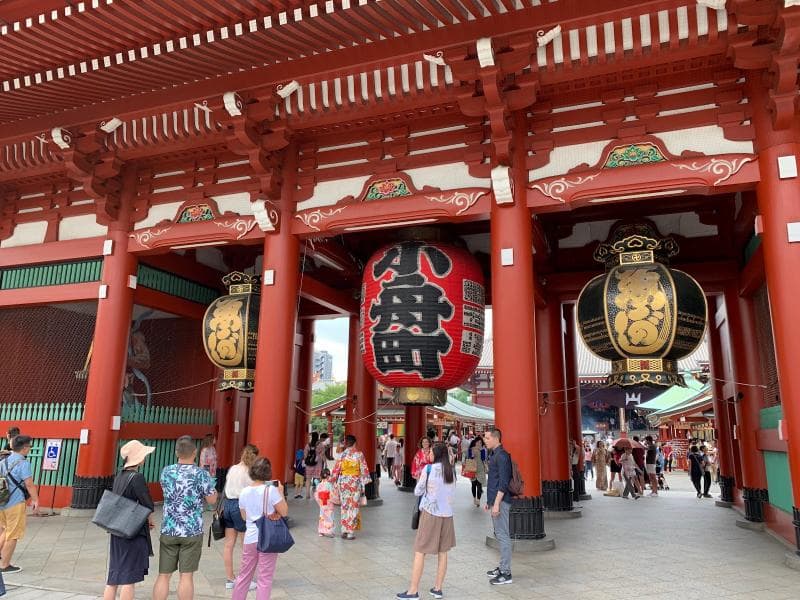
Explore Asakusa & Senso-ji in Tokyo, Japan's oldest temple. Discover its rich history, vibrant Nakamise street, and iconic Kaminarimon Gate. A spiritual and cultural heart.
Overview
Asakusa, nestled in Tokyo, Japan, is a captivating district that wonderfully preserves the nostalgic atmosphere of old Japan. Its spiritual heart is Senso-ji, Tokyo's most ancient temple and a revered Buddhist sanctuary dedicated to Kannon, the benevolent goddess of mercy. This iconic destination draws an astounding 30 million visitors annually, making it one of the most frequented spiritual sites globally. A visit to Asakusa and Senso-ji offers a unique journey through time, blending deep-rooted tradition with the dynamic pulse of modern Tokyo.
The temple complex is an architectural marvel, beginning with the imposing Kaminarimon (Thunder Gate), leading into the vibrant Nakamise-dori shopping street, and culminating at the Hozomon Gate, the majestic Main Hall, and a soaring five-story pagoda. Each element tells a story, inviting travelers to immerse themselves in a rich tapestry of history, culture, and devotion.
History & Cultural Background
The origins of Senso-ji are steeped in legend, dating back to 628 AD. The tale recounts two fishermen brothers, Hinokuma Hamanari and Takenari, who, while fishing in the Sumida River, miraculously discovered a small golden statue of Kannon. Despite their repeated attempts to return the statue to the river, it continuously reappeared, leading their village chief, Haji no Nakatomo, to recognize its profound significance and enshrine it. This act marked the temple's foundation, with its completion in 645 AD, solidifying its status as Tokyo's oldest temple.
Over centuries, Senso-ji's importance grew significantly. During the Edo period (1603-1867), the first Tokugawa shogun, Tokugawa Ieyasu, designated Senso-ji as a key temple for shogunate prayers, further cementing its prominence. Concurrently, the surrounding Asakusa district flourished as a vibrant cultural and entertainment center. Although much of the original temple complex, including gates and main structures, was devastated during the Great Tokyo Air Raid in 1945, the resilient spirit of Japan led to its meticulous reconstruction. The current Kaminarimon was rebuilt in 1960, and the Main Hall in the 1950s, symbolizing rebirth and enduring faith.
What Makes It Special
Senso-ji's allure lies in its iconic structures and enduring cultural practices. The journey typically begins at the Kaminarimon, or 'Thunder Gate,' an unmistakable symbol of Asakusa and Tokyo. It features a colossal red lantern and guardian statues of Fujin, the god of wind, and Raijin, the god of thunder. Interestingly, this iconic lantern was a donation from Konosuke Matsushita, the founder of Panasonic.
Beyond Kaminarimon stretches Nakamise-dori, a bustling 250-meter-long shopping street with a history spanning centuries. Here, visitors can explore stalls offering traditional Japanese snacks, unique souvenirs, and intricate crafts. The path then leads to the Hozomon Gate, the temple's inner entrance, known for housing important artifacts and displaying massive straw sandals called 'ōwaraji.'
The spiritual core is the Main Hall and the elegant five-story pagoda, both rebuilt after wartime destruction, standing as testaments to unwavering devotion. Adjacent to the temple is the Asakusa Shrine, a Shinto shrine honoring the three individuals credited with founding Senso-ji, beautifully illustrating the harmonious coexistence of Buddhist and Shinto traditions in Japan. This continuous rebuilding and preservation underscore Japan's determination for peace and cultural continuity.
Stories, Fun Facts & Local Details
One of the most intriguing aspects of Senso-ji is the Kannon statue itself; it remains a 'hibutsu' or hidden Buddha, never publicly displayed, with its exact details shrouded in mystery. Visitors can partake in traditional rituals, such as wafting incense smoke from the Jōkōro, a large incense burner, over themselves, a practice believed to bring good health and wisdom. Another popular tradition is drawing an 'omikuji,' a paper fortune slip, to glimpse one's future.
Observing local etiquette is part of the experience. At the 'chozuya' or purification fountain, one traditionally cleanses their hands and rinses their mouth (without letting the ladle touch the lips) before approaching the main sanctuary. When offering prayers at the Main Hall, it's customary to quietly place an offering and pray silently, without clapping as one would at a Shinto shrine.
Asakusa is also a hub for vibrant festivals. The Sanja Matsuri in May is one of Tokyo's largest and most spirited festivals, celebrating the temple's founders, while the Hagoita-ichi in December showcases decorative wooden paddles. Exploring the area via a traditional rickshaw tour provides a charming and historically rich perspective, with guides often sharing fascinating local insights. Don't miss sampling local delicacies like 'ningyo-yaki' (doll-shaped cakes) and 'kaminari okoshi' (thunder stirrups) along Nakamise-dori.
Visitor Perspective
Senso-ji welcomes all, with its expansive grounds always open and free admission to the temple itself. However, the Main Hall typically operates specific hours, for instance, from 6:00 AM to 5:00 PM. For a more serene experience, arriving early in the morning is recommended to avoid the peak crowds that gather throughout the day.
The entire Asakusa district, centered around the temple, is highly walkable, making it easy to explore on foot. For practical information, maps, free Wi-Fi, and an excellent observation deck offering panoramic views of Senso-ji and Nakamise Street, the Asakusa Culture Tourist Information Center is a valuable first stop. Reaching Asakusa is convenient via Tokyo's efficient public transport system, with several subway lines, including the Ginza Line and Asakusa Line, directly serving Asakusa Station, just a short walk from the temple.
Coordinates: 139.7914, 35.7088
View on Google Maps💬 How Travelers Describe This Place
Based on community votes
Must See
722Interesting
595Unique
358Photogenic
196Beautiful
19
Traveler Stories
Discover memorable experiences shared by travelers who have visited this place.
No traveler stories yet.
Be the first traveler to share what made this place memorable.
Things to see at Asakusa & Senso-ji



Tour
By
Spot
Discover amazing places around the world. Your journey starts here.
Explore
© 2026 TourBySpot. All rights reserved.