Anne Frank House
Amsterdam, Netherlands
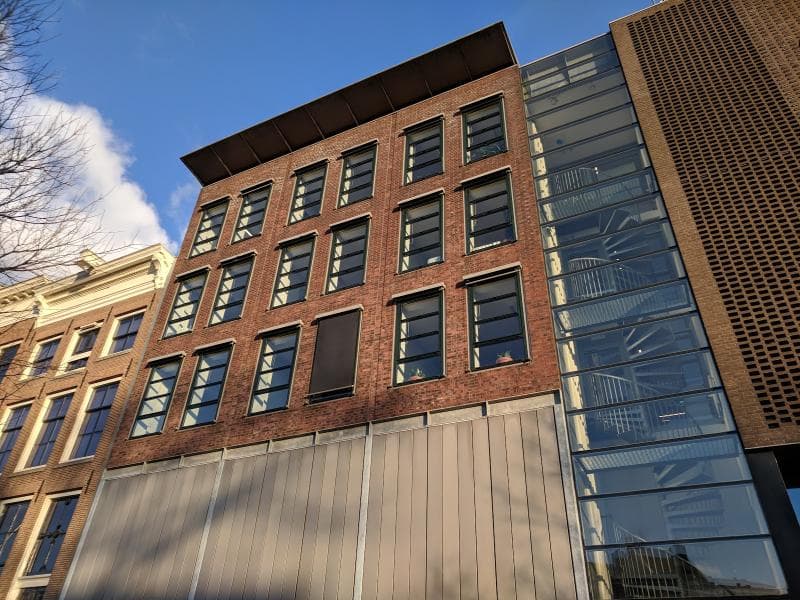
Explore the Anne Frank House in Amsterdam, Netherlands, a powerful museum preserving Anne Frank's hiding place and sharing her poignant story.
Overview
The Anne Frank House, located in the heart of Amsterdam, Netherlands, stands as a profoundly moving biographical museum dedicated to the Jewish wartime diarist Anne Frank. Situated on the picturesque Prinsengracht canal, near the Westerkerk, this historic canal house is globally recognized as the hiding place where Anne Frank, her family, and four other Jewish people sought refuge from Nazi persecution during World War II. It is not merely a museum but a preserved testament to the resilience of the human spirit amidst unimaginable adversity, drawing over a million visitors annually.
The museum's primary purpose, established in 1957 by Otto Frank, Anne's father and the sole survivor of the Secret Annex, is to maintain the hiding place and to educate visitors about the dangers of discrimination, racism, and antisemitism. The authentic atmosphere within its walls allows visitors to experience the story of Anne Frank through original artifacts, quotes, photos, and videos, offering a deeply personal and reflective journey into a dark chapter of history.
History & Cultural Background
Anne Frank was born in Frankfurt, Germany, in 1929. Her family moved to Amsterdam in the 1930s to escape the rising tide of antisemitism in Germany. Otto Frank established his pectin-trading business, Opekta, at Prinsengracht 263. With the Nazi invasion of the Netherlands in May 1940, life for Jewish people became increasingly perilous, marked by restrictive laws and the threat of deportation to concentration camps.
In July 1942, after Anne's older sister Margot received a call-up for a 'labour camp,' the Frank family, along with the van Pels family and later Fritz Pfeffer, went into hiding in the Secret Annex (Achterhuis) – a concealed back part of Otto Frank's business premises. For 25 months, these eight individuals lived in constant fear, relying on the bravery of several helpers who provided food, supplies, and news from the outside world. On August 4, 1944, their hiding place was betrayed, leading to their arrest and deportation to various concentration camps. Only Otto Frank survived the war.
Upon his return to Amsterdam, Otto Frank discovered Anne's diary, which she had received for her thirteenth birthday, just before going into hiding. Anne had meticulously documented her thoughts, fears, and hopes, even rewriting parts with the ambition of becoming a published writer after the war. Otto fulfilled her wish, and 'The Diary of a Young Girl' was first published in Dutch in 1947, quickly gaining international acclaim and becoming one of the most widely read books in the world.
What Makes It Special
The profound impact of the Anne Frank House lies in its powerful authenticity. Unlike many museums that recreate historical settings, the Secret Annex itself remains largely empty, at Otto Frank's specific request. This emptiness is deliberate, allowing visitors to internalize the stark reality of confinement and the absence left by those who were taken away. Walking through the narrow rooms and steep stairs, visitors can truly appreciate the cramped conditions and the emotional burden endured by the people in hiding.
A particularly iconic feature is the movable bookcase that disguised the entrance to the Secret Annex, a brilliant piece of concealment devised by their helpers. Inside, visitors can see original artifacts, including Anne Frank's actual diary and other notebooks, offering a tangible connection to her words and aspirations. The museum effectively uses quotes, photographs, and historical documents to bring Anne's story to life, emphasizing not just the personal tragedy but also the broader context of the Holocaust and the enduring fight against prejudice and discrimination.
Stories, Fun Facts & Local Details
Life in the Secret Annex was governed by strict rules to avoid detection. During the day, the occupants had to remain completely silent so as not to alert workers in the warehouse below. Flushing the toilet or running water was only permitted when the offices were empty. Anne Frank found solace in her diary, treating it as a friend and a vital outlet for her thoughts and feelings. She brightened her small room by pasting pictures of movie stars and postcards on the walls, creating a personal sanctuary within their hidden world.
The original canal house, Prinsengracht 263, was built in 1635, showcasing classic Dutch canal house architecture with its tall, narrow facade. The ingenious design of the Secret Annex, hidden behind the main house and invisible from the street, was a common architectural feature of the time, allowing for additional space. The museum also displays the height marks on the wall, showing Anne and Margot's growth during their time in hiding, a poignant reminder of their lost childhood. Otto Frank remained intimately involved with the museum until his death in 1980, ensuring Anne's legacy continued to inspire awareness against intolerance.
Visitor Perspective
A visit to the Anne Frank House is widely described as an emotional and profoundly impactful experience. The museum is designed to immerse visitors in Anne's story and the stark realities of hiding during the war. Due to the historic nature of the building and its small, authentic spaces, certain areas, including the Secret Annex, are not easily accessible for individuals with mobility challenges. The museum recommends those with limited mobility explore its robust digital library or virtual reality app.
Tickets for the Anne Frank House are in high demand and must be purchased online in advance through the official website. They are typically released several weeks ahead of time and sell out quickly. Photography is generally not allowed inside the museum, preserving the solemn atmosphere and encouraging personal reflection. While guiding inside the Annex itself is not permitted, an introductory program is often offered to provide historical context before visitors enter the self-guided tour. The journey through Anne's former home is a powerful reminder of history's lessons and the enduring importance of empathy and human dignity.
Coordinates: 4.88432, 52.37525
View on Google Maps💬 How Travelers Describe This Place
Based on community votes
Interesting
898Photogenic
667Beautiful
618Must See
449Unique
308
Traveler Stories
Discover memorable experiences shared by travelers who have visited this place.
No traveler stories yet.
Be the first traveler to share what made this place memorable.
Things to see at Anne Frank House



Tour
By
Spot
Discover amazing places around the world. Your journey starts here.
Explore
© 2026 TourBySpot. All rights reserved.