Diary Exhibits
Amsterdam, Netherlands
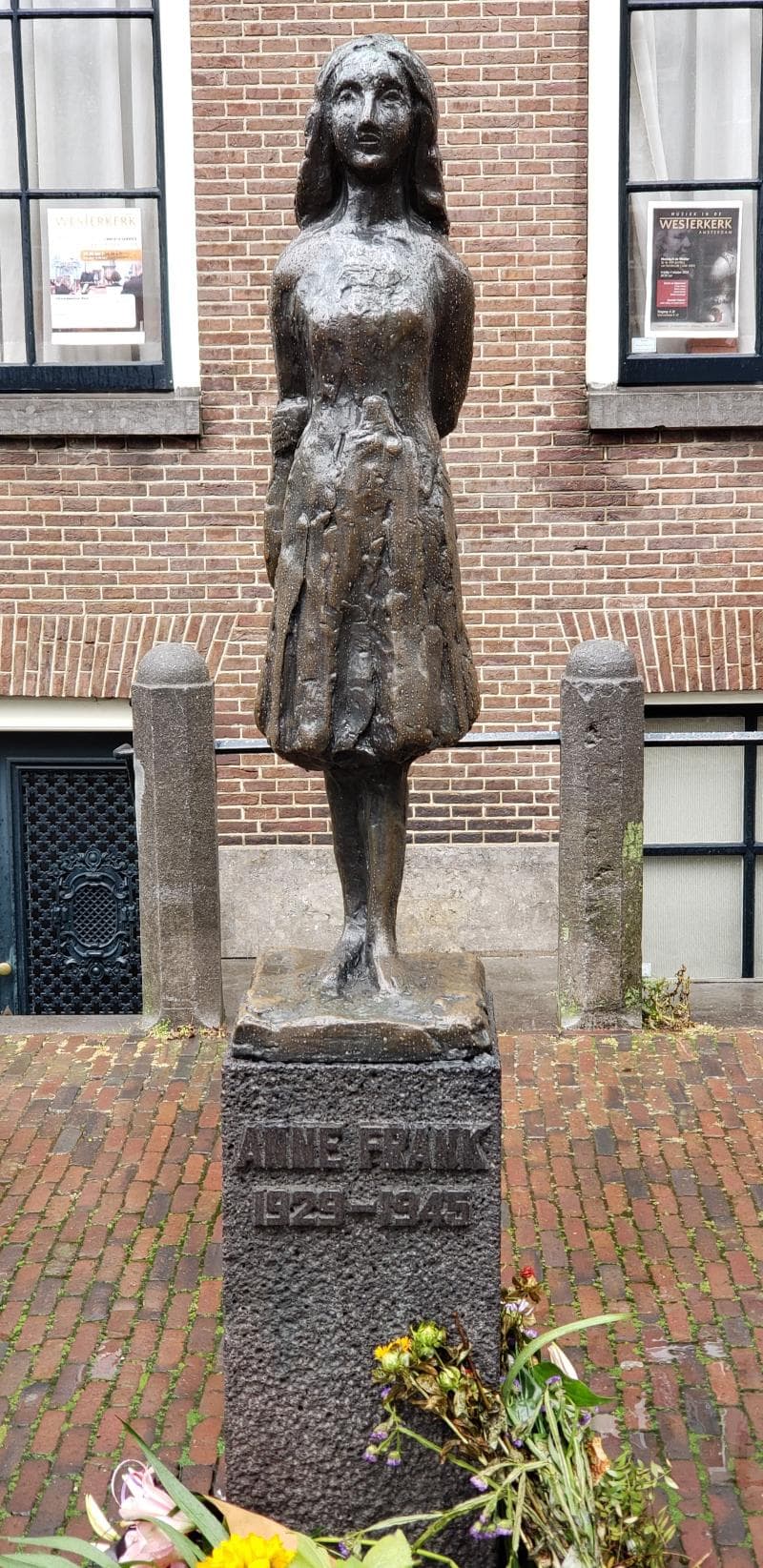
Explore the Diary Exhibits at the Anne Frank House in Amsterdam, Netherlands, featuring Anne's original diary and personal story.
Overview
The Anne Frank House in Amsterdam, Netherlands, stands as a profoundly moving historical house and biographical museum, dedicated to the legacy of Anne Frank. This poignant site preserves the Secret Annex, the hidden space where Anne Frank, her family, and four others sought refuge from Nazi persecution during World War II. Within its walls, the museum offers a powerful exhibition detailing Anne Frank's life, the story of her iconic diary, and broader, universal themes of persecution, discrimination, and human rights. Visitors are afforded a unique opportunity to see the original red-checked diary Anne received on her 13th birthday, along with other invaluable artifacts, photos, and videos that bring her story to life.
Stepping into the Anne Frank House allows for a deep, introspective experience, offering a tangible connection to a critical period in history. The museum’s curated displays and preserved spaces serve as a stark reminder of the atrocities of the Holocaust and the enduring human spirit. It is not merely a collection of objects but a narrative journey that resonates long after the visit.
History & Cultural Background
Anne Frank, a German-Jewish diarist, became a symbol of the innocent lives lost during the Holocaust. Her family moved from Germany to Amsterdam to escape Nazi persecution, and in 1940, her father, Otto Frank, relocated his business to Prinsengracht 263. It was in the hidden rear section of this building, later known as the Secret Annex, that the family would seek refuge. Their decision to go into hiding in July 1942 was prompted by Anne's older sister Margot receiving a call-up notice for a forced labor camp.
During the two harrowing years spent in hiding, Anne meticulously recorded her thoughts, fears, and dreams in her diary. This personal account offers an unparalleled insight into the daily life of those living under the constant threat of discovery. Following their arrest in 1944, the diary was miraculously salvaged by Miep Gies, one of the helpers. Otto Frank, the sole survivor of the eight people in hiding, ensured his daughter's words reached the world, publishing her diary in 1947. The Anne Frank House officially opened as a museum on May 3, 1960, with Otto Frank actively involved in its establishment and mission. He intentionally requested that the Secret Annex remain unfurnished and empty, a powerful and somber testament to the devastating loss and absence experienced by millions.
What Makes It Special
The core of what makes the 'Diary Exhibits' within the Anne Frank House so profoundly special is the direct encounter with Anne Frank's original writings. Visitors can behold the red-checked diary she received as a gift, alongside her other notebooks. The museum also alternately displays some of the loose sheets from her rewritten version of the diary, which she prepared with the ambition of becoming a published author after the war. This tangible connection to Anne's own hand provides an extraordinary sense of intimacy and authenticity.
Beyond the diaries themselves, the museum masterfully weaves Anne's personal narrative into the broader historical context of the Holocaust. It confronts visitors with essential themes of human rights, freedom, and the fight against discrimination and oppression. The preserved, authentic atmosphere of the Secret Annex, with its deliberately unfurnished rooms, evokes a visceral understanding of the claustrophobic and fear-filled existence of those in hiding. The exhibition also features original letters, photographs, and personal belongings of the Frank family and the other inhabitants of the Annex, offering further layers of connection to their lives.
Stories, Fun Facts & Local Details
Anne Frank's diary was a gift for her 13th birthday, received just a month before her family was forced into hiding. She quickly filled this initial diary and continued her writing in several notebooks. A significant detail of her literary ambition emerged in March 1944, when Anne, inspired by a radio broadcast about wartime diaries, began to rewrite and edit her entries. Her goal was to publish her story as a novel after the war, which she intended to title 'The Secret Annex.' This revised version consisted of 360 loose pages. Due to the extreme fragility of these historical documents, the museum rotates the display of these sheets, typically showcasing around 40 at any given time, allowing for their preservation while still making them accessible to the public.
Otto Frank, Anne's father, played a crucial role in establishing the museum and remained deeply involved until his death in 1980. His enduring hope was that the diary's readers and museum visitors would recognize the pervasive dangers of discrimination, racism, and hatred. Inside the Annex, visitors can see the iconic movable bookcase that ingeniously concealed the entrance to their hiding place. Anne's room in the Annex, which she shared with Fritz Pfeffer, was adorned with pictures she had pasted on the walls, a small effort to brighten her confined world. From her attic window, she would frequently gaze upon a large chestnut tree, a source of solace and connection to the outside world, which remarkably, still stands today.
Visitor Perspective
A visit to the Anne Frank House is widely regarded as a deeply emotional and contemplative experience, leaving a lasting impression on visitors. The museum is designed to immerse individuals in the story, employing a rich array of quotes, photographs, videos, and authentic original artifacts to convey the narrative. To enhance understanding and provide further context, a complementary audio tour is available in multiple languages. This tour elaborates on Anne Frank's life, the other individuals in hiding, their brave helpers, and the broader historical background of the persecution of Jews during World War II.
The atmosphere within the museum is intentionally subdued, with dimmed lighting in many areas, particularly in the Secret Annex. This deliberate choice helps to preserve the authentic feeling of the historical space and allows visitors to connect more profoundly with the past conditions. It is important to note that photography is strictly prohibited inside the museum. This policy is in place to protect the fragile artifacts and to ensure a respectful and immersive experience for all visitors, encouraging quiet reflection rather than distraction. Ultimately, the Anne Frank House offers a unique opportunity to gain a profound understanding of the individual human experience amidst the vast tragedy of the Holocaust, fostering empathy and historical awareness.
Coordinates: 4.884, 52.3752
View on Google Maps💬 How Travelers Describe This Place
Based on community votes
Beautiful
996Interesting
673Must See
585Unique
143Photogenic
80
Traveler Stories
Discover memorable experiences shared by travelers who have visited this place.
No traveler stories yet.
Be the first traveler to share what made this place memorable.

Tour
By
Spot
Discover amazing places around the world. Your journey starts here.
Explore
© 2026 TourBySpot. All rights reserved.