Historical Context Rooms
Amsterdam, Netherlands
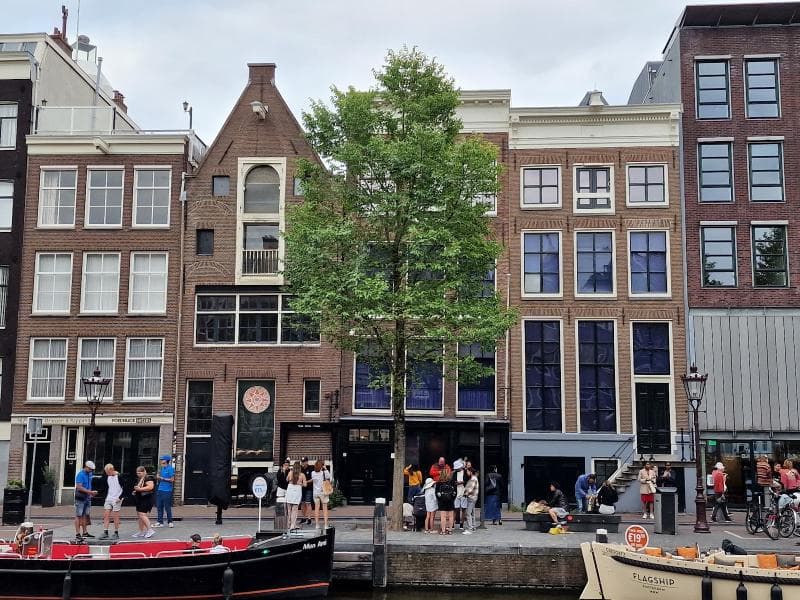
Explore the Historical Context Rooms at the Anne Frank House in Amsterdam, Netherlands, delving into Anne Frank's story and the Holocaust's history.
Overview
The Anne Frank House in Amsterdam, Netherlands, stands as a poignant memorial and educational institution, dedicated to the life and legacy of Anne Frank and the millions who suffered during the Holocaust. While many visitors are drawn to the preserved 'Secret Annex' where Anne and her family hid, the museum also dedicates significant space to what can be understood as 'Historical Context Rooms'. These areas are meticulously designed to expand upon Anne's personal story, placing it within the harrowing broader context of World War II, the Nazi occupation of the Netherlands, and the systematic persecution of Jewish people. The museum's approach is to weave together Anne's experiences with the wider historical narrative through a rich display of documents, photographs, film footage, and original artifacts.
These contextual exhibits are crucial for understanding the conditions that forced the Frank family into hiding and the ultimate tragic fate of millions. They are an integral part of the museum's mission to educate and remind visitors of the dangers of discrimination and prejudice, using Anne's diary as a starting point for a universal message.
History & Cultural Background
The historical and cultural background presented within the Anne Frank House traces the escalating events that led to the Frank family's decision to go into hiding. Visitors learn about the rise of Nazism in Germany, the anti-Jewish decrees, and the subsequent German occupation of the Netherlands in May 1940. The museum illustrates how Jewish citizens were systematically stripped of their rights, forced to wear yellow stars, and eventually subjected to deportation.
Through official documents, personal letters, and photographic evidence, the 'Historical Context Rooms' paint a vivid picture of life under occupation, detailing the fear, resistance, and daily struggles faced by the Dutch population, especially the Jewish community. Otto Frank, Anne's father, had moved his business, Opekta and Pectacon, to Prinsengracht 263 in 1940, and it was in the hidden annex of this very building that the family sought refuge.
These sections provide the necessary foundation for comprehending the 'Secret Annex' itself, explaining how ordinary lives were disrupted and transformed by political extremism and racial hatred, highlighting the cultural shift and loss that Amsterdam and Europe experienced.
What Makes It Special
What makes the 'Historical Context Rooms' particularly special is their ability to transform abstract historical facts into a deeply personal and relatable experience. Unlike the Secret Annex, which remains empty as a testament to the void left by its former occupants, these rooms are filled with informational displays and artifacts that provide a narrative beyond the physical hiding place.
Here, the visitor encounters not only the original diary of Anne Frank, displayed in a protected environment, but also the stories of the helpers who risked their lives, and the wider social and political landscape of the time. Multimedia presentations, including video testimonials and historical film footage, offer dynamic insights into the period. Temporary exhibitions often delve into specific themes related to the Holocaust or contemporary issues of human rights, ensuring the museum's relevance today.
The meticulous curation ensures that while Anne's individual voice is central, the visitor gains a profound understanding of the collective tragedy and the broader implications of her story for human history.
Stories, Fun Facts & Local Details
Within the 'Historical Context Rooms', visitors encounter various meaningful details that humanize the monumental history. One such detail is Anne Frank's ambition to become a writer and journalist, a dream nurtured in the Annex and evident in her extensive diary revisions. The museum displays some of her original notebooks and the rewritten version of her diary, comprising 215 loose sheets of paper.
Another touching detail is the collection of movie star postcards and pictures Anne pasted on her bedroom wall to brighten her confined space. Otto Frank had brought her collection into hiding, allowing her to turn 'the entire room into one big picture'.
The museum also sheds light on the vital role of the office personnel, known as the 'helpers', who provided food, news, and emotional support to those in hiding. Their courage and humanity underscore the local details of how ordinary individuals can make extraordinary choices in times of crisis. The story of Miep Gies, who salvaged Anne's diary after the family's arrest and later gave it to Otto, is particularly emphasized, highlighting her incredible dedication to preserving Anne's voice.
Visitor Perspective
Visiting the 'Historical Context Rooms' offers a deeply moving and educational perspective for travelers. While the Secret Annex evokes a sense of claustrophobia and the stark reality of hiding, these adjacent exhibition spaces provide the crucial backdrop against which Anne's experiences unfolded. Visitors leave with a comprehensive understanding of the historical events that led to the Holocaust and Anne's diary becoming a timeless testament to human resilience and hope.
The experience is designed to be thought-provoking, encouraging reflection on the lessons of history and their contemporary relevance. Many visitors describe it as a sobering but essential journey, enriching their understanding of both Anne Frank's personal narrative and the wider historical tragedy it represents. The museum's quiet atmosphere, combined with the powerful narratives, ensures a respectful and impactful visit, fostering empathy and a commitment to combating prejudice in all its forms.
Coordinates: 4.8844, 52.3756
View on Google Maps💬 How Travelers Describe This Place
Based on community votes
Photogenic
547Interesting
336Unique
219Beautiful
186Must See
80
Traveler Stories
Discover memorable experiences shared by travelers who have visited this place.
No traveler stories yet.
Be the first traveler to share what made this place memorable.

Tour
By
Spot
Discover amazing places around the world. Your journey starts here.
Explore
© 2026 TourBySpot. All rights reserved.