Anne’s Room
Amsterdam, Netherlands
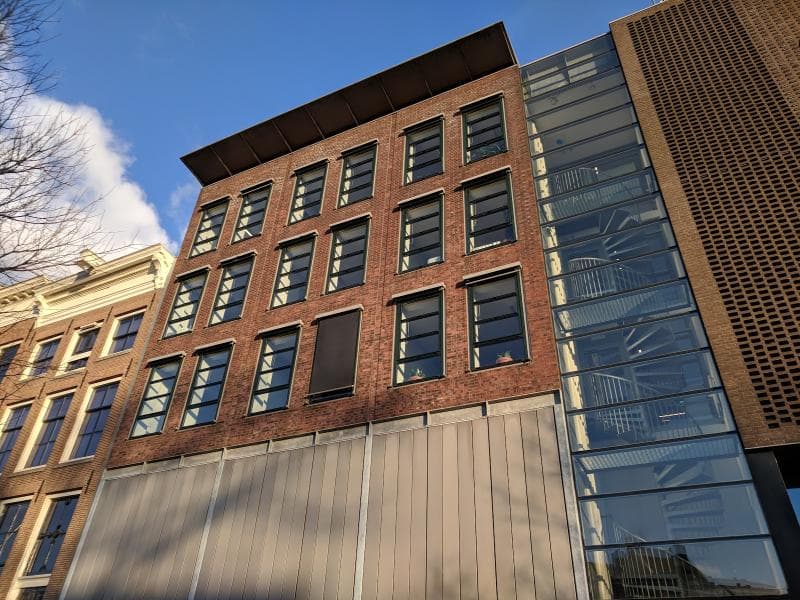
Explore Anne's Room inside the Anne Frank House in Amsterdam, Netherlands, a poignant symbol of hope and resilience during WWII.
Overview
Stepping into Anne's Room within the Anne Frank House in Amsterdam, Netherlands, is more than just entering a physical space; it is a profound journey into the past. This modest room, part of the Secret Annex, served as Anne Frank's sanctuary and a backdrop for her remarkable diary during World War II. The Anne Frank House museum, located at Prinsengracht 263, preserves the hiding place where Anne, her family, and four other people sought refuge from Nazi persecution for over two years. Today, it stands as a poignant memorial, inviting visitors to connect with Anne's story and reflect on the enduring themes of human resilience, persecution, and hope.
Unlike many museums that recreate historical settings, the rooms of the Secret Annex, including Anne's, are largely empty. This was a deliberate choice made by Otto Frank, Anne's father and the sole survivor of the eight people in hiding, to convey a powerful sense of absence and the void left by the Holocaust. This emptiness allows the visitor's imagination and Anne's words to fill the space, creating an intensely personal and often emotional experience.
History & Cultural Background
The building at Prinsengracht 263 has a history dating back to 1635, with the annex, or 'Achterhuis', where the hiding took place, built in 1739. Initially, it was a typical Amsterdam canal house with warehouses, and its narrow and deep structure was common due to historical tax practices based on street width. In 1940, Otto Frank moved his companies, Opekta and Pectacon, to this address.
When Anne's older sister Margot received a call-up for a labor camp in July 1942, the Frank family made the difficult decision to go into hiding in the Secret Annex, a hidden space behind Otto's business premises. They were soon joined by Hermann and Auguste van Pels and their son Peter, and later by Fritz Pfeffer. For 25 months, eight people lived concealed in these cramped quarters, with their entrance hidden behind a movable bookcase, a detail that has become iconic in Anne's story. Anne shared her small room with Fritz Pfeffer, a situation that often led to friction, as chronicled in her diary. Tragically, on August 4, 1944, their hiding place was betrayed, and all eight were arrested and deported to concentration camps. Only Otto Frank survived the war.
What Makes It Special
Anne's Room is special not for its furnishings, but for the tangible connection it offers to a young girl's remarkable spirit in the face of unimaginable adversity. It is here that Anne poured her thoughts, fears, and hopes into her diary, offering a unique firsthand account of life in hiding during the Holocaust. While the room itself is bare, traces of Anne's presence remain deeply moving. Visitors can still see the faded pencil marks on the wall where Otto Frank meticulously recorded the growing heights of Anne and Margot, a tender act of parental normalcy amidst their precarious existence. Perhaps most striking is the wall Anne decorated with pictures of movie stars, postcards, and royalty. These images, carefully pasted, were her window to the outside world, a defiant act of holding onto youth and dreams.
Stories, Fun Facts & Local Details
Life in the Secret Annex was a constant challenge, marked by strict routines to avoid detection. The occupants had to maintain absolute silence during the daytime while workers were present in the warehouse below. Using the bathroom was scheduled, and every noise was a potential risk. Anne's diary often details the tensions that arose from eight individuals sharing such a confined space, particularly her complex relationship with Fritz Pfeffer, her roommate. Despite the immense pressure, Anne found solace and purpose in her writing. Her room, though shared, became her private world, a canvas for her words and her hopes. The small detail of her growth marks on the wall – Anne grew over 13 centimeters during her time in hiding, while Margot grew only 1 centimeter – subtly highlights the passage of time and the stolen years of their adolescence.
Visitor Perspective
A visit to Anne's Room is a profoundly emotional experience for many. The narrow, steep stairs leading to the Secret Annex, and passing through the hidden bookcase, immediately transport visitors into the reality of their confinement. The self-guided tour, accompanied by an audio guide, allows for personal reflection. The absence of furniture, as per Otto Frank's wishes, forces visitors to confront the harsh reality of what was lost. Instead of seeing recreated domestic scenes, one feels the stark emptiness, which speaks volumes about the millions of lives extinguished. It is a somber journey, often leading to tears, but it also serves as a powerful reminder of Anne's legacy and the importance of combating prejudice and discrimination in all its forms.
Coordinates: 4.88432, 52.37525
View on Google Maps💬 How Travelers Describe This Place
Based on community votes
Beautiful
623Interesting
545Unique
343Must See
302Photogenic
20
Traveler Stories
Discover memorable experiences shared by travelers who have visited this place.
No traveler stories yet.
Be the first traveler to share what made this place memorable.

Tour
By
Spot
Discover amazing places around the world. Your journey starts here.
Explore
© 2026 TourBySpot. All rights reserved.