Amir Timur Square
Tashkent, Uzbekistan
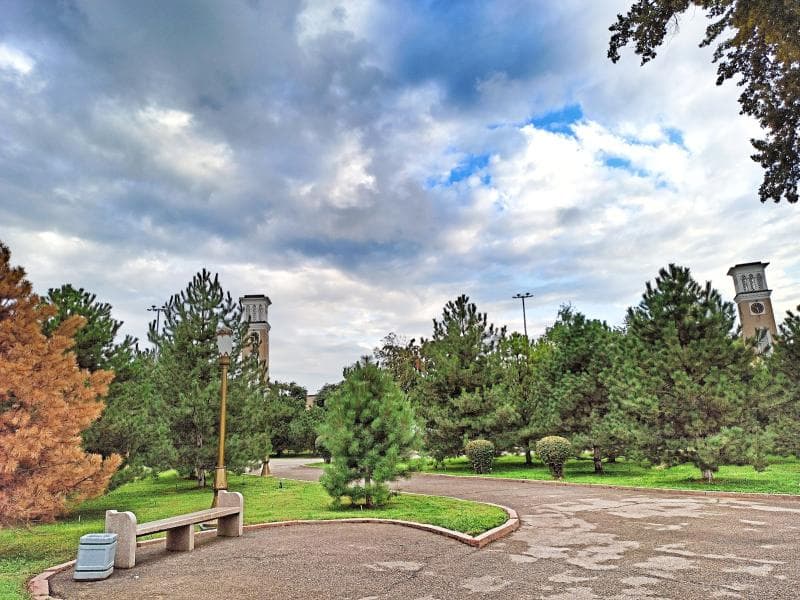
Discover Amir Timur Square in Tashkent, Uzbekistan – a historical crossroads with a majestic statue of Amir Timur, surrounded by iconic landmarks and rich cultural heritage.
Overview
Amir Timur Square, nestled in the vibrant heart of Tashkent, Uzbekistan, stands as a central landmark and a testament to the city's rich and multifaceted history. This expansive square is more than just a public space; it is a vital reference point from which eight main avenues of the city radiate, metaphorically linking Tashkent's past with its present and future. Adorned with lush greenery, seasonal flowerbeds, and calming fountains, the square offers a tranquil oasis amidst the urban bustle, inviting both locals and travelers to pause and absorb its historical grandeur.
At its core, the square is dominated by a majestic equestrian statue of Amir Timur, the revered 14th-century statesman and military leader who founded a vast empire stretching across Central Asia. This iconic monument serves as a powerful symbol of Uzbekistan's national pride and rich heritage. Surrounded by historically significant buildings such as the grand Uzbekistan Hotel, the stately University of Law, the insightful Amir Timur Museum, the iconic Tashkent Chimes, and the contemporary Palace of International Forums, Amir Timur Square encapsulates a unique blend of historical significance and modern civic life.
History & Cultural Background
The origins of Amir Timur Square date back to 1882 when it was established as a central park under the direction of General M. Chernyaev during the Russian Empire's Turkestan Military Command. Originally known as Konstantinovskaya Square, its initial design reflected European urban planning, intended to be the centerpiece of a 'new' Tashkent. Over the decades, the square served as a barometer of political change in Uzbekistan, with its central monument changing numerous times. It hosted statues of figures ranging from Governor-General Kaufmann and symbols of 'Free Workers' to Soviet leaders like Lenin, Stalin, and Karl Marx.
Following Uzbekistan's independence, the square underwent a significant transformation. In 1993, it was renamed Amir Timur Square, honoring the national hero. The bronze equestrian statue of Amir Timur, created by sculptor Ilkhom Jabbarov (and Kamol Dzhabbarov), was unveiled in 1994, solidifying the square's new identity. This renaming and the installation of Timur's statue marked a profound shift, celebrating Central Asia's indigenous history and cultural identity.
What Makes It Special
What makes Amir Timur Square truly special is its remarkable ability to narrate the complex history of Tashkent and Uzbekistan through its evolving landscape and central monument. The square's radial design, with eight avenues diverging from its center, mirrors the historical importance of Tashkent as a crossroads of the Great Silk Road, where ancient trade routes intersected. This urban planning ensures a harmonious flow and easy access to surrounding historical and modern institutions.
The centerpiece, the statue of Amir Timur on his rearing horse, is particularly striking. He is depicted in royal military attire, symbolizing his might and vision. Engraved on the pedestal in four languages—Uzbek, English, Arabic, and Russian—is Timur's famous motto: 'Power is in Justice' or 'Strength is in justice'. This inscription not only conveys Timur's philosophy of governance but also serves as a poignant reminder of the enduring values that shape the nation.
Stories, Fun Facts & Local Details
The square's history is rich with fascinating transitions. Before the current statue, the central pedestal was a revolving stage for ideological symbols. From a monument to Governor-General Kaufmann, it later held effigies of Free Workers, and then statues of Lenin, Stalin, and Karl Marx. Each change reflected a new chapter in the nation's political narrative, making the square a living historical document. The current statue of Amir Timur was unveiled in 1994 to mark the third anniversary of Uzbekistan's independence, signifying a reclamation of national heritage.
A curious detail lies within the square's design. The bronze relief behind the Amir Timur statue depicts his various conquests, and locals often touch the spot representing Samarkand for good luck. Another charming feature is the Tashkent Chimes, a clock tower that has been a city icon since 1947, providing a timeless backdrop to the square. In 2009, a new chime was built as a mirror reflection of the old one, creating an original 'gate' for the square.
Visitor Perspective
Amir Timur Square is easily accessible, notably via the Amir Timur metro station, making it a convenient starting point for exploring Tashkent. Visitors can enjoy a leisurely stroll through the square, admiring its meticulously maintained gardens and various architectural styles that reflect different epochs. The square is particularly charming in late April and early October when the weather is pleasant, and the fountains and flowers are at their peak.
Around the square, you will find several key attractions that enrich the visitor experience. The Amir Timur Museum offers deep insights into Timur's life and the Timurid dynasty, housing artifacts, manuscripts, and miniatures. The grand Palace of International Forums hosts significant state and international events, showcasing impressive modern architecture. Many travelers recommend setting aside 20-45 minutes to simply wander, take photographs, and soak in the atmosphere. The square often hosts cultural events and festivals, making it a dynamic place to experience local life and connect with Tashkent's vibrant pulse.
Coordinates: 69.27953, 41.3111
View on Google Maps💬 How Travelers Describe This Place
Based on community votes
Must See
910Unique
658Interesting
589Beautiful
374Photogenic
90
Traveler Stories
Discover memorable experiences shared by travelers who have visited this place.
No traveler stories yet.
Be the first traveler to share what made this place memorable.
Things to see at Amir Timur Square



Tour
By
Spot
Discover amazing places around the world. Your journey starts here.
Explore
© 2026 TourBySpot. All rights reserved.