Nearby Museums
Tashkent, Uzbekistan
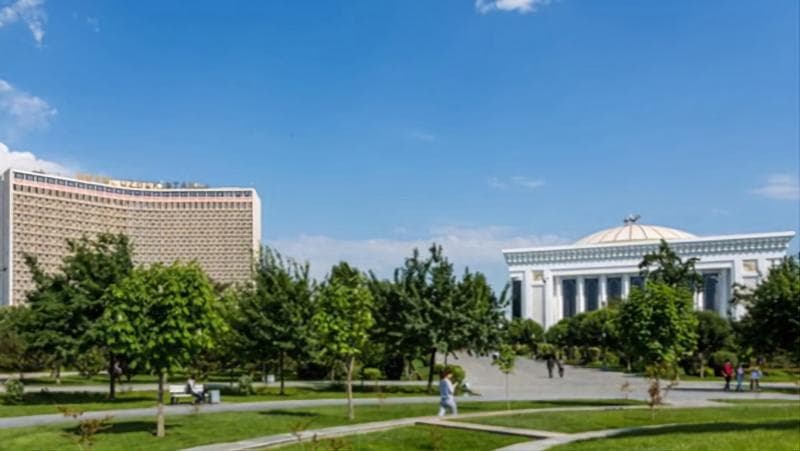
Discover Tashkent's rich heritage at museums near Amir Timur Square: Amir Timur Museum, State History, and Applied Arts. Explore ancient to modern Uzbek culture.
Overview
Amir Timur Square, a vibrant heart in Tashkent, Uzbekistan, serves as more than just a historical landmark; it is a gateway to the rich cultural tapestry of the nation. Surrounding this central green space, several esteemed museums invite curious travelers to delve into Uzbekistan's profound past and vibrant artistic heritage. These institutions collectively offer a comprehensive journey through centuries of civilization, from ancient artifacts to the glorious Timurid era and the intricate applied arts that define Uzbek craftsmanship. Each museum near the square provides a distinct window into the country's soul, making them essential stops for anyone wishing to truly understand this land at the crossroads of the Silk Road.
Among the most prominent are the Amir Timur Museum, dedicated to the legendary conqueror and his dynasty, the State Museum of History of Uzbekistan, chronicling the nation's vast timeline, and the State Museum of Applied Arts of Uzbekistan, showcasing exquisite traditional crafts.
History & Cultural Background
The history embodied by the museums around Amir Timur Square is deeply intertwined with Uzbekistan's identity. The square itself, originally laid out in the late 19th century during the Russian colonial period, has witnessed various transformations, reflecting the changing political and cultural landscape of Tashkent. It was once known as Konstantinovsky Square and later Revolution Square, before being renamed in honor of Amir Timur in the early 1990s following Uzbekistan's independence.
The **Amir Timur Museum**, a striking architectural edifice with a classical Oriental dome, opened its doors in 1996 to commemorate the 660th anniversary of Amir Timur's birth. Its establishment was a significant move in post-independence Uzbekistan to revive national spiritual and cultural heritage and acknowledge historical figures crucial to world civilization. Timur, a Turco-Mongol warlord, politician, and patron of arts and sciences, founded a vast empire in the 14th-15th centuries, laying the groundwork for the Timurid Renaissance.
The **State Museum of History of Uzbekistan**, founded much earlier in 1876 as the National Museum of Turkestan, is one of Central Asia's oldest museums. It has continuously collected and preserved artifacts that tell the story of the region from prehistoric times to the present day. The museum underwent significant renovations and reopened in July 2026, with its building itself designated a UNESCO World Heritage Site.
Meanwhile, the **State Museum of Applied Arts of Uzbekistan** began its life as a temporary exhibition for handicrafts in 1937, evolving into a permanent collection housed in a beautiful late 19th-century palace, originally belonging to a Russian diplomat. This museum reflects the continuous artistic traditions and skilled craftsmanship that have flourished in Uzbekistan for centuries.
What Makes It Special
Each museum near Amir Timur Square offers a unique and compelling experience. The **Amir Timur Museum** stands out not only for its impressive architecture, designed in the shape of a headgear worn by ancient Uzbek soldiers and adorned with exquisite mosaics and traditional motifs, but also for its thematic depth. It houses over 5,000 artifacts, with more than 2,000 on display, detailing Timur's genealogy, military campaigns, diplomatic relations, and the cultural flourishing of the Timurid era.
The **State Museum of History of Uzbekistan** is remarkable for its sheer scope, with a fund exceeding 250,000 exhibits. Its collection spans over a millennium, from Stone Age implements and ancient Buddhist art, like a well-preserved alabaster Buddha relief from Fayaz Tepe, to Islamic calligraphy, numismatic treasures from various dynasties, and ethnographic items. It provides an invaluable overview of Uzbekistan's formation and rich cultural amalgamation.
The **State Museum of Applied Arts of Uzbekistan** captivates visitors with its stunning collection of over 4,000 decorative art pieces. Housed in a building that is itself an architectural marvel with interiors refurbished in an Oriental style, the museum showcases wood carving, ceramics, metalwork, jewelry, embroidery, and textiles. It is a vibrant testament to the enduring skill and aesthetic sensibilities of Uzbek artisans.
Stories, Fun Facts & Local Details
Beyond the exhibits, these museums hold fascinating narratives. The Amir Timur Museum, for instance, prominently features a copy of the Usman Koran, a holy book of Muslims, in its central hall. There is also an impressive panel illustrating Amir Timur's life from birth to death, rendered in miniature art style. A fun fact is that the museum building's vibrant teal dome recalls the Gur-e Amir in Samarkand, Timur's final resting place, and its image was once featured on the 1000 som banknote, signifying its national importance.
The State Museum of History, with its vast numismatic collection, presents coins dating back to the 5th century BC, offering tangible links to ancient empires like the Achaemenids, Alexander the Great, and the Kushans. It also houses a bronze bracelet from the 2nd millennium BC, found in the Tashkent region, and rock carving drawings from Khorezm, showcasing the incredibly deep historical roots of the land.
The State Museum of Applied Arts not only displays beautiful objects but also provides insight into the architectural heritage. The building's layout and elements are characteristic of late 19th-century aristocratic households and mosques, offering a historical context to the art it contains. Each piece of art, from intricate suzanis (embroidered textiles) to colorful ceramics, tells a story of local traditions and regional artistic schools.
Visitor Perspective
Visiting the museums near Amir Timur Square offers a deeply enriching experience for any traveler. The central location of the square makes these cultural institutions easily accessible, often within walking distance or a short metro ride. The Amir Timur Museum is directly adjacent to the square, offering an immediate immersion into the legacy of the national hero. Many exhibits are presented with information in multiple languages, including English, making them accessible to international visitors.
Travelers often find themselves captivated by the detailed miniatures and manuscripts at the Amir Timur Museum, which bring the history of the Timurid empire to life. At the State Museum of History, the journey through Uzbekistan's ancient past is both educational and inspiring, particularly the archaeological finds and the comprehensive historical overview. While some artifacts might be replicas, the museum provides an excellent general idea of Central Asian history. The State Museum of Applied Arts is a visual delight, where the vibrant colors and intricate designs of traditional Uzbek crafts spark admiration and provide a deeper appreciation for the country's living artistic traditions. Engaging with these collections allows visitors to connect with the past, appreciate the artistic ingenuity, and understand the cultural continuity that defines Uzbekistan.
Coordinates: 69.27953, 41.3111
View on Google Maps💬 How Travelers Describe This Place
Based on community votes
Beautiful
910Must See
755Interesting
658Photogenic
589Unique
374
Traveler Stories
Discover memorable experiences shared by travelers who have visited this place.
No traveler stories yet.
Be the first traveler to share what made this place memorable.

Tour
By
Spot
Discover amazing places around the world. Your journey starts here.
Explore
© 2026 TourBySpot. All rights reserved.