Public Plaza
Tashkent, Uzbekistan
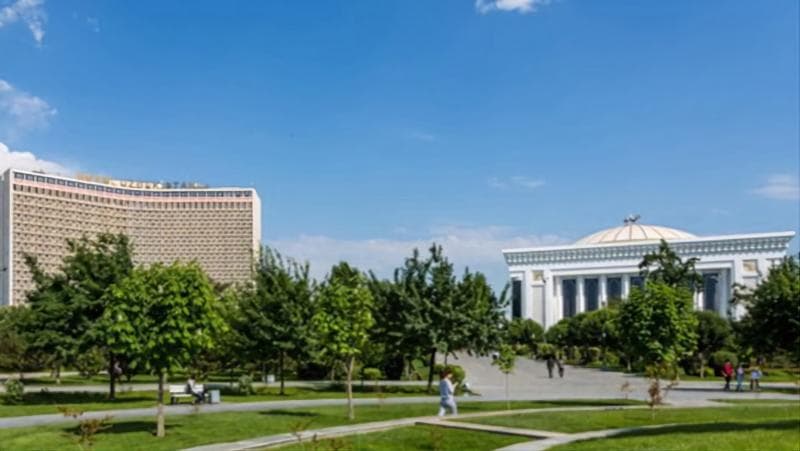
Discover Amir Timur Square, Tashkent's central public plaza. Explore its rich history, iconic equestrian statue, and surrounding architectural wonders in Uzbekistan.
Overview
Amir Timur Square, often considered the heart of Tashkent, Uzbekistan, serves as the city's quintessential public plaza. This vibrant green space is a central gathering point where locals and travelers alike can experience the pulse of the Uzbek capital. Radiating outwards from its core, eight major avenues connect the square to various parts of Tashkent, symbolizing its pivotal role in the city's urban fabric. Adorned with lush plantings, picturesque fountains, and comfortable seating, the square offers a tranquil oasis amidst the bustling city life. At its very center stands the magnificent equestrian statue of Amir Timur, the revered 14th-century statesman and military leader, whose legacy is deeply intertwined with the nation's identity. The square is surrounded by a collection of historically significant and architecturally impressive buildings, including the Hotel Uzbekistan, the University of Law, the Amir Timur Museum, the iconic Tashkent Chimes, and the grand Palace of Forums. Open to visitors year-round, day and night, Amir Timur Square is a place for leisurely strolls, enjoying the atmosphere, and reflecting on the rich history it embodies.
History & Cultural Background
The history of Amir Timur Square dates back to 1882 when it was initially established as a central park named Konstantinovskaya Square by Imperial Russian architects. Its strategic location at the intersection of two main streets, which followed ancient Silk Road trade routes, destined it to become a vital hub. Over the decades, the central monument of the square underwent a remarkable series of transformations, reflecting the shifting political landscapes of the region. Initially, it featured a statue of Governor-General Konstantin Kaufman. Following the 1917 Russian Revolution, the square was renamed Revolution Square, and various monuments to Soviet figures such as Lenin, Stalin, and Karl Marx successively occupied the central pedestal. It wasn't until 1993, after Uzbekistan gained independence, that the square received its current name, Amir Timur Square. The bronze equestrian statue of Amir Timur, sculpted by Ilkhom Jabbarov, was then unveiled in 1994, solidifying its status as a symbol of national pride and heritage. The square underwent a significant reconstruction in 2009, enhancing its beauty with modern amenities while preserving its historical essence.
What Makes It Special
Amir Timur Square's unique appeal lies in its blend of historical depth and modern vitality. Its distinctive circular shape, with eight alleys radiating like spokes of a wheel, is not merely an aesthetic choice but a historical echo of the city's radial planning and its role as a crossroads. The equestrian statue of Amir Timur is particularly striking, depicting the formidable ruler on a rearing horse, symbolizing strength and wisdom. Engraved on its granite pedestal is Timur's renowned motto, 'Power is in Justice,' inscribed in four languages, which serves as a powerful reminder of his governance philosophy. The array of architectural marvels encircling the square further enhances its distinctiveness. The Uzbekistan Hotel, with its unique book-like design, stands as a notable example of Soviet-era architecture. The Amir Timur Museum, dedicated to the Timurid dynasty, offers profound insights into an influential era of Central Asian history. The Tashkent Chimes, a beloved landmark since 1947, and the magnificent Palace of Forums, an impressive structure built for major international events, all contribute to the square's grandeur and significance.
Stories, Fun Facts & Local Details
Amir Timur Square holds many fascinating stories and local quirks that add to its charm. For instance, the main monument has changed several times throughout history, reflecting the shifting political narratives—from Tsarist generals to Soviet leaders, and finally, to the national hero Amir Timur. Locals often say that if you stand in the center of the square, you are truly at the 'heart' of Tashkent, as all major city routes once originated from this point. It's a popular spot for both locals and tourists to relax, meet friends, or simply observe the city's rhythm. During summer evenings, the square comes alive with families strolling, children chasing bubbles, and the aroma of grilled lamb and melon wafting from nearby cafes. There's an unspoken rule among locals to promenade counter-clockwise around the statue at dusk. A fun local tip suggests touching the spot representing Samarkand on the bronze relief behind Timur's statue for good luck, a gesture often performed by removing gloves first, as the metal warms under fingertips. The Tashkent Chimes, one of the famous clock towers near the square, has a unique origin story; its mechanism arrived as a military trophy from Eastern Prussia after World War II.
Visitor Perspective
For any traveler to Tashkent, Amir Timur Square is an essential first stop, offering a perfect introduction to the city's character. It's a place where history is palpable, yet the atmosphere is entirely modern and inviting. Visitors can easily spend an hour or more simply walking through the lush green areas, admiring the architecture, and soaking in the vibrant public life. The square is free to enter and accessible 24 hours a day. It's particularly enchanting at dusk when the monuments are beautifully illuminated, creating a magical ambiance for evening strolls. From here, many of Tashkent's other prominent attractions, like the Amir Timur Museum and Broadway Alley, are just a short walk away. The convenience of the Amir Timur Metro Station, located directly beneath the square, makes it incredibly easy to reach from anywhere in the city. Whether you're interested in history, architecture, or simply wish to experience the daily life of Tashkent, this central public plaza offers a welcoming and enriching experience.
Coordinates: 69.27952832497279, 41.31110281460375
View on Google Maps💬 How Travelers Describe This Place
Based on community votes
Photogenic
692Beautiful
674Must See
503Interesting
261Unique
49
Traveler Stories
Discover memorable experiences shared by travelers who have visited this place.
No traveler stories yet.
Be the first traveler to share what made this place memorable.

Tour
By
Spot
Discover amazing places around the world. Your journey starts here.
Explore
© 2026 TourBySpot. All rights reserved.