Central Gardens
Tashkent, Uzbekistan
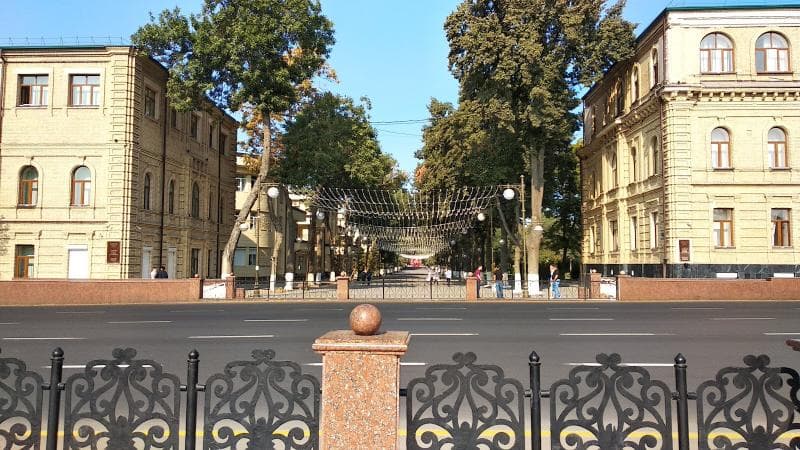
Discover the lush Amir Timur Square, Tashkent, Uzbekistan's central green heart, rich in history, iconic monuments, and cultural significance.
Overview
At the very heart of Tashkent, Uzbekistan, lies Amir Timur Square, a vibrant public space that serves as a central gathering point and a testament to the city's rich history and cultural identity. Often perceived by visitors as the 'central gardens' of the metropolis, the square is characterized by its lush greenery, refreshing fountains, and well-maintained pathways. It's a tranquil oasis amidst the bustling city, inviting both locals and travelers to pause, reflect, and enjoy the open air. From this central point, eight main avenues radiate outwards, making it a pivotal hub for navigating Tashkent. The square's focal point is the majestic equestrian statue of Amir Timur, the revered 14th-century Turco-Mongol conqueror and statesman, whose legacy profoundly shaped Central Asia.
History & Cultural Background
The history of what is now Amir Timur Square dates back to 1882 when it was established as a small park by order of General M. Chernyaev during the Russian Imperial era. Initially known as Konstantinovsky Square, it was designed in a classic European style with broad avenues and surrounding institutional buildings like gymnasiums, a normal school, and a state bank. Over the decades, the square underwent numerous transformations, mirroring the changing political landscape of the region. Its central monument changed several times, hosting statues of Governor-General K.P. Kaufman, various revolutionary obelisks, Joseph Stalin, and Karl Marx during different periods. Following Uzbekistan's independence, the square was renamed Amir Timur Square in 1994, and a new bronze monument of Amir Timur on a rearing horse was erected, symbolizing national pride and heritage. This shift marked a significant cultural revival, honoring a figure considered a national hero for his contributions to statehood, science, and culture.
What Makes It Special
What truly sets the central green area of Amir Timur Square apart is its blend of historical significance with its role as a contemporary urban sanctuary. The square is a 'radial ring park' where verdant spaces, vibrant flowerbeds, and calming fountains create a picturesque setting. The careful arrangement of greenery and water features offers a serene escape, making it a favorite spot for leisurely strolls and relaxation. The square is surrounded by historically important buildings, including the 'Uzbekistan' Hotel, the University of Law (formerly a women's gymnasium), the Amir Timur Museum with its distinctive azure dome, and the grand Palace of Forums. These architectural marvels not only contribute to the square's aesthetic appeal but also provide a glimpse into different epochs of Tashkent's development.
Stories, Fun Facts & Local Details
The square holds numerous interesting narratives. For instance, the renowned Tashkent Chimes, iconic clock towers that have become a symbol of the city, stand proudly near the square. Their mechanism, brought from Eastern Prussia as a military trophy in 1947, tells a unique story of post-war history. A controversial, yet significant, event occurred in 2009 when centuries-old chinor trees surrounding the monument were felled during a reconstruction, sparking public outcry. However, young trees and new plantings have since regenerated the green landscape. The monument to Amir Timur itself is particularly notable; the inscription on its plinth, 'Power is in Justice,' is engraved in four languages, reflecting Timur's famous motto and his emphasis on law and order.
Visitor Perspective
For a curious traveler, Amir Timur Square offers an immersive experience into Tashkent's soul. It's a place where history breathes through monuments and architecture, and where daily life unfolds amidst green tranquility. Visitors can begin their exploration here, as the square forms the literal center from which to venture into other parts of Tashkent. The surrounding recreational zones, with their lawns, flowers, and fountains, provide perfect opportunities for quiet contemplation or simply people-watching. Often, the square hosts various cultural events and celebrations, offering a chance to witness local traditions and vibrant community life. The square's accessibility, with a nearby metro station and numerous bus routes, ensures it's an easy and essential stop on any Tashkent itinerary.
Coordinates: 69.28327, 41.31267
View on Google Maps💬 How Travelers Describe This Place
Based on community votes
Must See
951Beautiful
491Unique
414Photogenic
310Interesting
277
Traveler Stories
Discover memorable experiences shared by travelers who have visited this place.
No traveler stories yet.
Be the first traveler to share what made this place memorable.

Tour
By
Spot
Discover amazing places around the world. Your journey starts here.
Explore
© 2026 TourBySpot. All rights reserved.