Ambras Castle
Innsbruck, Austria
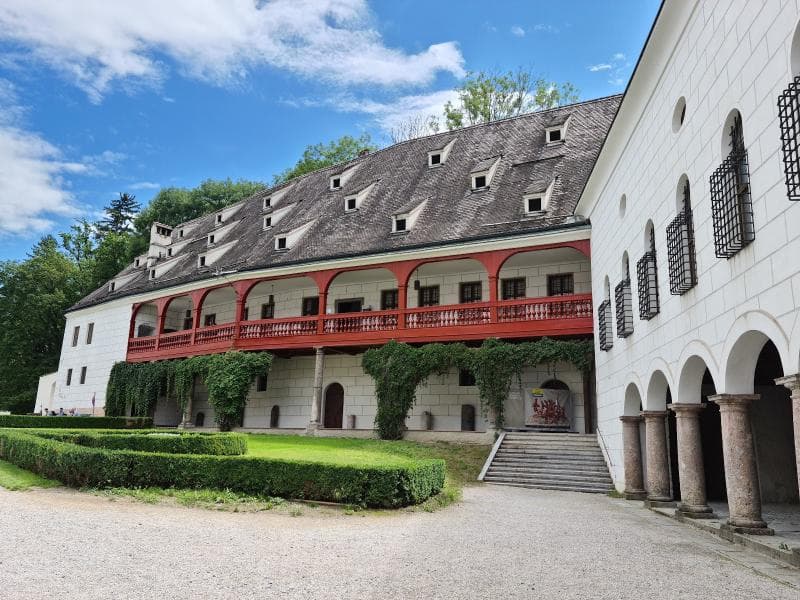
Discover Ambras Castle in Innsbruck, Austria – a Renaissance marvel and one of the world's oldest museums, home to Archduke Ferdinand II's unique collections and the stunning Spanish Hall.
Overview
Perched majestically in the hills above Innsbruck, Austria, Ambras Castle, or Schloss Ambras, is a Renaissance gem that offers a captivating journey into the past. Originally a medieval fortress, it was transformed in the 16th century into a magnificent residence and pioneering museum by Archduke Ferdinand II. Today, it stands as one of Tyrol's most significant cultural landmarks, renowned for its extraordinary collections that span art, natural history, and curiosities.
Visitors to Ambras Castle can explore the historic Upper Castle, the impressive Lower Castle housing the famous Armouries and the Chamber of Art and Curiosities, and the grand Spanish Hall. Surrounded by a sprawling park, the castle invites contemplation of its rich history and the visionary spirit of its founder.
History & Cultural Background
The origins of Ambras Castle trace back to a 10th-century fortification, which served as the seat of the powerful Counts of Andechs. After being destroyed in 1133, the site was eventually rebuilt. Its most defining transformation began in 1564 when Archduke Ferdinand II, sovereign of Tyrol and son of Emperor Ferdinand I, acquired the medieval complex.
Ferdinand II dedicated himself to converting the fortress into a splendid Renaissance castle, intended as a lavish gift for his beloved wife, Philippine Welser. Their marriage was morganatic and initially kept secret due to Philippine's commoner status, yet their union was marked by devotion. Philippine became a cherished figure among the local populace, admired for her charity and extensive knowledge of herbal medicine and culinary arts. Her influence is still seen in elements like her unique bathhouse.
Beyond being a residence, Ferdinand II envisioned Ambras as a museum, specifically commissioning the Lower Castle to house his vast collections. This groundbreaking initiative makes Ambras Castle one of the world's oldest museums, conceived from the outset to systematically display art and wonders.
What Makes It Special
What truly sets Ambras Castle apart is its status as arguably the world's oldest purpose-built museum, where collections have remained in their original location for centuries. Archduke Ferdinand II was not merely a collector but a visionary who created a structured display for his treasures, reflecting the Renaissance's burgeoning interest in art, science, and the natural world.
The castle's distinct components each offer a unique experience. The Spanish Hall is a breathtaking example of German Renaissance architecture, featuring an ornate wooden ceiling and 27 full-length portraits of Tyrolean rulers. It continues to host cultural events and concerts today. The Chamber of Art and Curiosities, a true 'Wunderkammer,' is a time capsule showcasing objects classified as 'artificialia,' 'naturalia,' 'scientifica,' 'exotica,' and 'mirabilia' – from intricate artworks and scientific instruments to exotic finds. Furthermore, the Armouries display magnificent suits of armor, including the 'Heroes' Armoury,' providing a glimpse into the martial culture of the past.
Stories, Fun Facts & Local Details
Archduke Ferdinand II's love story with Philippine Welser is central to Ambras Castle's charm. Despite societal disapproval of their marriage due to her non-noble birth, Ferdinand gifted her this grand castle, where they raised their family. Philippine's personal touch can still be seen in her bath chambers, an unusually large and luxurious amenity for the 16th century, and her famous cookbook, which survives as one of the oldest culinary manuscripts by a German-speaking woman.
The Chamber of Art and Curiosities holds some intriguing exhibits, including a notable 16th-century portrait of Vlad III Dracula, also known as Vlad the Impaler. Another unique aspect is the collection of portraits depicting individuals with hypertrichosis, a condition of excessive hair growth, which was later named 'Ambras syndrome' in reference to these very depictions.
Even the castle's park has tales to tell. Ferdinand II designed the gardens himself, incorporating elements like an artificial waterfall and a grotto where 'drinking games' were held for guests, featuring a 'trick chair' that would hold visitors until they consumed a large glass of wine. These whimsical details highlight the lively court life once enjoyed within these walls.
Visitor Perspective
Ambras Castle provides a rich and immersive experience for curious travelers. It operates daily from 10 a.m. to 5 p.m., though it closes during November, so planning your visit accordingly is advisable. Exploring the Upper Castle's Habsburg Portrait Gallery, wandering through the diverse collections in the Lower Castle, and marveling at the grandeur of the Spanish Hall offers a comprehensive view of Renaissance life and artistic achievement.
The extensive castle grounds, with their serene Paradise Garden and Apothecary Garden, offer peaceful spaces for a stroll. The castle is part of the KHM Museum Association, ensuring its collections are well-preserved and presented. Visitors can appreciate the historical and cultural significance of this remarkable site, walking in the footsteps of Archduke Ferdinand II and Philippine Welser, and discovering the 'first museum in the world' in its original glory.
Coordinates: 11.43472, 47.25667
View on Google Maps💬 How Travelers Describe This Place
Based on community votes
Must See
710Unique
102Interesting
102Photogenic
95Beautiful
87
Traveler Stories
Discover memorable experiences shared by travelers who have visited this place.
No traveler stories yet.
Be the first traveler to share what made this place memorable.
Things to see at Ambras Castle



Tour
By
Spot
Discover amazing places around the world. Your journey starts here.
Explore
© 2026 TourBySpot. All rights reserved.