Lower Castle Exhibits
Innsbruck, Austria
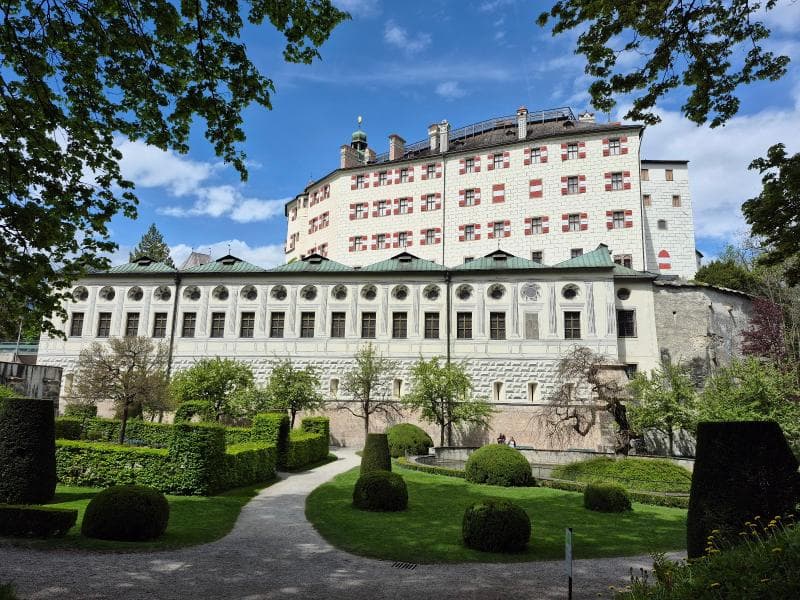
Explore the Lower Castle Exhibits at Ambras Castle in Innsbruck, Austria, featuring the world's oldest Kunstkammer and historic armouries.
Overview
Nestled amidst the picturesque landscape above Innsbruck, Austria, Ambras Castle stands as a testament to Renaissance grandeur and intellectual curiosity. Within its walls, the Lower Castle exhibits offer a captivating journey into the mind of a 16th-century Habsburg prince, Archduke Ferdinand II. This remarkable section of the castle houses two of the world's oldest and most significant museum collections: the Chamber of Art and Curiosities, known in German as the Kunst- und Wunderkammer, and the meticulously preserved Armouries. These exhibits were revolutionary for their time, designed not merely as private collections but as systematically organised public displays, marking Ambras Castle as arguably the first museum in the world.
Visiting the Lower Castle provides a unique opportunity to immerse oneself in a bygone era, where art, science, and the exotic converged. It offers a clear window into the Renaissance worldview, showcasing the era's fascination with both human achievement and the wonders of the natural world. Each display invites contemplation, drawing visitors into the intellectual and cultural landscape of Archduke Ferdinand II's court.
History & Cultural Background
The cultural and historical importance of Ambras Castle is inextricably linked to Archduke Ferdinand II (1529–1595), who served as the princely sovereign of Tyrol and Further Austria. Around 1564, Ferdinand II began transforming the medieval fortress into a magnificent Renaissance palace, initially as a gift for his secret wife, Philippine Welser. His true passion, however, lay in collecting, and he soon commissioned the construction of the Lower Castle specifically to house his extensive and diverse collections.
The Armouries and the Chamber of Art and Curiosities were established between 1572 and 1583, with the aim of systematically collecting and presenting objects. This innovative approach positioned Ferdinand II as a pioneer of modern museology. His Kunstkammer was not just a random assortment but a 'wonder room' designed to showcase artificialia (art and craftsmanship), naturalia (natural objects), scientifica (scientific instruments), exotica (objects from distant lands), and mirabilia (rarities and wonders).
What Makes It Special
What sets the Lower Castle Exhibits apart is their authenticity and Archduke Ferdinand II's visionary approach to collecting. The Chamber of Art and Curiosities is the only Kunstkammer of the Renaissance era that has been preserved at its original location, within the very buildings constructed for it. This allows visitors to experience the collection as Ferdinand II intended, offering an unparalleled insight into a 16th-century princely collection. It houses an astonishing array of objects, from intricately crafted glass figures and coral collections to mechanical toys, ancient scientific instruments, and exotic artifacts like a samurai armour and a Ryukyu bowl.
The Armouries, another core part of Ferdinand's collection, feature masterpieces of European armourer's art. Here, one can find rare 15th-century jousting armour from Emperor Maximilian I's collection, as well as suits of armour belonging to famous 16th-century commanders. Ferdinand II even had his own armour included, joining the ranks of the 'heroes' he sought to commemorate. The systematic arrangement of these armours and the accompanying portraits of their owners was a groundbreaking concept, creating what was known as the 'Armoury of Heroes' or 'Heldenrüstkammer'.
Stories, Fun Facts & Local Details
The exhibits at Ambras are rich with fascinating stories and unique details. The Chamber of Art and Curiosities features a famous portrait of a man with hypertrichosis (excessive hair growth), historically known as the 'Hirsute Man' or Petrus Gonsalvus, whose condition even led to the term 'Ambras syndrome'. Another thought-provoking piece is the painting of a 'Disabled Man', believed to be a jester, which was intentionally shocking to 16th-century viewers, revealing his body only upon lifting a paper covering.
Archduke Ferdinand II's secret marriage to Philippine Welser, a commoner, is a romantic undercurrent to the castle's history. Despite her non-royal status, Philippine was beloved by the people of Tyrol for her charity and compassion. While her living quarters were in the Upper Castle, her presence undoubtedly influenced the cultural vibrancy of Ambras. The collections themselves are a testament to the Renaissance fascination with 'wonders of nature' and 'artificialia', showcasing the era's blend of nascent scientific inquiry, artistic skill, and exotic exploration.
Visitor Perspective
Stepping into the Lower Castle Exhibits is like stepping directly into the heart of the Renaissance. The historical authenticity and meticulous preservation create an immersive experience that transports visitors back to the 16th century. One can almost feel the presence of Archduke Ferdinand II, a prince who, with his groundbreaking collections, essentially invented the modern museum. The layout, the variety of objects, and the sheer volume of historical artifacts encourage a slow, thoughtful exploration. Whether marveling at the intricate armours that once graced battlefields and tournaments, or pondering the exotic and curious items in the Kunstkammer, each piece tells a story of an era defined by discovery, artistry, and a boundless intellectual appetite. It is a journey that appeals not just to history buffs, but to anyone curious about the origins of our modern understanding of collecting and exhibiting the world's treasures.
Coordinates: 11.43472, 47.25667
View on Google Maps💬 How Travelers Describe This Place
Based on community votes
Unique
896Photogenic
550Must See
102Beautiful
95Interesting
28
Traveler Stories
Discover memorable experiences shared by travelers who have visited this place.
No traveler stories yet.
Be the first traveler to share what made this place memorable.

Tour
By
Spot
Discover amazing places around the world. Your journey starts here.
Explore
© 2026 TourBySpot. All rights reserved.