Yerevan Opera Theatre
Yerevan, Armenia
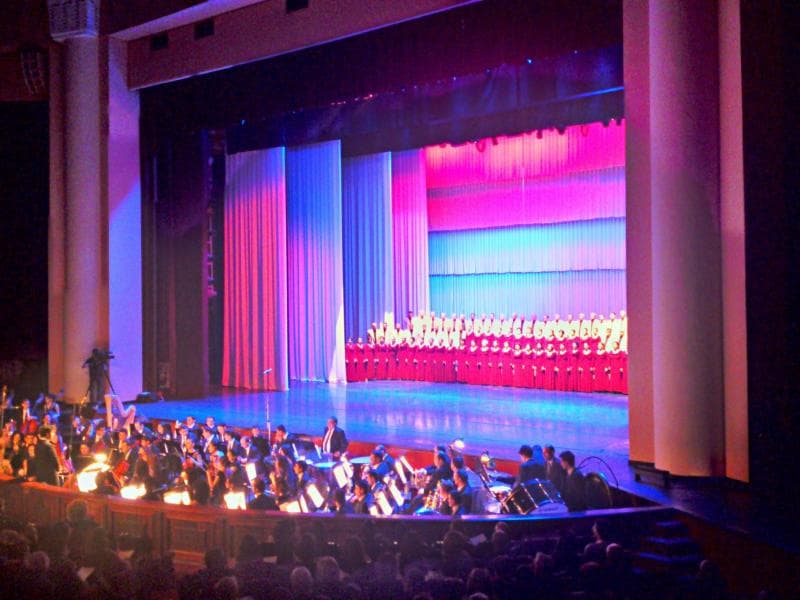
Discover the Yerevan Opera Theatre in Yerevan, Armenia. Explore its stunning architecture, rich history, and vibrant performances of opera and ballet.
Overview
The Alexander Spendiaryan National Academic Opera and Ballet Theatre, often simply called the 'Opera' by locals, stands as a crowning jewel in the heart of Yerevan, Armenia. More than just a venue for performing arts, it is a significant architectural landmark and a vibrant cultural hub for the nation. Designed by the eminent Armenian architect Alexander Tamanian, this iconic building showcases a unique blend of classical and traditional Armenian architectural elements, making it instantly recognizable and a point of national pride. Since its official opening in 1933, the theatre has played a pivotal role in the development and promotion of Armenian opera and ballet, hosting both national masterpieces and international works. It is a place where Armenian musical history truly comes alive, embodying the country's rich artistic traditions.
History & Cultural Background
The story of the Yerevan Opera Theatre began on November 28, 1930, with its groundbreaking, marking the 10th anniversary of Soviet Armenia. The theatre officially opened its doors on January 20, 1933, with a performance of Alexander Spendiaryan's opera 'Almast,' to whom the venue is named in honor. The building's design was conceived by Alexander Tamanian, a renowned Armenian architect and city planner, who envisioned it as a central element in Yerevan's urban layout. Tamanian worked on the project until his death in 1936, after which his son, Gevorg Tamanian, continued the work, overseeing the completion of the theatre hall in 1939. Large-scale construction was fully completed by 1953, reaching its present architectural form.
The establishment of the theatre greatly spurred the creation of new national operas and ballets. Notable early Armenian productions included Aram Khachaturian's ballet 'Happiness,' which later evolved into the internationally acclaimed 'Gayane,' and Armen Tigranian's opera 'Anoush,' which has remained a core part of the theatre's repertoire since its staging in 1935. In 1937, Tamanian's design for the opera house was awarded the 'Grand Prix' at the International Exhibition in Paris, gaining international recognition for its architectural brilliance. In 1956, the theatre was granted the status of National Academic Opera and Ballet Theatre, solidifying its importance in Armenia's cultural landscape.
What Makes It Special
What truly sets the Yerevan Opera Theatre apart is its distinctive architectural design and its exceptional acoustic properties. Alexander Tamanian's vision resulted in a unique semicircular building that ingeniously connects two main halls: the Alexander Spendiaryan Opera and Ballet National Theatre and the Aram Khachaturian Concert Hall. These two auditoriums, designed as self-sufficient amphitheatres, are known for their magnificent acoustics, which enhance every performance. The use of stone construction and the acoustically-generated form help dampen unnecessary noise reflection, ensuring superior sound transmission for audiences.
The building's aesthetic is a testament to Tamanian's genius, blending the best traditions of medieval Armenian architecture with stylized national ornaments, resulting in a classical yet distinctly Armenian landmark. This blend of historical reverence and functional brilliance earned its design international acclaim. The theatre's central location in Yerevan, surrounded by green spaces and directly opposite Freedom Square, further enhances its special status as a focal point for city life and cultural expression. It is a symbol of Armenia's enduring artistic spirit, a place where the grandeur of classical arts is deeply rooted in national identity.
Stories, Fun Facts & Local Details
The Yerevan Opera Theatre is not just a building; it's interwoven with local life and boasts several memorable stories and fun facts. One particularly famous event occurred in April 2015 when American rapper Kanye West performed a free midnight concert outside the theatre, near Swan Lake, drawing a massive crowd. This impromptu performance highlighted the theatre's role as a public space and cultural magnet, extending beyond traditional opera and ballet.
The area surrounding the theatre is a lively hub. Freedom Square, located directly in front, is adorned with statues of prominent Armenian cultural figures: the poet Hovhannes Tumanyan and the composer Alexander Spendiaryan, lending a profound sense of history to the locale. The nearby Swan Lake, often a tranquil spot with actual swans in warmer months, transforms into an ice rink in winter, making the theatre a year-round attraction. Numerous cafes populate the adjacent district, creating a popular gathering spot for Yerevan's youth and adding to the vibrant atmosphere, especially in the evenings. The theatre's long-standing success includes performances in over 20 countries, showcasing Armenian talent on a global stage. It has also hosted diverse artists, including Charles Aznavour and Ian Anderson.
Visitor Perspective
Visiting the Yerevan Opera Theatre offers a captivating experience, whether you're attending a performance or simply admiring its architecture. The season typically runs from September through June, showcasing a rich calendar of operas, ballets, and concerts. Productions range from traditional Italian and Russian operas to innovative Armenian ballets, ensuring a diverse repertoire. The exceptional quality of the in-house orchestra and talented singers is frequently praised by visitors.
For those unable to attend a performance, the theatre also offers dedicated guided 'Opera Tours', allowing visitors to explore the halls, backstage areas, production workshops, and even meet some of the artists. This provides a unique behind-the-scenes glimpse into one of Yerevan's most significant cultural institutions. The theatre's central location makes it easily accessible, surrounded by other attractions like Freedom Square, Northern Avenue, and the Cascade Complex. Before and after performances, the surrounding park, with its lit fountains in the evenings, becomes a social hub, where patrons can enjoy the lively atmosphere and nearby cafes. Tickets are remarkably affordable by Western standards, making world-class opera and ballet accessible to many. The overall experience is often described as intimate and unforgettable, a true immersion into Armenian culture and artistry.
Coordinates: 44.509, 40.1848
View on Google Maps💬 How Travelers Describe This Place
Based on community votes
Must See
517Beautiful
422Unique
394Interesting
269Photogenic
145
Traveler Stories
Discover memorable experiences shared by travelers who have visited this place.
No traveler stories yet.
Be the first traveler to share what made this place memorable.
Things to see at Yerevan Opera Theatre



Tour
By
Spot
Discover amazing places around the world. Your journey starts here.
Explore
© 2026 TourBySpot. All rights reserved.