Ballet Theatre
Yerevan, Armenia
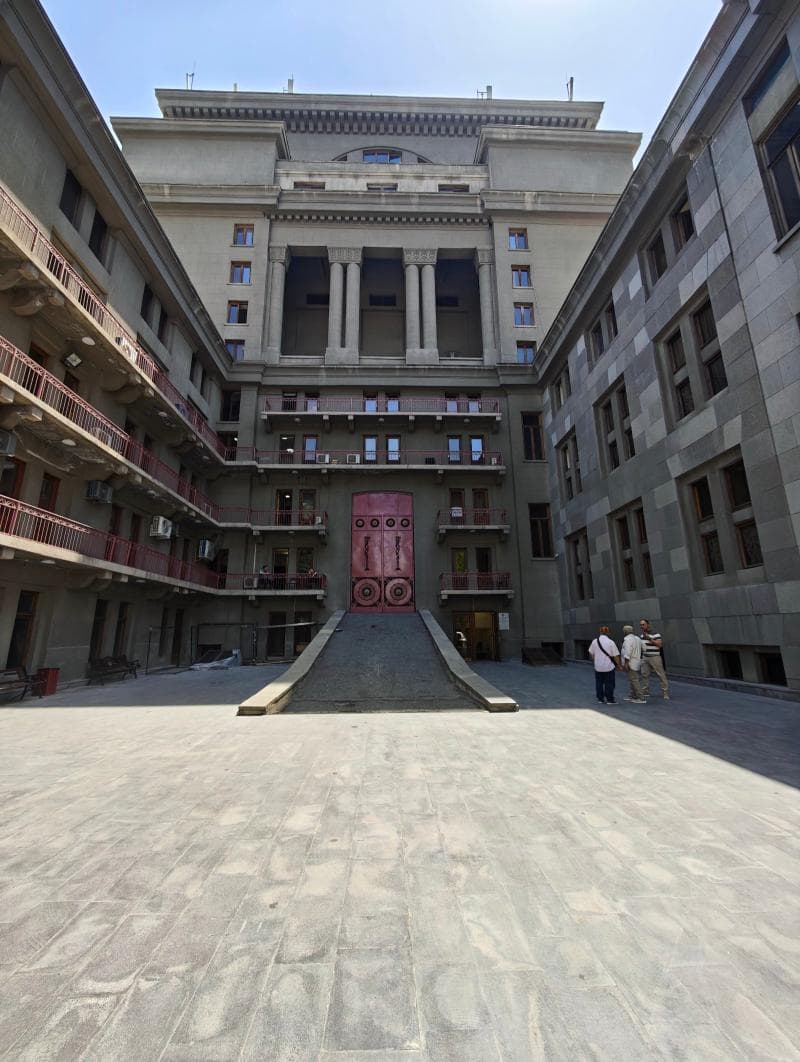
Discover the Ballet Theatre at Yerevan Opera, Armenia's cultural heart. Explore its history, unique architecture, and world-class ballet performances.
Overview
Nestled in the vibrant heart of Yerevan, Armenia, the Ballet Theatre, an integral part of the Alexander Spendiaryan National Academic Opera and Ballet Theatre, stands as a grand testament to the nation's rich artistic heritage. Often simply referred to by locals as 'The Opera', this architectural marvel by Alexander Tamanian is not merely a venue; it is a cultural landmark, a vibrant stage where the universal language of dance eloquently intertwines with Armenian spirit. The theatre is celebrated for its commitment to both classical and contemporary ballet, regularly enchanting audiences with world-renowned performances and nurturing local talent.
The ballet company, established shortly after the theatre's inauguration, quickly became a cornerstone of Armenia's performing arts, contributing significantly to the cultural fabric of Yerevan. Visitors are drawn to its opulent design, excellent acoustics, and the chance to witness powerful storytelling through the grace and precision of ballet. Whether you are a seasoned connoisseur or a curious traveler, the Ballet Theatre offers a profound and memorable cultural experience within the captivating city of Yerevan.
History & Cultural Background
The vision for the Yerevan Opera Theatre, housing its esteemed Ballet Theatre, began in January 1926 with the approval for a People's House. Architect Alexander Tamanian was entrusted with its design, aiming to blend modern requirements with traditional Armenian art and classical aesthetics. The ground-breaking took place on 28 November 1930, marking the 10th anniversary of Soviet Armenia, and the theatre officially opened its doors on 20 January 1933, with the premiere of Alexander Spendiaryan's opera 'Almast'.
Shortly after the theatre's foundation in 1933, a dedicated ballet troupe was established. This troupe quickly rose to prominence, staging its first full ballet performance, Tchaikovsky's 'Swan Lake', in 1935. This marked a pivotal moment, ushering in an era where ballet would become a defining artistic expression in Armenia. The theatre's role was not only to present international masterpieces but also to foster a distinct Armenian ballet tradition, with Aram Khachaturian's 'Happiness' (later evolving into 'Gayane') becoming the first Armenian ballet.
Tamanian's architectural brilliance earned the building the Grand Prize at the 1937 Paris World Expo, showcasing Armenia's unique classical architecture on a global stage. The theatre's construction, while inaugurated in 1933, continued in phases, with significant completion in 1939 under his son's supervision and final touches in 1953, creating the magnificent structure we see today.
What Makes It Special
The Ballet Theatre in Yerevan is special for several compelling reasons. Architecturally, it is an exquisite example of Alexander Tamanian's 'Armenian classical style', synthesizing neoclassical European forms with decorative motifs from medieval Armenian architecture. The characteristic pink-to-orange tufa stone, which gives Yerevan its 'Pink City' nickname, contributes to its unique aesthetic.
Artistically, the theatre upholds a high standard of ballet performance, reflecting the excellent Soviet classical training tradition. The Armenian ballet company has produced internationally touring soloists and maintains a repertoire that skillfully balances classical masterpieces like 'Swan Lake' and 'Romeo and Juliet' with significant Armenian works, most notably Aram Khachaturian's 'Gayane' and 'Spartacus'. Attending a performance of 'Gayane' or 'Spartacus' in the theatre where the composer is honored adds a profound resonance to the experience.
Furthermore, its central location in Freedom Square, surrounded by bustling cultural life, makes it a vibrant hub. The theatre's two main halls, including the Alexander Spendiaryan Opera and Ballet National Theatre with approximately 1070 seats, boast exceptional acoustics, crucial for the immersive experience of ballet.
Stories, Fun Facts & Local Details
A fascinating detail about the Yerevan Opera Theatre's design is its circular structure, which ingeniously houses two distinct halls: the Alexander Spendiaryan Opera and Ballet National Theatre and the Aram Khachaturian Concert Hall. This dual functionality allows for a diverse program of both operatic and ballet performances, alongside symphonic concerts.
The theatre is deeply intertwined with the legacy of Aram Khachaturian, one of Armenia's most renowned composers. The famous 'Sabre Dance' from his ballet 'Gayane' is perhaps the most widely recognized piece of music associated with Armenia globally. Witnessing 'Gayane' on its home stage in Yerevan is a truly immersive cultural experience.
The area surrounding the theatre, Freedom Square, is a popular gathering place for locals, often hosting festivals and street performers. This creates a lively atmosphere before and after performances, allowing visitors to soak in the local culture. Guided tours are available, offering a rare opportunity to explore backstage areas, production workshops, and even meet artists, providing an intimate glimpse into the theatre's inner workings.
Visitor Perspective
For a curious traveler, visiting the Ballet Theatre within the Yerevan Opera Theatre offers an opportunity to engage with high art in a truly authentic setting. The experience begins even before entering the theatre, as its impressive façade and central location on Freedom Square invite admiration. Many visitors praise the stunning architecture and the welcoming atmosphere.
Tickets for performances can be purchased on-site or online, though it's advisable to book in advance for popular shows. While attending a full ballet performance is highly recommended, those with limited time can also opt for a guided tour, which provides a comprehensive look at the theatre's history and architectural triumphs, including access to areas not typically seen by the public.
The theatre's repertoire is diverse, featuring not only classical ballets but also innovative modern productions by Armenian, Russian, and European composers. The quality of performances, often featuring leading Armenian artists and international guest stars, is consistently high, ensuring a world-class artistic experience. The excellent acoustics of the hall enhance every note and movement, making for an unforgettable evening.
Coordinates: 44.514898207623155, 40.185800904909975
View on Google Maps💬 How Travelers Describe This Place
Based on community votes
Photogenic
964Unique
926Beautiful
646Interesting
482Must See
380
Traveler Stories
Discover memorable experiences shared by travelers who have visited this place.
No traveler stories yet.
Be the first traveler to share what made this place memorable.

Tour
By
Spot
Discover amazing places around the world. Your journey starts here.
Explore
© 2026 TourBySpot. All rights reserved.