Vrelo Bosne
Sarajevo, Bosnia and Herzegovina
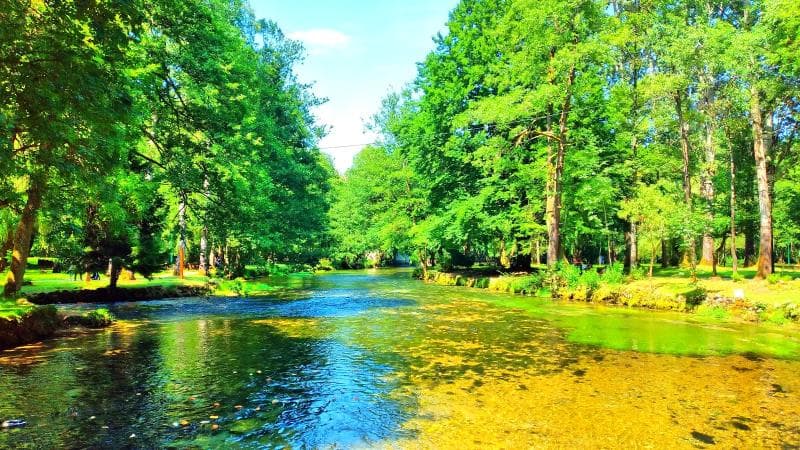
Explore Vrelo Bosne, the stunning natural spring park in Sarajevo, Bosnia and Herzegovina, where the Bosna River originates amidst lush beauty.
Overview
Nestled at the foot of Mount Igman, on the outskirts of Sarajevo, Bosnia and Herzegovina, lies Vrelo Bosne, a breathtaking natural monument and public park. This serene oasis, meaning 'Spring of the Bosna River,' marks the exact source of the Bosna River, one of the country's most significant waterways. Spread across approximately 603 hectares, Vrelo Bosne offers a tranquil escape from urban life, characterized by its crystal-clear waters, lush greenery, and a network of small islands connected by charming wooden bridges. It is a beloved destination for both locals and travelers seeking solace in nature's embrace.
The park's main entrance is often accessed via the historic Velika Aleja, or 'Great Avenue,' a picturesque 3.5-kilometer promenade lined with centuries-old horse chestnut and plane trees. This tree-lined path sets the tone for a visit, inviting leisurely strolls, bicycle rides, or traditional horse-drawn carriage journeys, known locally as 'fijakeri.'
History & Cultural Background
The history of Vrelo Bosne and its surrounding area, Ilidža, is deeply intertwined with centuries of human activity and natural reverence. Ilidža itself boasts an archaeological history dating back as far as 2400–2000 BC, indicating its long-standing appeal. During the Roman period, the area was known for its healing waters, with a settlement called Aquae Sulphurae, suggesting the thermal springs of Ilidža have been valued for millennia. A Roman Bridge, not far from Vrelo Bosne, built between 1530 and 1550 using original Roman stones, stands as a testament to this ancient connection.
The present-day appearance of the park, particularly the Velika Aleja, was significantly shaped during the Austro-Hungarian era. Planted in 1892, the avenue with its grand trees became a symbol of the period's elegant leisure. Vrelo Bosne was officially recognized and protected as a natural monument in 1977, a status further solidified in 2006. However, the park faced hardship during the Bosnian War (1992-1995) when many trees were cut for fuel. A remarkable restoration effort by local youth and international ecological organizations in 2000 brought the park back to its former splendor, showcasing a community's dedication to preserving its natural heritage.
What Makes It Special
What truly sets Vrelo Bosne apart is the sheer purity and abundance of its natural springs. These are not merely trickles, but multiple powerful resurgences emerging from beneath the limestone mass of Mount Igman, forming the crystal-clear headwaters of the Bosna River. The water here is so pristine that it serves as a significant source of drinking water for Sarajevo.
The park is a vibrant ecosystem, boasting a rich biodiversity. Visitors can observe various bird species, including graceful swans and ducks gliding across the calm waters, as well as native brown trout in the transparent pools. The mature forests are home to a diversity of plant life, with distinctive avenues of horse chestnut, London plane, and lime trees, transitioning into natural riparian forests of alder, willow, and ash. This ecological richness contributes to a remarkably fresh atmosphere, providing a stark and refreshing contrast to city environments.
Stories, Fun Facts & Local Details
Vrelo Bosne has long been a cherished retreat for Sarajevans, a place where generations have come to unwind and connect with nature. It's often said that 'you haven't truly visited Sarajevo if you haven't spent at least half a day at Vrelo Bosne.' The park's exceptionally cold and clear water is famous, with locals jokingly remarking that 'your teeth will tingle from the cold' if you dare to taste it directly. While the spring water is drinkable, it's generally recommended to exercise caution.
The traditional 'fijakeri' horse-drawn carriage rides along Velika Aleja are a quintessential Vrelo Bosne experience, a charming echo of Austro-Hungarian times. These carriages have been operating since 1895, making the journey to the springs a step back in time. For many, the name 'Bosna' itself is thought to derive from an ancient Indo-European word meaning 'water,' a fitting etymology for a river whose source is so celebrated. The park is also notably cooler than the city of Sarajevo during the hot summer months, making it a popular refuge from the heat.
Visitor Perspective
A visit to Vrelo Bosne typically begins with the scenic journey down Velika Aleja, whether on foot, by rented bicycle, or in a horse-drawn carriage. Upon entering the main park area, visitors are greeted by a captivating landscape of bubbling springs, small waterfalls, and interconnected islands. Wooden walkways and bridges crisscross the water, offering intimate views of the clear streams and allowing for serene exploration.
The park is well-equipped for a relaxing day out, featuring picnic areas, benches, covered rest spots, and playgrounds for children. Cafes and restaurants are available, often serving local specialties like freshwater trout. Vrelo Bosne is accessible year-round, though spring and autumn showcase particularly beautiful foliage and stronger water flow. While there is a minimal entrance fee, it contributes to the upkeep of this protected natural treasure. It is easily reachable from Sarajevo by car, public transport (tram to Ilidža, followed by a walk or carriage ride), offering a peaceful and refreshing half-day excursion.
Coordinates: 18.269447, 43.818867
View on Google Maps💬 How Travelers Describe This Place
Based on community votes
Must See
872Beautiful
684Unique
363Interesting
250Photogenic
88
Traveler Stories
Discover memorable experiences shared by travelers who have visited this place.
No traveler stories yet.
Be the first traveler to share what made this place memorable.
Things to see at Vrelo Bosne



Tour
By
Spot
Discover amazing places around the world. Your journey starts here.
Explore
© 2026 TourBySpot. All rights reserved.