Forest Trails
Sarajevo, Bosnia and Herzegovina
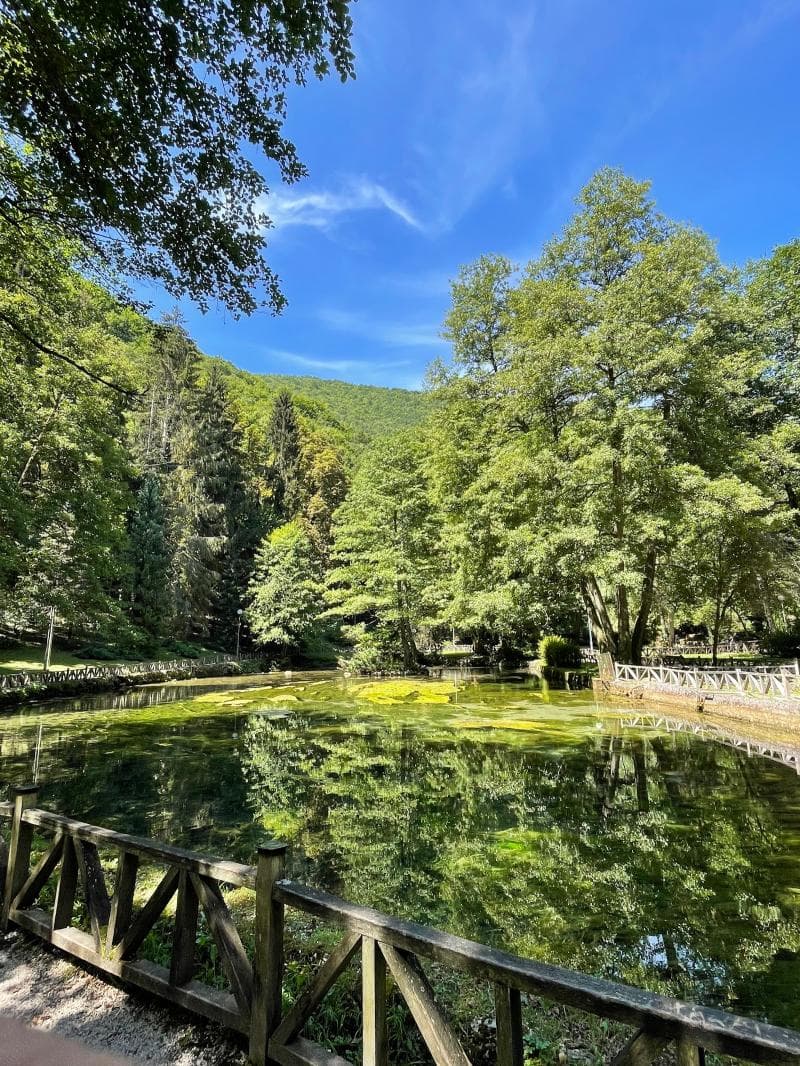
Explore the serene Forest Trails of Vrelo Bosne in Sarajevo, Bosnia and Herzegovina. Discover natural springs, rich history, and lush landscapes.
Overview
The ‘Forest Trails’ within Vrelo Bosne, located in Sarajevo, Bosnia and Herzegovina, refer to the extensive network of walking paths that meander through this stunning natural monument. Vrelo Bosne, meaning 'Spring of the Bosna River,' is nestled at the foothills of Mount Igman, providing a serene escape on the outskirts of the vibrant city. This protected natural area spans approximately 603 to 617 hectares, encompassing the crystal-clear springs that give rise to the Bosna River. Visitors can explore a landscape defined by numerous small islands connected by picturesque wooden bridges, bubbling streams, and small waterfalls that contribute to the river's formation. The air here is noticeably cooler and fresher than in the city, especially during the warmer months, making it a beloved retreat for both locals and tourists seeking tranquility amidst lush greenery.
The park's charm is further enhanced by its rich biodiversity, featuring diverse flora and fauna, including swans and ducks gracefully gliding across the calm waters, as well as indigenous brown trout in its streams. The walking trails are suitable for leisurely strolls, jogging, and cycling, offering a chance to immerse oneself in nature's embrace. The journey to the heart of Vrelo Bosne often begins with a scenic ride or walk along the Velika Aleja (Great Alley), a 3.5-kilometer tree-lined promenade that adds to the overall enchanting experience.
History & Cultural Background
Vrelo Bosne and its surrounding area are steeped in history, reflecting layers of civilizations that have recognized its unique natural value. The broader Ilidža municipality, where Vrelo Bosne is situated, has archaeological significance dating back as far as 2400–2000 BC. During the Ottoman period, the region was renowned for its healing thermal waters, leading to the development of the Ilidža spa town. A notable historical landmark is the Roman Bridge, located not far from the springs, which was rebuilt between 1530 and 1550 using original Roman stones, connecting Romans with the ancient village of Aquae Sulphurae.
The current appearance of the park was largely shaped during the Austro-Hungarian era (1878-1918). The iconic Velika Aleja, planted in 1892, is a testament to this period, featuring a beautiful promenade of horse chestnut and plane trees. Many traditional buildings and villas from this time still line the avenue, offering a glimpse into the past luxury and social life of Sarajevo. Sadly, during the Bosnian War, the park suffered neglect, with trees being cut down for heating. However, it was admirably restored to its former glory in 2000 by local youths and an international ecological organization, preserving its natural heritage for future generations.
What Makes It Special
What truly sets the Forest Trails of Vrelo Bosne apart is the harmonious blend of pristine nature and accessible beauty. It is one of the rare places where the source of a major European river, the Bosna, emerges directly as a powerful, clear flow, forming picturesque lakes and streams almost immediately. The constant temperature of the spring water, typically between 9-12°C, contributes to the vibrant ecosystem and the exceptional clarity of the water, allowing visitors to see the gravel beds through several meters of depth.
The sheer variety of interconnected islands and small bridges creates an almost fairy-tale like setting, making every turn on the forest trails a discovery. The area boasts a high level of biodiversity, including over 26 distinct plant communities and 20 identified mammal species, some connected to the slopes of Mount Igman. The presence of swans, ducks, and various bird species adds to the tranquility and allure, offering a rich experience for nature enthusiasts and birdwatchers. It serves as a vital green lung for Sarajevo, providing a refreshing contrast to urban life and a natural source of quality drinking water for the city.
Stories, Fun Facts & Local Details
The name 'Bosna' itself is believed to derive from the ancient Indo-European word 'bosana,' meaning 'water,' a fitting etymology for a region so defined by its springs and rivers. Historically, London newspapers in the 19th century even described the Ilidža area, including Vrelo Bosne, as 'the nicest place in the world,' praising its invigorating air and enchanting climate that could inspire a poetic mood in anyone. The Velika Aleja, leading to Vrelo Bosne, is not just a path; it's a living piece of history, famously comprising 726 sycamore and chestnut trees. A charming detail is the availability of traditional horse-drawn carriages, known as 'fijakers,' which have transported visitors along the Great Alley since 1895, with the first recorded ride being by Austro-Hungarian Archduke Franz Ferdinand. While the spring water is incredibly pure, local sources sometimes recommend against direct consumption from all springs, despite its general quality. Interestingly, the Bosnia and Herzegovina national football team has been known to hold training sessions in the serene environment of Vrelo Bosne, highlighting its appeal even for athletes seeking a natural and peaceful setting.
Visitor Perspective
Visiting the Forest Trails of Vrelo Bosne offers a deeply rejuvenating experience. It's an ideal destination for those seeking a peaceful retreat from the urban bustle of Sarajevo, providing ample opportunities for relaxation and connection with nature. The park is easily accessible from Sarajevo; visitors can reach Ilidža by tram or bus, followed by a pleasant walk, bicycle ride, or a scenic horse-drawn carriage trip along the Velika Aleja. The entrance to the park usually requires a minimal fee, which contributes to its maintenance and preservation.
Once inside, the network of well-maintained walking paths allows for hours of exploration, leading to various scenic spots perfect for picnics or simply enjoying the calming sounds of flowing water and rustling leaves. Numerous benches and covered rest areas are strategically placed for comfort. There are also cafes and restaurants within the park, offering refreshments and traditional Bosnian cuisine, including freshly caught river trout. While beautiful year-round, many suggest spring, when water flow is strongest and wildflowers bloom, or autumn, for its stunning foliage, as the best times to visit. The 'Forest Trails' are family-friendly, with playgrounds for children and wide, flat paths suitable for all ages and fitness levels, making Vrelo Bosne a truly inclusive natural sanctuary.
Coordinates: 18.269447, 43.818867
View on Google Maps💬 How Travelers Describe This Place
Based on community votes
Interesting
618Unique
449Must See
335Photogenic
308Beautiful
22
Traveler Stories
Discover memorable experiences shared by travelers who have visited this place.
No traveler stories yet.
Be the first traveler to share what made this place memorable.

Tour
By
Spot
Discover amazing places around the world. Your journey starts here.
Explore
© 2026 TourBySpot. All rights reserved.