Viru Gate
Tallinn, Estonia
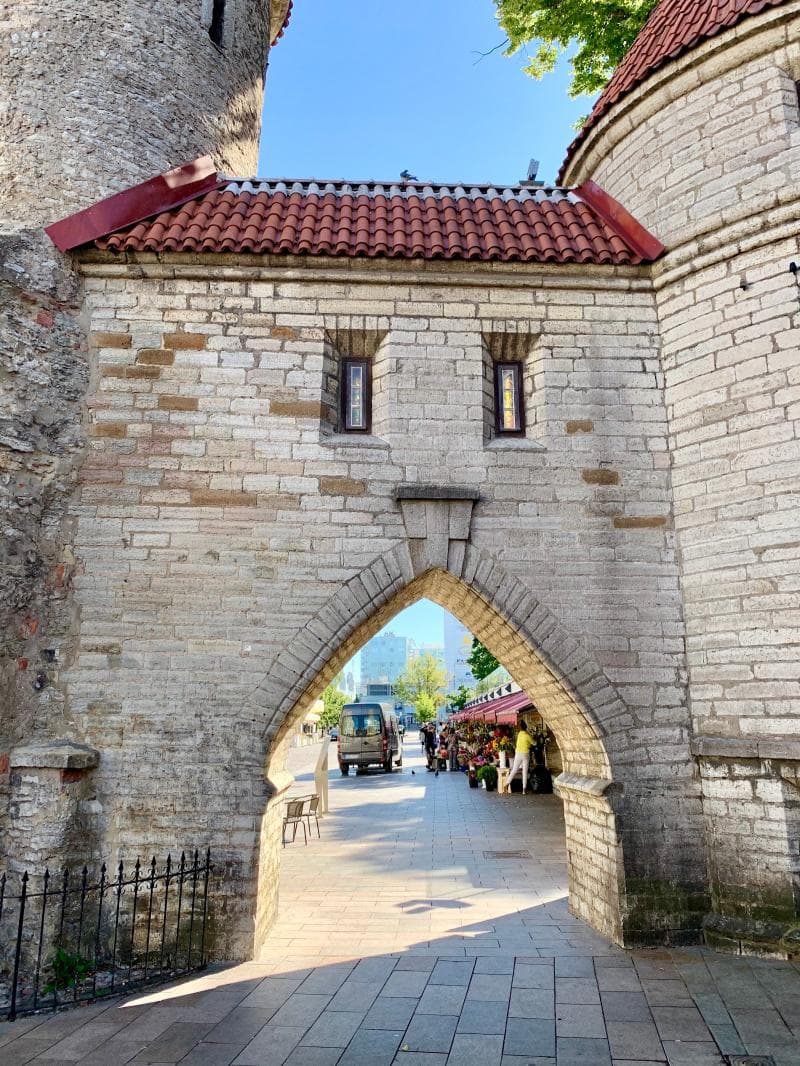
Discover Viru Gate, Tallinn's iconic medieval entrance. Explore its rich history, unique towers, and vibrant flower market. A must-see landmark in Estonia.
Overview
The Viru Gate stands as an iconic and charming entrance to the medieval Old Town of Tallinn, Estonia. Comprising two distinctive round towers with conical, tiled roofs, this landmark serves as a picturesque gateway, inviting travelers to step back in time. It is a well-preserved fragment of Tallinn's formidable 14th-century city wall, making it one of the most recognizable and photographed symbols of the Estonian capital. Located at the vibrant start of Viru Street, the gate acts as a natural transition point from the modern city into the UNESCO World Heritage-listed historic core, where cobblestone streets and ancient architecture await.
Today, the Viru Gate is more than just an architectural marvel; it's a bustling hub that marks the beginning of countless explorations into Tallinn's rich past. It is freely accessible to the public, offering continuous viewing of its exterior and serving as a popular meeting spot for both locals and visitors.
History & Cultural Background
The history of the Viru Gate is deeply intertwined with the defensive fortifications of Tallinn, then known as Reval. Its origins trace back to the 14th century, when it was constructed as an integral part of the larger city wall system. The gate's primary purpose was to protect the city from invaders while also controlling trade and movement in and out of the walled settlement. Initial mentions of the gate date to 1359, and by 1370, an elaborate foregate system was already in place.
In 1446, older wooden structures were replaced, and a more robust stone gatehouse was built, which included the two characteristic round towers still visible today. In its prime, the Viru Gate was a complex defensive structure, potentially featuring a drawbridge over a moat and a lifting grate for added security.
As Tallinn modernized in the 19th century, many sections of the city walls and gates were dismantled to accommodate urban development. A significant alteration occurred in 1888 when parts of the gate complex were demolished to make way for Tallinn's first horse-drawn tram line. Fortunately, the two corner towers were preserved, standing as enduring witnesses to centuries of change and becoming the iconic structures we see today.
What Makes It Special
What truly sets the Viru Gate apart is its remarkable ability to connect Tallinn's present with its medieval past. The gate's sturdy limestone construction and its two round towers, topped with striking red clay tiles, evoke a fairytale-like aesthetic, offering a vivid glimpse into the city's Hanseatic era.
It serves as a powerful symbol of Tallinn's resilience and its commitment to preserving its rich cultural heritage. Recognized as an officially registered trademark of Tallinn and a valuable cultural heritage site of Estonia, the Viru Gate is more than just old stone; it's a living monument. Its photogenic charm, especially during sunrise or twilight when subtle lighting accentuates its ancient textures, makes it a favorite subject for photographers and a frequent feature in travel guides and postcards.
Stories, Fun Facts & Local Details
One fascinating aspect of the Viru Gate's story involves its adaptation to the needs of a growing city. In 1888, when Tallinn introduced its first horse-drawn tram, the medieval gate presented a logistical challenge. Instead of removing the entire structure, a pragmatic decision was made to demolish the central part of the gate to allow the tram and other traffic to pass through, while preserving the two iconic corner towers. This decision inadvertently created the unique appearance we associate with the Viru Gate today, where the towers frame the bustling street.
Just outside the gate, visitors are often greeted by a vibrant flower market, a long-standing tradition that adds a splash of color and a pleasant fragrance to the historic surroundings. This lively market enhances the gate's charm and makes it an even more inviting place. The towers are sometimes affectionately referred to by locals as the 'Gates of the Past', a nod to their role as a portal to the city's ancient heart.
Visitor Perspective
Passing through the Viru Gate is like embarking on a journey through time. As you walk between its majestic towers, you leave behind the modern pulse of Tallinn and are instantly immersed in the enchanting atmosphere of its medieval Old Town.
The gate is a perfect starting point for exploration. From here, you can easily wander down Viru Street, a lively pedestrian thoroughfare lined with charming boutiques, cozy cafes, traditional market stalls, and restaurants. Take your time to stroll along the surviving sections of the city wall, admire the architecture, and soak in the ambiance. The Viru Gate is an open public space, viewable 24/7, year-round, making it a convenient and memorable first impression of this captivating city.
Coordinates: 24.7493, 59.4366
View on Google Maps💬 How Travelers Describe This Place
Based on community votes
Interesting
953Beautiful
695Photogenic
658Must See
396Unique
22
Traveler Stories
Discover memorable experiences shared by travelers who have visited this place.
No traveler stories yet.
Be the first traveler to share what made this place memorable.
Things to see at Viru Gate



Tour
By
Spot
Discover amazing places around the world. Your journey starts here.
Explore
© 2026 TourBySpot. All rights reserved.