Old Town Entrance
Tallinn, Estonia
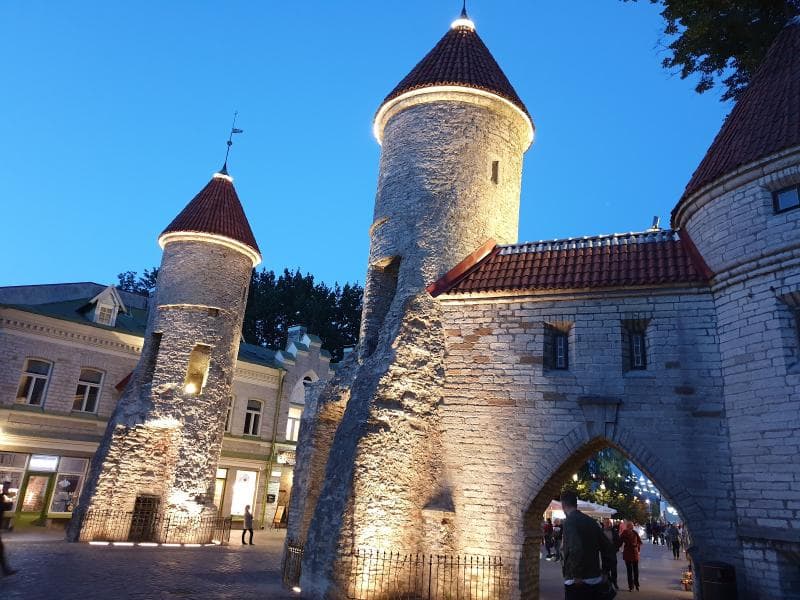
Discover Viru Gate, the iconic medieval entrance to Tallinn's Old Town, Estonia. Explore its rich history, unique architecture, and vibrant surroundings.
Overview
Stepping into Tallinn's Old Town is an experience akin to entering a living fairytale, and the iconic Viru Gate serves as the enchanting portal to this medieval realm. More than just an entrance, the Viru Gate is one of the most recognizable and beloved symbols of the Estonian capital, marking a clear boundary between the bustling modern city and the meticulously preserved historical core. It welcomes countless visitors each day with its two distinctive, ivy-clad round towers, inviting them to journey back in time. Located at the very beginning of the lively Viru Street, the gate is easily accessible and acts as an ideal starting point for exploring the labyrinthine cobblestone streets, charming squares, and ancient architecture that define Tallinn's UNESCO World Heritage-listed Old Town.
Today, the area surrounding the gate is vibrant, often adorned with seasonal flower stalls that add a burst of color to the historic stone. Passing through these sturdy towers, travelers are immediately immersed in an atmosphere where every turn reveals centuries of history, from merchant houses to cozy cafes and artisan shops. The Viru Gate is not merely a historical monument; it is a gateway to the soul of Old Tallinn, promising an unforgettable exploration of Estonia's rich cultural heritage.
History & Cultural Background
The history of the Viru Gate is deeply intertwined with the development of Tallinn's formidable medieval defensive fortifications, which protected the city then known as Reval. First documented in 1359, the gate was part of a robust barbican system designed to guard the eastern approach to the city. By 1370, an elaborate network of foregates was already in place. The original wooden structures were later replaced by a more impressive stone gatehouse in 1446, giving rise to the two characteristic round towers that greet visitors today.
In its prime, the Viru Gate was a far more complex structure than what remains. It was part of a larger defense system that included moats, drawbridges, and a main square-based tower, alongside other smaller round towers as barbicans. The city walls themselves, some of the best-preserved in Europe, once boasted around 45 towers and stretched for approximately four kilometers. However, to accommodate the growing city's needs and increasing traffic, much of the original gate complex and sections of the city walls were dismantled in the late 19th century, specifically around 1880. Fortunately, the two iconic round towers were spared, serving as enduring sentinels of Tallinn's medieval past.
What Makes It Special
The Viru Gate's enduring charm lies in its unique ability to transport visitors. As a well-preserved fragment of the city's medieval wall, it serves as a tangible link to Tallinn's rich history. The sight of its twin, conical-roofed towers, often draped in green ivy during warmer months, creates an almost fairytale-like aesthetic that is instantly recognizable and highly photogenic.
Beyond its visual appeal, the gate signifies a profound transition. Stepping through its archway is like crossing a threshold from the contemporary world into a meticulously preserved medieval urban landscape. It is the official and most symbolic entrance to Tallinn's Old Town, a UNESCO World Heritage site, making it a pivotal landmark for anyone exploring the city. The gate's presence helps to define the unique character of Tallinn, where ancient traditions blend seamlessly with a vibrant modern life just outside its historical bounds.
Stories, Fun Facts & Local Details
The Viru Gate holds a trove of interesting stories and details that enrich its historical significance. Originally, its German name was 'Lehmpforte', which translates to 'clay gate', a nod to the clay pits that were once located nearby. This detail offers a glimpse into the topographical and industrial landscape surrounding the medieval city.
Perhaps one of the most surprising facts about the Viru Gate is its transformation in the late 19th and early 20th centuries. For approximately thirty years, starting in 1888, the gate area was reshaped to allow a horse-drawn tram line to pass directly through it. This remarkable adaptation saw the medieval entrance cut open to accommodate early urban transport, highlighting Tallinn's continuous evolution. While the original gate system was altered, the resilient corner towers survived, standing witness to this period of change. Today, where tram bells once rang, pedestrians now stroll, continuing the gate's role as a vital urban thoroughfare.
The area immediately around the Viru Gate remains a lively hub. It is a common meeting point for both locals and tourists, serving as a natural starting point for various walking tours into the Old Town. Just outside the gate, visitors often find a colorful flower market, adding a picturesque touch to the medieval entrance.
Visitor Perspective
For any traveler to Tallinn, the Viru Gate offers an inviting and hassle-free introduction to the Old Town. Its central location on Viru Street makes it incredibly easy to find, whether arriving by public transport or walking from other parts of the city center. As a public monument, the gate is accessible 24 hours a day, seven days a week, and viewing it from the outside requires no ticket or reservation, offering complete freedom to visit at any convenient time.
Passing through the Viru Gate, visitors are immediately met with the charm of the Old Town's narrower, cobbled streets, leading to countless historical buildings, shops, and cafes. It is the perfect spot to begin a leisurely stroll, capture memorable photographs against a backdrop of medieval architecture, or simply soak in the atmosphere. While entry inside the towers themselves is generally not provided for tourists, their exterior presence and the vibrant surrounding area provide an immersive experience, making the Viru Gate an essential and memorable starting point for any Tallinn adventure.
Coordinates: 24.749332, 59.436641
View on Google Maps💬 How Travelers Describe This Place
Based on community votes
Unique
445Interesting
416Must See
289Beautiful
141Photogenic
33
Traveler Stories
Discover memorable experiences shared by travelers who have visited this place.
No traveler stories yet.
Be the first traveler to share what made this place memorable.

Tour
By
Spot
Discover amazing places around the world. Your journey starts here.
Explore
© 2026 TourBySpot. All rights reserved.