Universalmuseum Joanneum
Graz, Austria
Explore Universalmuseum Joanneum in Graz, Austria—Austria's oldest and Central Europe's largest universal museum, blending art, history, and science.
Overview
The Universalmuseum Joanneum, nestled in the historic city of Graz, Austria, stands as a beacon of cultural and scientific heritage. Established in 1811 by Archduke Johann, it holds the distinction of being Austria's oldest museum and the second largest in the nation, surpassed only by Vienna's Kunsthistorisches Museum. More impressively, it is recognized as the largest universal museum in Central Europe. Its vast collections, numbering over 4.9 million objects, are spread across 14 architecturally significant locations throughout Graz and the Styria region. This multidisciplinary institution encompasses a remarkable breadth of subjects, including archaeology, geology, paleontology, mineralogy, botany, zoology, history, art, and folk culture, offering a comprehensive journey through humanity's achievements and natural wonders. In 2009, the museum was officially rebranded from Landesmuseum Joanneum to Universalmuseum Joanneum, a name change that aptly reflects its expansive scope and international importance.
History & Cultural Background
The story of the Universalmuseum Joanneum begins with the visionary Archduke Johann of Austria, who founded it on November 26, 1811. Conceived as an 'inner Austrian national museum' and a teaching institution, the Archduke, a fervent advocate of Enlightenment ideals, aimed to create a comprehensive repository of knowledge. His ambition was to bring to life 'nature, the changing times, human industry and perseverance,' thereby stimulating a thirst for knowledge among students and the public. Initially, the Joanneum was primarily an educational institution with a strong emphasis on natural history and technology, areas reflecting the Archduke's personal passions. It attracted leading 19th-century scientists, including Friedrich Mohs, who famously developed the Mohs scale of mineral hardness within its halls, and Franz Unger, a pioneer in paleobotany.
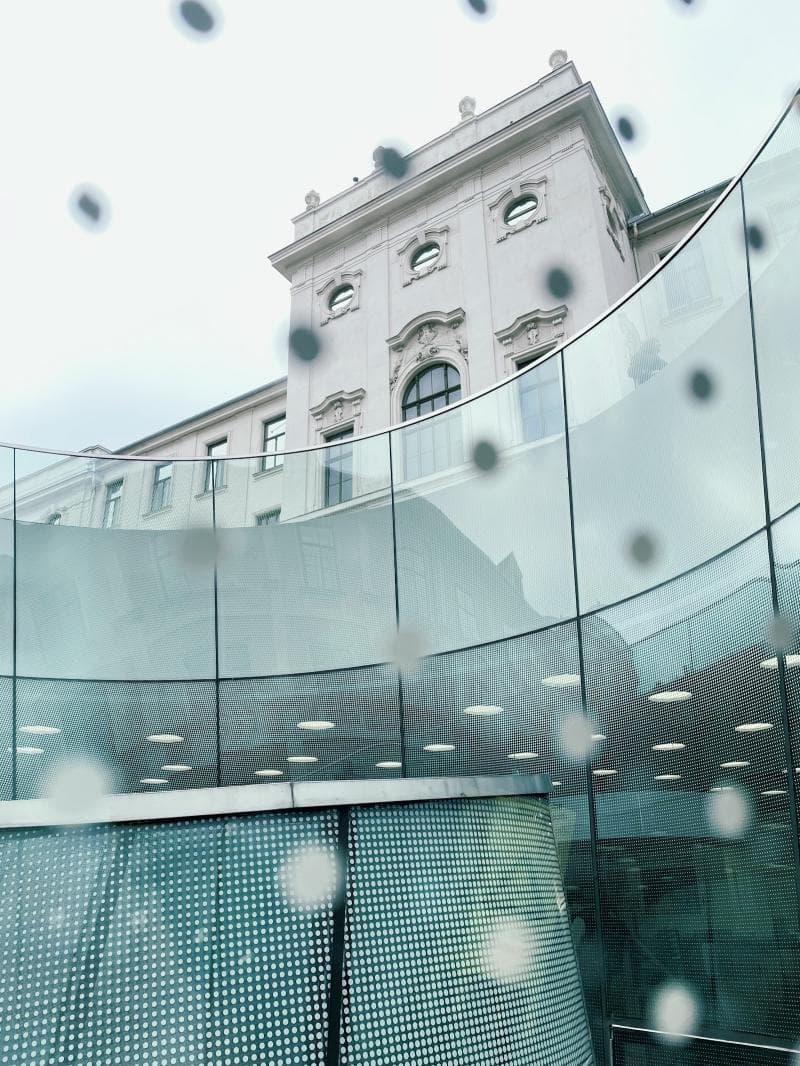
The institution's educational wing gained the status of an Imperial Technical College in 1864, eventually evolving into today's Graz University of Technology, with a formal separation of its academic and museum functions by 1975. The museum's initial home was the historic Lesliehof, a 17th-century Baroque building. As its collections rapidly expanded, a new, purpose-built structure, known as the 'New Joanneum' at Neutorgasse 45, was erected between 1890 and 1895. This monumental Neo-Baroque edifice, designed by August Gunold, became a cornerstone of the museum complex. A significant modernization project culminated in 2011 with the reopening of the Joanneumsviertel (Joanneum Quarter) for its 200th anniversary. This renovation included an innovative underground visitor center, cleverly illuminated by circular patios that punctuate the public square above.
What Makes It Special
The Universalmuseum Joanneum's unique character stems from its unparalleled 'universality' and its impressive array of sites. It masterfully blends venerable historic structures with cutting-edge modern architecture. A prime example is the Kunsthaus Graz, often affectionately dubbed the 'Friendly Alien.' Opened in 2003 when Graz served as the European Capital of Culture, this biomorphic, blue-bubble-shaped building is a striking landmark dedicated to contemporary art. Visitors can experience its interior via a 'Travelator' and enjoy panoramic city views from its 'needle' viewing platform.
Another crown jewel is the Landeszeughaus, or Styrian Armoury, which houses the world's largest collection of historic weapons and armor, offering a tangible link to the region's military past. Furthermore, the UNESCO World Heritage site of Schloss Eggenberg is integral to the Joanneum, hosting several key collections, including the Alte Galerie (Old Gallery), the Archaeology Museum, and the Coin Cabinet. The Coin Cabinet alone boasts over 70,000 objects, making it Austria's second-largest public collection of its kind. For those seeking interactive learning, CoSA (Center of Science Activities) encourages hands-on exploration, a refreshing departure from the usual 'do not touch' museum rule.
Stories, Fun Facts & Local Details
Archduke Johann's profound personal interests heavily influenced the Joanneum's initial collections. His extensive private mineralogy and coinage collections formed the very core of the museum's early holdings, laying the foundation for its renowned scientific and historical departments. Interestingly, early attempts to systematically collect archaeological finds from Styria faced an unusual hurdle: an imperial decree in 1812 mandated that all such discoveries be sent to Vienna, temporarily stunting the Joanneum's archaeological growth until the regulation was relaxed in 1846.
The iconic Kunsthaus Graz has earned a variety of whimsical nicknames from locals and visitors alike, including 'Friendly Alien,' 'baby hippo,' 'sea slug,' 'porcupine,' and even 'whale,' all testament to its unique and playful architectural form. The modernization of the Joanneumsviertel revealed an ingenious architectural solution: its new underground extension is bathed in natural light filtering through circular patios embedded in the public square above, seamlessly blending modern design with historical surroundings. Beyond its founder's legacy, the Joanneum has ties to other scientific luminaries, with Nikola Tesla reportedly having researched and taught in Graz at the institution. The museum's dedication goes beyond mere display; it actively collects, preserves, researches, and communicates the rich tapestry of Styria's nature, history, art, and culture, playing a vital role in regional identity.
Visitor Perspective
A visit to the Universalmuseum Joanneum promises a deeply rich and immersive cultural experience for every type of traveler. With its vast and varied offerings, covering everything from ancient history and classical art to contemporary science and technology, there truly is 'something for everyone' to discover and enjoy. To facilitate exploration across its numerous sites, the museum offers the convenient 'Universalmuseum Joanneum Pass,' providing access to multiple locations and simplifying the visitor's journey. The institution is committed to accessibility, featuring facilities such as wheelchair-accessible entrances, braille in lifts, and specialized tours for visitors with disabilities, ensuring a welcoming experience for all. Whether you're peering into the depths of history at the Styrian Armoury, marveling at the 'Friendly Alien' of the Kunsthaus, or gaining new perspectives from its viewing platform, the Universalmuseum Joanneum offers not just exhibits, but an engaging and memorable exploration of knowledge and culture.
Coordinates: 15.4375, 47.06861
View on Google Maps💬 How Travelers Describe This Place
Based on community votes
Unique
996Photogenic
673Beautiful
585Interesting
143Must See
69
Traveler Stories
Discover memorable experiences shared by travelers who have visited this place.
No traveler stories yet.
Be the first traveler to share what made this place memorable.
Things to see at Universalmuseum Joanneum



Tour
By
Spot
Discover amazing places around the world. Your journey starts here.
Explore
© 2026 TourBySpot. All rights reserved.