Armoury (Landeszeughaus)
Graz, Austria
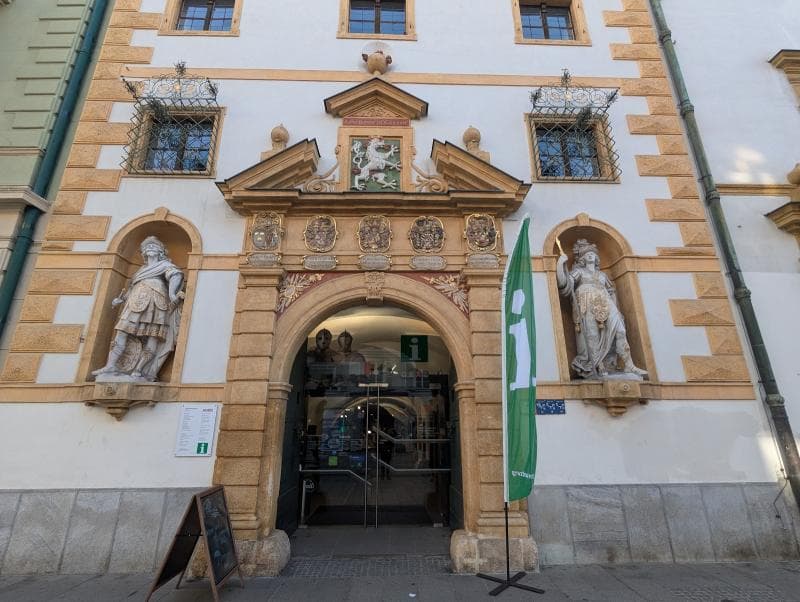
Explore the Landeszeughaus (Armoury) in Graz, Austria – the world's largest preserved historic armory. Discover 32,000+ historical weapons and armor.
Overview
The Armoury, locally known as the Landeszeughaus, in Graz, Austria, stands as the world's largest preserved historic armory. It is an integral part of the renowned Universalmuseum Joanneum, a prominent cultural institution in Styria. Housing an astonishing collection of over 32,000 historical weapons, suits of armor, and military equipment, this unique museum offers a profound journey into Europe's past.
Situated in the heart of Graz, the Landeszeughaus is not merely a collection of artifacts; it is the original arsenal building, meticulously preserved since the 17th century, offering an authentic glimpse into military history.
History & Cultural Background
The origins of the Styrian Armoury date back to the mid-17th century. From the 15th to the 18th centuries, the Duchy of Styria, positioned on the southeastern frontier of the Habsburg Empire, faced continuous threats and conflicts, particularly from the expanding Ottoman Empire and Hungarian rebels. This strategic vulnerability necessitated a robust defense system.
To address this need, the Styrian estates commissioned the construction of the 'Landschaftliches Zeughaus' (Regional Armoury) between 1642 and 1644, designed by the Tyrolean architect Antonio Solar. It served as the primary arms depot and the most crucial equipment center in the southeast of the Habsburg Empire.
By the 18th century, as armed conflicts diminished, the armoury's operational importance waned. In 1749, Empress Maria Theresia sought to centralize the army and ordered its closure and the relocation of its contents to Vienna. However, the Styrian estates successfully petitioned for its preservation, arguing for its historical significance as a 'monument to the history of the region and the bravery of their ancestors.' This intervention saved the collection and the building, allowing it to remain intact. It first opened its doors to the general public in 1882 and was later integrated into the Joanneum.
What Makes It Special
What truly sets the Landeszeughaus apart is its distinction as the world's largest preserved historic armory, maintaining its original 17th-century structure and the unique arrangement of its vast collection. Unlike many other museums where collections are retrospectively assembled, the Styrian Armoury displays its items much as they would have been stored centuries ago.
The sheer volume of around 32,000 exhibits, ranging from suits of armor to firearms, swords, and cannons, spread across four floors, creates an immersive experience often described as a 'forest of steel.' This authentic presentation provides unparalleled insight into early modern regional defense and military life. Among its treasures is one of only seven completely preserved horse armors worldwide.
In April 2026, the Armoury was awarded the prestigious European Heritage Label, recognizing its outstanding importance for Europe's shared cultural heritage and its role as a crossroads of Central and Southeast Europe.
Stories, Fun Facts & Local Details
The survival of the Landeszeughaus itself is a testament to local pride and historical foresight. The successful appeal by the Styrian estates to Maria Theresia ensured that this remarkable collection remained in Graz, celebrated as a symbol of Styrian bravery against historical threats.
The building's functional design, conceived by Antonio Solar, was optimized for emergency preparedness, with weapon racks and shelves rising to the ceiling, creating an awe-inspiring visual impact. Interestingly, the original fittings of the building create an interior climate that has inadvertently protected the iron artifacts from corrosion for centuries, contributing to their remarkable preservation.
Visitors often note the palpable sense of history within its walls; it feels less like a traditional museum and more like a moment in time held in suspension, where one can almost hear the echoes of soldiers preparing for battle.
Visitor Perspective
Stepping into the Landeszeughaus is like embarking on a journey back to the age of knights and musketeers. Visitors traverse four floors, where approximately 32,000 pieces of historical arms and military equipment from the 15th to the early 19th centuries are meticulously displayed. The collection includes thousands of armors and helmets, small arms, polearms, and swords, providing a comprehensive view of warfare technology and defensive gear.
To enhance the experience, guided tours are regularly offered in both German and English, providing invaluable historical context and detailed interpretations of the collection, as individual labels are not always present due to heritage protection regulations. Audio guides and printed leaflets are also available. The museum is conveniently located in Graz's city center, easily accessible on foot or by tram, making it a must-visit for anyone interested in history, castles, or the evolution of military equipment.
Coordinates: 15.43861, 47.07083
View on Google Maps💬 How Travelers Describe This Place
Based on community votes
Unique
445Interesting
416Must See
289Beautiful
141Photogenic
33
Traveler Stories
Discover memorable experiences shared by travelers who have visited this place.
No traveler stories yet.
Be the first traveler to share what made this place memorable.

Tour
By
Spot
Discover amazing places around the world. Your journey starts here.
Explore
© 2026 TourBySpot. All rights reserved.