Natural History Museum
Graz, Austria
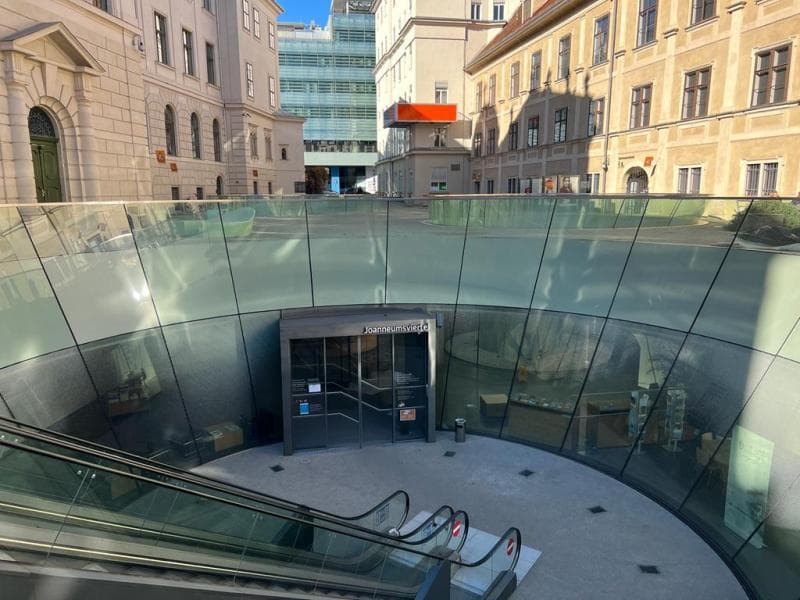
Explore the Natural History Museum in Graz, Austria, a key part of the Universalmuseum Joanneum. Discover millions of specimens from Earth's 500-million-year history, from minerals to extinct animals.
Overview
The Natural History Museum, nestled within the expansive Universalmuseum Joanneum in Graz, Austria, offers a profound journey through the wonders of animate and inanimate nature. As a vital part of the Joanneumsviertel, a vibrant cultural quarter in Graz, this museum houses an exceptional array of natural history collections, encompassing botany, geology, mineralogy, mycology, paleontology, and zoology. Visitors can delve into a captivating narrative that spans over 400 to 500 million years of Earth's history, focusing particularly on the geological evolution of Styria and the remarkable diversity of life forms that have shaped our planet. With its impressive collection of over 2.1 million objects across its broader natural history departments, the museum stands as a testament to the Universalmuseum Joanneum's status as Austria's oldest and Central Europe's largest universal museum.
History & Cultural Background
The Universalmuseum Joanneum's origins trace back to 1811, established by the visionary Archduke Johann of Austria. It emerged as Austria's first public museum, conceived not merely as a repository of artifacts but as a dynamic center for education and scientific inquiry. Archduke Johann, known for his deep passion for the natural sciences, laid the groundwork for the museum's natural history focus; his personal collection of thousands of mineral specimens formed the very foundation of what would become the esteemed mineralogical collection.
Throughout its history, the Joanneum attracted leading scientific minds, such as Friedrich Mohs, who famously developed the Mohs scale of mineral hardness while at the institution, and Franz Xaver Unger, a pioneering figure in paleobotany. These foundational contributions solidified the museum's reputation as a hub for natural science research and learning. The Natural History Museum, in its current modern presentation within the Joanneumsviertel, was unveiled in 2013, continuing a legacy of showcasing nature's grandeur through contemporary exhibition design.
What Makes It Special
What truly sets the Natural History Museum apart is the sheer scale and scientific significance of its collections. It boasts an astonishing 1.1 million animal specimens, 650,000 plants and fungi, 200,000 rocks and fossils, and 100,000 minerals. These extensive holdings allow the museum to trace the geological history of Styria and the evolution of diverse species over hundreds of millions of years. The museum effectively bridges historical collections with contemporary issues through interactive exhibits and multimedia stations, making complex topics such as biodiversity and climate change accessible and engaging.
A notable highlight is the historical mineral collection, where visitors can explore the very context in which Friedrich Mohs formulated his enduring hardness scale. Additionally, the museum proudly displays objects personally collected by Archduke Johann, offering a direct link to its founder. Visually, a striking 31-meter-long picture cycle by Fritz Messner vividly illustrates the complete history of Earth from its inception to the present day. Among its unique treasures is one of the few remaining specimens of the Giant Auk, an extinct seabird, found within its zoological collection, alongside intricate glass models of invertebrates, crafted with techniques now lost to time.
Stories, Fun Facts & Local Details
The spirit of Archduke Johann's Enlightenment ideals, focused on public education and societal well-being, continues to resonate within the museum's halls. A fascinating historical endeavor was the 'Flora styriaca' project, an ambitious initiative to cultivate and document every single plant species native to Styria within the Joanneum Garden. Beyond scientific luminaries, the museum's collections even include minerals famously described by the renowned polymath Johann Wolfgang von Goethe.
For those fascinated by prehistoric life, the museum presents impressive finds such as mammoth and cave bear remains. Its exhibits go beyond static displays, utilizing interactive elements to explore crucial contemporary themes like biodiversity, habitat preservation, and the impacts of climate change in Styria and globally. Furthermore, the Natural History Museum extends its scientific reach through the Centre of Natural History in Graz-Andritz, where researchers conduct ongoing studies, and visitors can engage directly with natural scientists for in-depth information.
Visitor Perspective
Strategically located in the easily accessible Joanneumsviertel, the Natural History Museum provides a rich and welcoming experience for all. The museum prides itself on its accessibility, featuring wheelchair-friendly entrances, elevators, barrier-free toilets, and clear pictograms throughout. To enhance the visitor experience, audio guides are available in several languages, including simplified versions and those designed for visually impaired visitors. While some visitors have noted that English translations for every exhibit might be limited, the overall feedback highlights the museum's educational value, particularly its extensive and well-organized rock and mineral collections, and engaging zoological displays. Travelers looking to explore multiple cultural institutions in Graz can conveniently visit the Natural History Museum with a Joanneum 24-hour or 48-hour ticket, granting access to various sites within the Universalmuseum Joanneum network.
Coordinates: 15.4375, 47.06861
View on Google Maps💬 How Travelers Describe This Place
Based on community votes
Must See
995Unique
839Beautiful
388Interesting
289Photogenic
141
Traveler Stories
Discover memorable experiences shared by travelers who have visited this place.
No traveler stories yet.
Be the first traveler to share what made this place memorable.

Tour
By
Spot
Discover amazing places around the world. Your journey starts here.
Explore
© 2026 TourBySpot. All rights reserved.