Three Crosses Monument
Vilnius, Lithuania
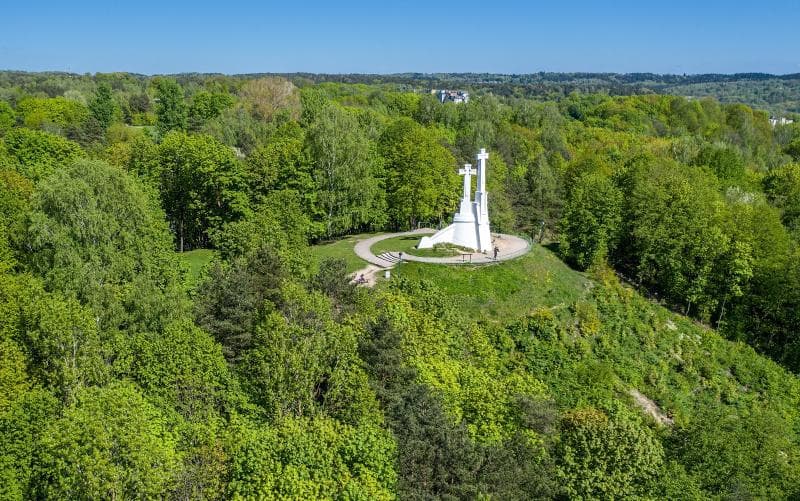
Discover the Three Crosses Monument in Vilnius, Lithuania, a powerful symbol of freedom and resilience. Explore its rich history, legends, and breathtaking panoramic views of the city from Kalnai Park.
Overview
Perched atop the verdant Hill of Three Crosses, also known as Bald Hill, within Vilnius's scenic Kalnai Park, stands the iconic Three Crosses Monument (Lithuanian: Trys kryžiai). This prominent landmark, composed of three striking white concrete crosses, commands attention from various vantage points across the Lithuanian capital, especially the historic Old Town. Standing at an impressive 12 meters in height, the monument is more than just a visual spectacle; it is a profound symbol of Lithuanian national identity, resilience, and an enduring testament to freedom. Visitors are drawn not only to its majestic presence but also to the breathtaking panoramic views it offers of Vilnius's charming cityscape, including its red-tiled roofs, historic church spires, and the meandering Neris River.
History & Cultural Background
The origins of the Three Crosses Monument are steeped in both legend and verifiable history, reflecting Lithuania's complex past. According to a long-held legend, the crosses commemorate a tragic event in the 14th century when several Franciscan friars were martyred on this very hill by pagan inhabitants. While some accounts speak of seven friars beheaded, others mention fourteen monks in total, with some thrown into the river.
The first wooden crosses are believed to have been erected on the hill sometime before 1649, appearing in historical depictions of the city. These early wooden structures required periodic replacement due to natural decay. The present concrete monument has a more recent history, though equally tumultuous. In 1916, during the German occupation of World War I, the first concrete monument was designed by Polish-Lithuanian architect Antoni Wiwulski (Antanas Vivulskis) and erected through public donations. This structure stood for decades until 1950, when it was tragically blown up by the Soviet authorities, who viewed it as a symbol of religious and national defiance. However, the spirit of the monument could not be suppressed. In 1989, amidst the burgeoning Lithuanian independence movement (Sąjūdis), the monument was rebuilt on its original foundations. This reconstruction, led by sculptor Stanislovas Kuzma based on Henrikas Šilgalis's design, was unveiled on June 14, 1989, a date chosen to commemorate the mass deportations of Lithuanians during the Soviet era, solidifying its role as a powerful symbol of national freedom.
What Makes It Special
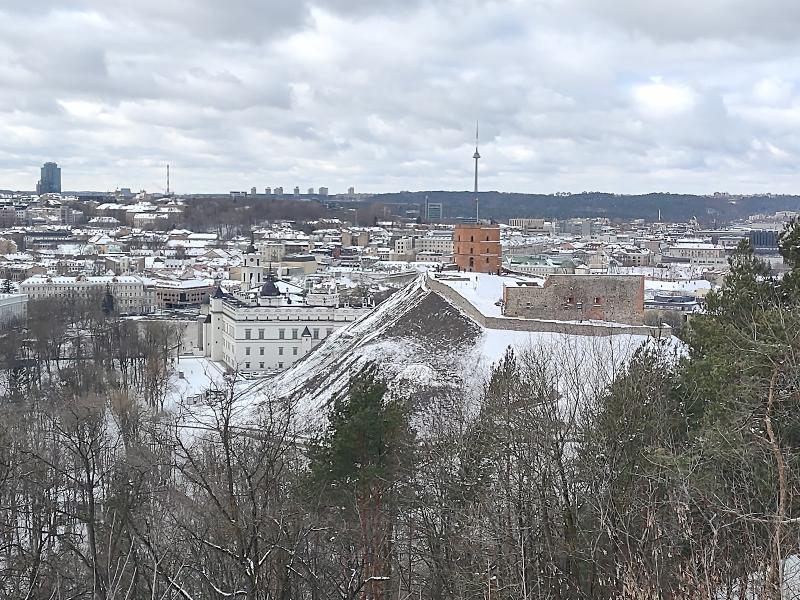
Beyond its striking visual presence, the Three Crosses Monument holds deep significance for many reasons. Its repeated destruction and subsequent reconstruction mirror the unwavering spirit and turbulent journey of the Lithuanian nation itself, transforming it into a powerful emblem of enduring freedom and resistance. The monument's prominent position on the Hill of Three Crosses offers unparalleled panoramic vistas of Vilnius, encompassing the UNESCO-listed Old Town, the Gediminas Castle Tower, and the serene Vilnelė River. This viewpoint is particularly captivating at sunset when the city below twinkles with lights. Furthermore, the monument is often illuminated in vibrant colors to mark significant national and international events, adding a dynamic and contemporary layer to its historical grandeur.
Stories, Fun Facts & Local Details
The Hill of Three Crosses has been known by various names throughout history, including Bald Hill (Plikasis kalnas) and Crooked Hill (Kreivasis kalnas), hinting at its rugged and prominent nature. While the Franciscan monk martyrdom legend is widely accepted, there are fascinating alternative theories about the crosses' origins. Some suggest they were erected to celebrate Lithuania's baptism or even to give thanks for the end of a devastating plague. A testament to its cultural importance, the monument was once featured on Lithuania's 50 litas banknote. For a truly local experience, visit on All Saints' Day, when residents of Vilnius traditionally climb the hill to place votive candles at the base of the crosses, creating a moving display of remembrance and reverence. The hill is nestled within the sprawling Kalnai Park, adjacent to the beautiful Bernardine Garden and the Vilnelė River, making it an integral part of the city's green heart.
Visitor Perspective
Visiting the Three Crosses Monument offers a rewarding experience for any traveler. The journey to the summit involves a pleasant climb, with various paths catering to different fitness levels. You can choose a steeper route with stairs for a quicker ascent or a more gradual trail, often starting from the picturesque Bernardine Garden. Comfortable footwear is highly recommended for the walk. While the views are spectacular at any time of day, many find the panoramic vista particularly breathtaking at sunset, as the city lights begin to emerge. Autumn also presents a beautiful spectacle as the surrounding trees in Kalnai Park burst into vibrant colors. The monument and its surrounding park are freely accessible, making it an excellent budget-friendly activity. Allow approximately 30-45 minutes for your visit to truly soak in the history, the serene atmosphere, and, of course, capture those unforgettable views of Vilnius.
Coordinates: 25.2976, 54.6867
View on Google Maps💬 How Travelers Describe This Place
Based on community votes
Photogenic
1.0kUnique
869Must See
416Interesting
309Beautiful
33
Traveler Stories
Discover memorable experiences shared by travelers who have visited this place.
No traveler stories yet.
Be the first traveler to share what made this place memorable.
Things to see at Three Crosses Monument




Tour
By
Spot
Discover amazing places around the world. Your journey starts here.
Explore
© 2026 TourBySpot. All rights reserved.