Kalnai Park
Vilnius, Lithuania
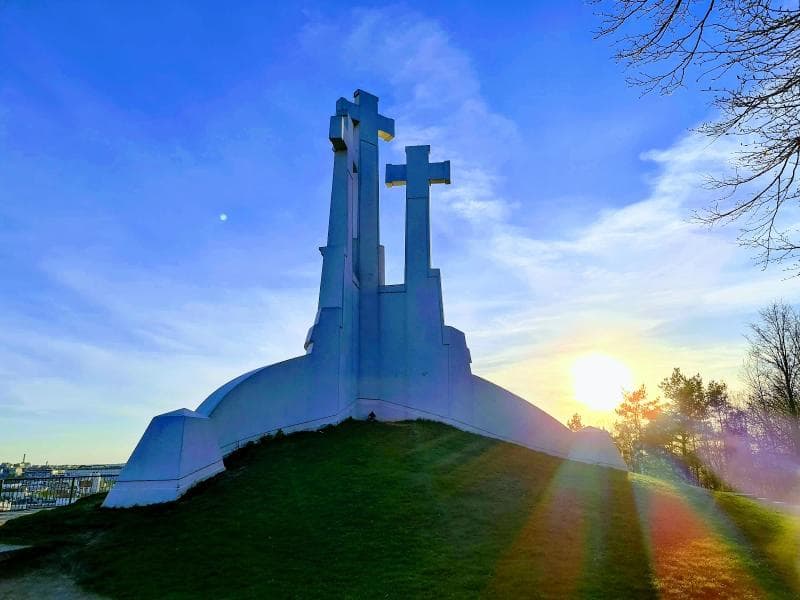
Explore Kalnai Park in Vilnius, Lithuania, home to the iconic Three Crosses Monument, rich history, legends, and panoramic city views.
Overview
Kalnai Park, meaning 'Park of Hills' in Lithuanian, is a sprawling 24.5-hectare (61-acre) public park nestled between the Neris and Vilnia Rivers in Vilnius, Lithuania. This verdant expanse is an integral part of the State Cultural Reserve of Vilnius Castles, offering a unique blend of natural beauty, historical depth, and breathtaking panoramic views of the city's Old Town. It's a cherished destination for both locals and travelers seeking tranquility, scenic walks, and a profound connection to Lithuania's past. The park is characterized by its four prominent hills: the Crooked Hill (also known as the Three Crosses Hill), Table Hill, Bekes Hill, and the Hill of Gediminas's Grave.
As you wander through Kalnai Park, you'll find winding paths suitable for leisurely strolls and more energetic hikes, leading to various historical mounds and, most notably, the iconic Three Crosses Monument. Beyond its historical allure, the park also serves as a vibrant community space, hosting various concerts and festivals during the warmer months, contributing to the city's lively cultural scene.
History & Cultural Background
The history of Kalnai Park is deeply interwoven with the origins and enduring spirit of Vilnius. The most prominent landmark, the Three Crosses Monument atop Crooked Hill, stands as a powerful testament to the city's religious and national identity. Legend has it that in the 14th century, seven Franciscan friars were martyred on this very hill while attempting to spread Christianity in pagan Lithuania. Some versions of the tale suggest three of them were crucified.
In memory of these events, wooden crosses were erected on the hill as early as the 17th century, becoming an integral part of Vilnius's skyline. Over time, as the wooden structures deteriorated, they were periodically replaced. The first concrete monument, designed by the Polish-Lithuanian architect Antoni Wiwulski, was installed in 1916. However, this symbol of faith and resilience faced destruction in 1950, when Soviet authorities ordered its demolition. The present Three Crosses Monument, a design by Henrikas Šilgalis and built by Stanislovas Kuzma, was proudly re-erected in 1989, symbolizing Lithuania's reawakened independence and enduring spirit.
The park's other hills also hold significant historical fragments. The Crooked Hill itself is hypothesized by archaeologists to have once housed the wooden Crooked Castle, which met its demise during the Lithuanian Civil War in the late 14th century. Meanwhile, the Hill of Gediminas's Grave is steeped in myth, believed by some to be the resting place of Grand Duke Gediminas, and today serves as a ritual site for the Romuva (reconstructionist-pagan) community. Bekes Hill, named after the Hungarian military commander Gáspár Bekes, who was buried there in the 16th century due to his Arian faith preventing burial in Catholic cemeteries, reminds us of the diverse historical figures linked to this land.
What Makes It Special
Kalnai Park is special not just for its monumental crosses, but for the profound sense of place it evokes. It's a sanctuary where urban bustle fades into verdant slopes and historic echoes. The park offers some of the most captivating panoramic vistas of Vilnius, allowing visitors to gaze upon the red rooftops of the Old Town, the meandering rivers, and the city's blend of ancient and modern architecture. This unique vantage point provides an unparalleled perspective on the city's layout and its natural surroundings.
The geographical arrangement of its distinctive hills, each with its own story, creates a natural outdoor museum. From the flat expanse of Table Hill to the historically significant Crooked Hill, the park is a living landscape that narrates centuries of Lithuanian heritage. Furthermore, its accessibility from the city center, bordering areas like Užupis and the Vilnelė River, makes it an easily reachable escape into nature and history.
Stories, Fun Facts & Local Details
Beyond the established historical facts, Kalnai Park is a repository of local legends and intriguing tidbits. The tale of the martyred Franciscan friars on the Hill of Three Crosses is arguably the most famous, illustrating the intense period of religious transition in Lithuania and the sacrifices made in the name of faith. Another local detail concerns Bekes Hill, named after Gáspár Bekes, whose burial there underscores the religious complexities of the era, as his Arian beliefs meant he could not be interred in traditional Catholic grounds.
Archaeological digs in the 'Valley of Songs' within the park have unveiled remnants of a 13th to 14th-century settlement and even the remains of German World War II prisoners, adding layers of untold stories beneath its tranquil surface. It's also a place where ancient pagan traditions resonate, particularly on the Hill of Gediminas's Grave, where the Romuva community continues to hold rituals. These interwoven narratives provide a rich tapestry of human experience, from devotion and conflict to celebration and remembrance.
Visitor Perspective
For a curious traveler, Kalnai Park offers an immersive experience that stimulates both the mind and the senses. Approaching the Three Crosses Monument involves a moderate climb, often via wooded paths and stairs, rewarding the effort with truly spectacular views. It's advisable to wear comfortable, sturdy footwear to navigate the varied terrain. The journey up to the monument is as much a part of the experience as the destination itself, providing moments of quiet reflection amidst the rustling leaves and birdsong.
Standing at the base of the Three Crosses, looking out over the panoramic expanse of Vilnius, one can almost feel the layers of history beneath their feet. The park's natural setting also provides excellent opportunities for photography, especially during sunrise or in the evening when the city lights begin to twinkle. Whether you seek historical enlightenment, a peaceful retreat, or simply a stunning vista, Kalnai Park delivers a memorable and profoundly engaging encounter with the heart of Vilnius. You might even stumble upon a concert or event, adding an unexpected cultural dimension to your visit.
Coordinates: 25.2976, 54.6867
View on Google Maps💬 How Travelers Describe This Place
Based on community votes
Beautiful
551Must See
547Photogenic
421Unique
298Interesting
212
Traveler Stories
Discover memorable experiences shared by travelers who have visited this place.
No traveler stories yet.
Be the first traveler to share what made this place memorable.

Tour
By
Spot
Discover amazing places around the world. Your journey starts here.
Explore
© 2026 TourBySpot. All rights reserved.