Observation Areas
Vilnius, Lithuania
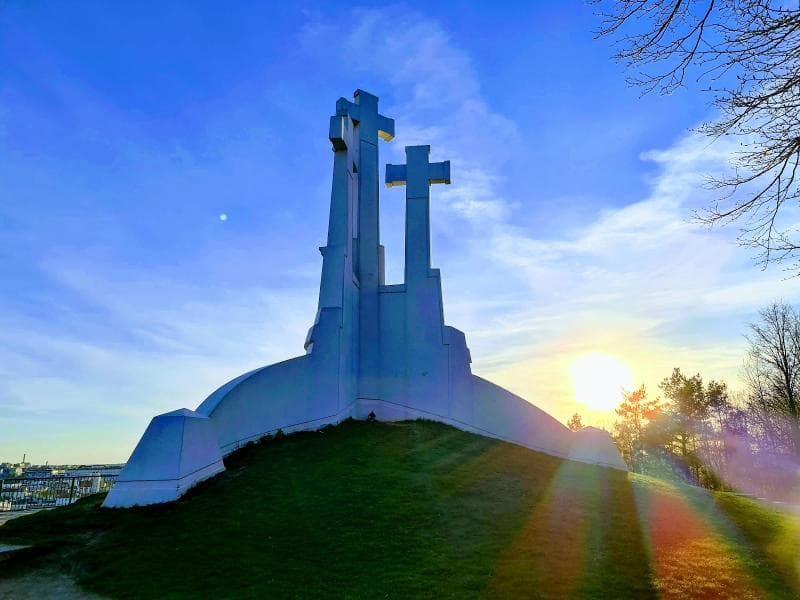
Discover the Observation Areas at Vilnius's Three Crosses Monument. Enjoy panoramic views of Old Town, learn its deep history, and unique cultural significance in Lithuania.
Overview
Perched majestically atop the Hill of Three Crosses, within the sprawling Kalnai Park in Vilnius, Lithuania, lie the iconic Observation Areas surrounding the Three Crosses Monument. This prominent landmark, often referred to as Bald Hill or Crooked Hill, offers some of the most breathtaking panoramic vistas of Vilnius Old Town. Comprising three striking white reinforced concrete crosses, the monument is not merely a sight to behold but a profound symbol deeply woven into the fabric of the city's identity and the Lithuanian nation's enduring spirit and resilience.
Visitors making the journey to this elevated vantage point are rewarded with sweeping views that encompass the city's distinctive red-tiled rooftops, the elegant spires of historic churches, the meandering flow of the Neris River, and other significant landmarks like Gediminas Castle Tower and Vilnius Cathedral. The area provides a unique perspective on the capital, making it a must-visit for anyone seeking both stunning scenery and a connection to Vilnius's rich cultural tapestry.
History & Cultural Background
The story of the Three Crosses Monument is steeped in both legend and verifiable history, reflecting centuries of faith, martyrdom, and national struggle. The origins of the crosses are tied to a poignant legend dating back to the 14th century, which recounts the martyrdom of Franciscan friars on this very hill. While accounts vary, some legends speak of seven friars, others of fourteen, who were brutally killed—some beheaded, others crucified and cast into the Vilnele River—due to the clash between pagan beliefs and the Christian gospel they preached.
To commemorate these tragic events, wooden crosses were first erected on the hill between 1613 and 1636. These wooden structures, symbols of remembrance and faith, required periodic replacement as they succumbed to the elements. A more permanent solution arrived in 1916, when a concrete monument was designed by the distinguished Polish-Lithuanian architect Antoni Wiwulski (Antanas Vivulskis).
However, the monument's existence faced severe challenges during the Soviet occupation. In 1950, by order of the Soviet authorities, Wiwulski's monument was tragically demolished, an act intended to suppress religious and national sentiment. It was not until 1989, on the cusp of Lithuania regaining its independence, that the current monument was reconstructed. Designed by Stanislovas Kuzma after Henrikas Šilgalis's original vision, the new 12-meter tall crosses stand as a powerful testament to the nation's enduring spirit and the triumph of freedom.
What Makes It Special
What truly sets the Observation Areas of the Three Crosses Monument apart is the unparalleled visual spectacle they offer. From this elevated position, visitors are treated to an expansive panorama that captures the essence of Vilnius, presenting a magnificent tableau of its Old Town, a UNESCO World Heritage site. You can clearly discern the intricate details of the city's historical architecture, the vibrant hues of its tiled roofs, and the distant spires that punctuate the skyline.
Beyond the visual appeal, the monument holds deep significance as a symbol of Lithuanian national identity, resilience, and faith. It stands as a silent sentinel, overlooking a city that has weathered centuries of change and challenges. The crosses themselves are often illuminated in various colors, particularly during special events or to commemorate significant moments for Lithuania and the wider world, adding another layer of dynamic beauty to the landmark.
The journey to the summit, traversing the paths of Kalnai Park, is an experience in itself, offering a refreshing escape into nature within the urban landscape. This combination of historical depth, cultural resonance, and stunning natural and urban vistas makes the Observation Areas a uniquely compelling destination.
Stories, Fun Facts & Local Details
The legends surrounding the Hill of Three Crosses are numerous and contribute significantly to its mystique. The most widely known tale recounts the martyrdom of Franciscan friars in the 14th century, a tragic event that sparked the tradition of placing crosses on this site. While the exact historical accuracy remains debated, the legend has persisted, influencing the cultural narrative of Vilnius for centuries.
A unique detail in the monument's modern history is its appearance on the former 50 litas banknote, a testament to its national importance and recognition within Lithuania. Furthermore, visitors can sometimes spot the remnants of the crosses that were blown up by Soviet authorities in 1950, lying at the foot of the hill. These fragments serve as a poignant, tangible reminder of the country's turbulent past and its struggles for self-determination.
A particularly moving local tradition takes place on All Saints' Day, when residents of Vilnius make a pilgrimage to the monument. They place votive candles at the base of the crosses, creating a sea of flickering lights that glow softly in the evening mist, a beautiful and solemn tribute to remembrance. It is also interesting to note that the current crosses, rebuilt in 1989, closely mirror the design of Wiwulski's 1916 monument, though they were made slightly taller and lighter in color.
Visitor Perspective
The Observation Areas at the Three Crosses Monument offer an accessible and enriching experience for all. There is no entry fee, and the site is open twenty-four hours a day, seven days a week, making it a budget-friendly and flexible destination for travelers. Reaching the monument involves a climb, but the paths are well-maintained, offering a choice between steeper stairs for a quicker ascent or more gradual routes that often begin from the nearby Bernardine Garden.
Comfortable footwear is highly recommended to navigate the walk up the hill. The best times to visit are often during the early morning or late afternoon, when the light casts a golden glow over the city, or specifically at sunset for an unforgettable spectacle as the city lights begin to twinkle. Autumn also presents a picturesque setting, with Kalnai Park's trees ablaze in vibrant fall colors. Given its exposed location, the hilltop can be windy and chilly, so bringing a windproof layer is a sensible tip for visitors.
The monument and its observation points are particularly recommended for photography enthusiasts eager to capture sweeping cityscapes, history buffs keen on understanding Vilnius's past, couples seeking a romantic vista, and anyone who appreciates a pleasant walk amidst nature. The experience is often described as rewarding, providing both stunning visual memories and a deeper appreciation for Vilnius's historical and cultural significance.
Coordinates: 25.2976, 54.6867
View on Google Maps💬 How Travelers Describe This Place
Based on community votes
Photogenic
547Interesting
336Unique
219Beautiful
186Must See
80
Traveler Stories
Discover memorable experiences shared by travelers who have visited this place.
No traveler stories yet.
Be the first traveler to share what made this place memorable.

Tour
By
Spot
Discover amazing places around the world. Your journey starts here.
Explore
© 2026 TourBySpot. All rights reserved.