Thean Hou Temple
Kuala Lumpur, Malaysia
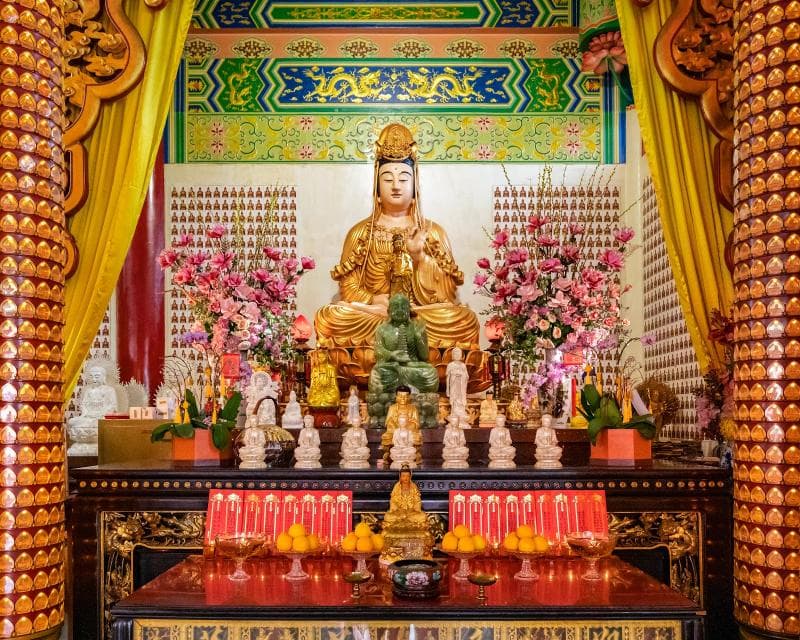
Explore Thean Hou Temple, a grand six-tiered Chinese temple in Kuala Lumpur, Malaysia. Discover its history, stunning architecture, and cultural significance.
Overview
Perched majestically atop Robson Heights, the Thean Hou Temple stands as a magnificent six-tiered Chinese temple in Kuala Lumpur, Malaysia. It is not merely a place of worship but a vibrant cultural landmark and one of the largest Chinese temples in Southeast Asia. This architectural marvel, dedicated primarily to the sea goddess Mazu, offers visitors a serene escape with breathtaking panoramic views of the city skyline.
Constructed by the local Hainanese community and officially opened in 1989, the temple seamlessly blends traditional Chinese design with modern architectural elements. Its vibrant red pillars, ornate roofs adorned with dragon and phoenix motifs, and intricate carvings make it a visual spectacle, particularly captivating during festive seasons when thousands of lanterns illuminate its grounds. The Thean Hou Temple serves as a focal point for religious practices, cultural celebrations, and even marriage registrations, embodying Malaysia's rich multicultural heritage.
History & Cultural Background
The story of the Thean Hou Temple is deeply rooted in the history of Kuala Lumpur's Hainanese community. Originally, Chinese immigrants often relied on clan associations and temples to foster community ties and preserve their cultural identity in a new land. The Selangor & Federal Territory Hainan Association, which owns and manages the temple, has a long history, dating back to 1889 when a shrine for Thean Hou was first established.
The current grand structure saw its foundation laid in 1981, with construction completed in 1987 and its official inauguration in 1989. It was built to honor Mazu, the revered Chinese sea goddess also known as Tian Hou or the Heavenly Mother, believed to be the protector of fishermen and sailors. Beyond Mazu, the temple also enshrines Guan Yin, the Goddess of Mercy, and Shui Wei Sheng Niang, a goddess particularly significant to the Hainanese community. This syncretic approach, incorporating elements of Buddhism, Taoism, and Confucianism, reflects the diverse spiritual traditions within the Chinese community and Malaysia's broader cultural landscape.
What Makes It Special
The Thean Hou Temple is celebrated for several distinctive qualities. Its prominent hilltop location on Robson Heights offers some of the most impressive views of Kuala Lumpur, making it a favorite spot for photographers and visitors seeking a picturesque vista.
Architecturally, it is a masterpiece. The six-tiered structure features an intricate blend of modern and traditional Chinese design, characterized by striking red pillars, dragon-inspired columns, multi-arched gateways, and elaborate carvings that tell stories from Chinese folklore. The rich red and gold color scheme is not just aesthetically pleasing but also symbolic of prosperity and good fortune in Chinese culture.
Furthermore, its status as one of the largest and oldest Chinese temples in Southeast Asia underscores its significance. It's a living cultural centre, hosting a wide array of activities beyond religious worship, including traditional Chinese martial arts classes like Tai Chi and Qigong, and even acting as a popular venue for Chinese wedding ceremonies and marriage registrations.
Stories, Fun Facts & Local Details
Walking through the temple grounds reveals many charming details. You might discover a Chinese medicinal herbs garden, providing a glimpse into traditional remedies. A serene tortoise pond, where tortoises are released as an act of merit-making, adds to the tranquil atmosphere. The grounds are also home to statues representing the 12 Chinese zodiac animals, each accompanied by descriptive panels, offering an engaging way to learn about Chinese astrology.
During major Chinese festivals, such as Chinese New Year, the Mid-Autumn Festival, and Wesak Day, the temple truly comes alive. It's adorned with thousands of vibrant red lanterns, creating an unforgettable spectacle that draws both devotees and tourists from around the globe. The Mazu birthday celebration held here is noted as one of the largest outside of China, attracting significant attention since the Mazu belief was designated as an 'Intangible Cultural Heritage of Humanity' by UNESCO.
For many local Chinese residents, the Thean Hou Temple holds a special place, particularly for those seeking blessings for a happy and prosperous marriage. Its function as a marriage registration centre makes it a unique and meaningful location for couples to begin their journey together.
Visitor Perspective
Visiting the Thean Hou Temple offers a multifaceted experience for any curious traveler. Entry to the temple grounds is generally free, making it an accessible cultural highlight. It is open daily, typically from 8:00 AM to 8:00 PM, allowing ample time to explore its various levels and offerings.
Upon arrival, you'll first encounter the grand multi-arched gateway, leading to levels that house souvenir stalls and a canteen on the first floor. The main prayer hall, located on the upper levels, is where the principal deities reside. Beyond the main halls, visitors can wander through the gardens, enjoy the quiet contemplation offered by small pavilions, and take in the expansive city views from different vantage points. The temple's blend of spiritual reverence, architectural grandeur, and rich cultural activities creates an immersive and memorable journey, offering a deep insight into the Chinese heritage of Malaysia.
Coordinates: 101.68778, 3.12167
View on Google Maps💬 How Travelers Describe This Place
Based on community votes
Beautiful
996Interesting
673Must See
585Unique
143Photogenic
80
Traveler Stories
Discover memorable experiences shared by travelers who have visited this place.
No traveler stories yet.
Be the first traveler to share what made this place memorable.
Things to see at Thean Hou Temple



Tour
By
Spot
Discover amazing places around the world. Your journey starts here.
Explore
© 2026 TourBySpot. All rights reserved.