Pagoda
Kuala Lumpur, Malaysia
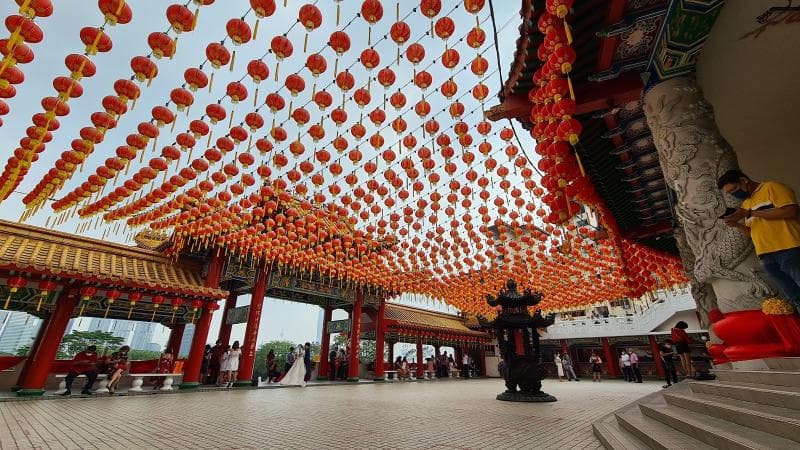
Explore the majestic Pagoda at Thean Hou Temple in Kuala Lumpur, Malaysia. Discover its rich history, unique architecture, and cultural significance.
Overview
Perched majestically atop Robson Heights in Kuala Lumpur, the Pagoda within the Thean Hou Temple stands as a magnificent testament to Chinese architectural grandeur and spiritual devotion. This iconic structure is an integral part of one of Southeast Asia's largest and most impressive Chinese temples, offering visitors a serene escape and breathtaking panoramic views of the city skyline. The temple itself, and by extension its striking pagoda, beautifully intertwines elements of Buddhism, Taoism, and Confucianism, creating a rich tapestry of cultural and religious expression that draws both devotees and curious travelers alike.
History & Cultural Background
The Thean Hou Temple, completed in 1987 and officially opened in 1989, owes its existence to the dedicated Hainanese community in Kuala Lumpur. It was built to honor Thean Hou (also known as Mazu or Tianhou), the revered Goddess of the Sea, who is traditionally believed to protect fishermen and seafarers. Beyond Mazu, the temple also pays homage to Guanyin, the Goddess of Mercy, and Shui Wei Sheng Niang, the Goddess of the Waterfront.
This syncretic approach, blending multiple religious philosophies, is deeply embedded in the temple's design and purpose, making it a significant cultural landmark. The Hainanese Association of Selangor and Federal Territory, which manages the temple, ensured that its construction would reflect a harmonious blend of traditional Chinese design with modern architectural techniques, preserving heritage while embracing contemporary craftsmanship.
What Makes It Special
The Pagoda at Thean Hou Temple is a distinctive, multi-tiered structure that immediately captures the eye with its intricate details and vibrant colors. Its design was notably inspired by the Linggu Temple in Nanjing, China, giving it an authentic touch of traditional Chinese aesthetics. One of its most captivating features is the presence of the twelve animal signs of the Chinese zodiac adorned at its base, inviting visitors to find their birth year's animal.
Beyond the zodiac, the pagoda's roof lines are a spectacle of traditional Chinese architecture, often featuring terracotta ridge beasts, dragons, and phoenixes that symbolize strength, renewal, and good fortune. The pagoda's structure, along with the temple's vibrant red pillars and dragon-inspired columns, contributes to the overall architectural allure, creating a visually stunning and spiritually significant landmark.
Stories, Fun Facts & Local Details
The Pagoda, and the temple grounds it graces, are alive with stories and cultural nuances. During major Chinese festivals like Chinese New Year and the Mid-Autumn Festival, the entire temple complex, including the pagoda, becomes a dazzling display of thousands of illuminated red lanterns, creating a magical atmosphere.
The surrounding gardens offer peaceful contemplation, featuring a Chinese medicinal herb garden, a wishing well, and a popular tortoise pond where visitors can observe hundreds of tortoises. A sacred Bodhi tree also provides a tranquil spot for meditation. The Thean Hou Temple is also renowned as a popular venue for Chinese wedding ceremonies, where couples seek blessings for a happy and prosperous marriage, often praying to Kwan Yin.
Fortune-telling is another common activity here, where visitors can consult oracles or draw lotus sticks, adding an element of traditional interaction to the visit. These practices highlight the temple's role not just as a place of worship, but as a vibrant community hub deeply integrated into the lives of Kuala Lumpur's Chinese population.
Visitor Perspective
Visiting the Pagoda within Thean Hou Temple offers a truly immersive cultural experience. Entry to the temple is free, making it accessible to all. To fully appreciate its beauty and the peaceful ambiance, it's often recommended to visit early in the morning or late in the afternoon to avoid larger crowds and the midday heat.
While there isn't a strict dress code for the general temple grounds, it's always respectful to wear modest clothing that covers shoulders and knees, especially when entering prayer halls. Given its hilltop location and the expansive nature of the complex, wearing comfortable shoes is advisable. From the vantage point of the temple and its pagoda, visitors are rewarded with breathtaking vistas of Kuala Lumpur, particularly stunning as the city lights begin to twinkle in the evening, making it a memorable spot for photography and quiet reflection.
Coordinates: 101.68778, 3.12167
View on Google Maps💬 How Travelers Describe This Place
Based on community votes
Must See
797Interesting
695Unique
396Beautiful
286Photogenic
22
Traveler Stories
Discover memorable experiences shared by travelers who have visited this place.
No traveler stories yet.
Be the first traveler to share what made this place memorable.

Tour
By
Spot
Discover amazing places around the world. Your journey starts here.
Explore
© 2026 TourBySpot. All rights reserved.