The Little Mermaid
Copenhagen, Denmark
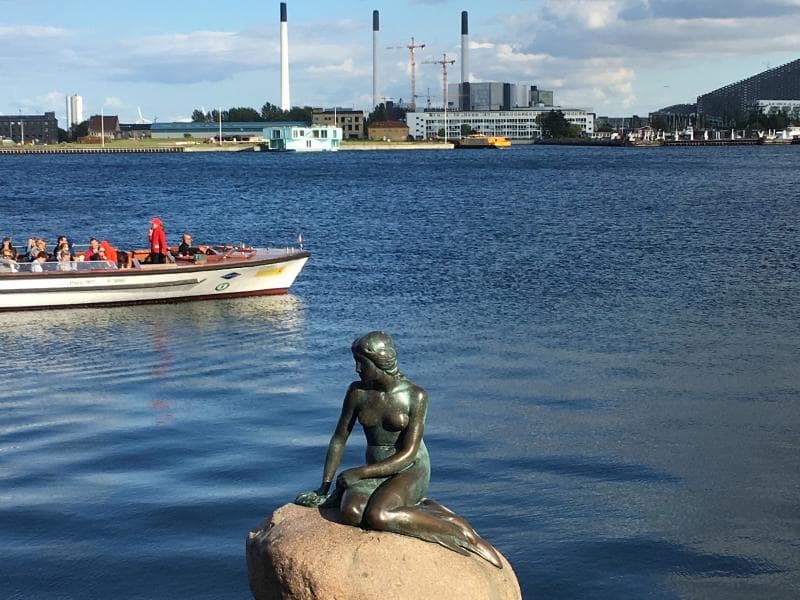
Discover Copenhagen's iconic Little Mermaid statue, inspired by Hans Christian Andersen's fairy tale. Learn its history, significance, and visitor tips in Denmark.
Overview
Perched gracefully on a rock by the waterside of the Langelinie Promenade, The Little Mermaid statue is an enduring symbol of Copenhagen, Denmark. This iconic bronze sculpture, known in Danish as 'Den Lille Havfrue', captures the imagination of millions of travelers each year, offering a poignant connection to one of the world's most beloved fairy tales. Unveiled on August 23, 1913, the statue is surprisingly modest in stature, standing at 1.25 meters (approximately 4 feet) tall and weighing 175 kilograms. Its unassuming presence belies its profound cultural significance and the rich stories it embodies.
As a key landmark, The Little Mermaid draws visitors to Copenhagen's vibrant harbor, inviting them to reflect on themes of longing, transformation, and unfulfilled love. The statue is freely accessible to the public, day and night, reflecting its role as a communal emblem. The surrounding Langelinie Promenade features wide, well-paved, and largely flat paths, making the area easily navigable for all visitors, including those with wheelchairs or strollers.
History & Cultural Background
The genesis of The Little Mermaid statue began in 1909, sparked by the vision of Carl Jacobsen, the son of the founder of Carlsberg Breweries and a prominent patron of the arts. Jacobsen was captivated by a ballet performance at Copenhagen's Royal Theatre based on Hans Christian Andersen's classic fairy tale, 'The Little Mermaid', published in 1837. Deeply moved by the story and the performance, he commissioned sculptor Edvard Eriksen to bring the sorrowful character to life in bronze.
The creation process itself has become part of the statue's legend. Ballerina Ellen Price, who danced the lead role in the ballet, was initially asked to model for the sculpture's head. However, she declined to pose nude for the body. Consequently, Eriksen's wife, Eline Eriksen, bravely stepped in to model for the statue's physique, while Price's likeness is often said to have inspired the face. While some accounts suggest Eline modeled for the entire sculpture, the narrative of two models adds to its unique history. The statue’s enduring presence underscores Denmark's rich literary heritage and Copenhagen's deep-seated connection to the maritime world.
What Makes It Special
Despite its modest dimensions, The Little Mermaid possesses an undeniable charm and depth that makes it truly special. It is not merely a statue but a tangible embodiment of Andersen's poignant narrative, representing universal themes of sacrifice, longing, and the profound pursuit of a different life. Her quiet gaze out over the water evokes the mermaid's yearning for a human soul, an aspect of the original tale that is far more melancholic than many modern interpretations.
Perhaps what further elevates its special status is its remarkable resilience. Over the decades, The Little Mermaid has become a recurring target for vandals and activists, suffering numerous acts of defacement, including decapitations, the loss of an arm, and even being knocked from its rock by a bomb blast. Yet, with each act of damage, the statue has been meticulously restored to its original form. This persistent return reflects the city's unwavering commitment to preserving its cultural symbols and the unbreakable spirit of this beloved icon.
Stories, Fun Facts & Local Details
The story behind The Little Mermaid is filled with fascinating details. It is a common 'fun fact' that many visitors are surprised by her small size upon first encounter, often expecting a grander monument due to her global fame. This perceived 'underwhelming' scale, however, is part of her unique character, allowing for a more intimate connection with the figure.
Another intriguing detail is the persistent tale of the two models: the renowned ballerina Ellen Price for the face and the sculptor's wife, Eline Eriksen, for the body. This collaborative, albeit slightly unconventional, artistic process adds a human element to the statue's creation. The statue has only left its Copenhagen home once, traveling to Shanghai in 2010 to represent Denmark at the World Expo, a rare journey for this steadfast sentinel of the harbor. The original Hans Christian Andersen fairy tale, published in 1837, presents a far darker and more bittersweet ending than its modern retellings, with the mermaid dissolving into sea foam rather than achieving a conventional 'happily ever after,' a depth of narrative reflected in the statue's wistful expression.
Visitor Perspective
Visiting The Little Mermaid offers more than just a photo opportunity; it is an invitation to engage with Danish culture and history. Most visitors typically spend between 15 and 30 minutes at the site, allowing ample time to appreciate the statue, soak in the harbor views, and consider the layers of meaning behind it.
For the best experience and to avoid the largest crowds, particularly during the peak summer season, consider an early morning visit before 9:00 AM or a peaceful late evening stroll. The statue is conveniently located, approximately a 15-minute walk from Østerport Station, which is easily accessible via Copenhagen's metro and S-train network. Many choose to cycle along the scenic waterfront, or combine their visit with other nearby attractions such as the historic Kastellet fortress, the grand Gefion Fountain, or a leisurely canal cruise that offers a different perspective of the mermaid from the water.
Coordinates: 12.599278, 55.69286
View on Google Maps💬 How Travelers Describe This Place
Based on community votes
Photogenic
791Interesting
457Unique
252Must See
147Beautiful
19
Traveler Stories
Discover memorable experiences shared by travelers who have visited this place.
No traveler stories yet.
Be the first traveler to share what made this place memorable.
Things to see at The Little Mermaid



Tour
By
Spot
Discover amazing places around the world. Your journey starts here.
Explore
© 2026 TourBySpot. All rights reserved.