Waterfront Paths
Copenhagen, Denmark
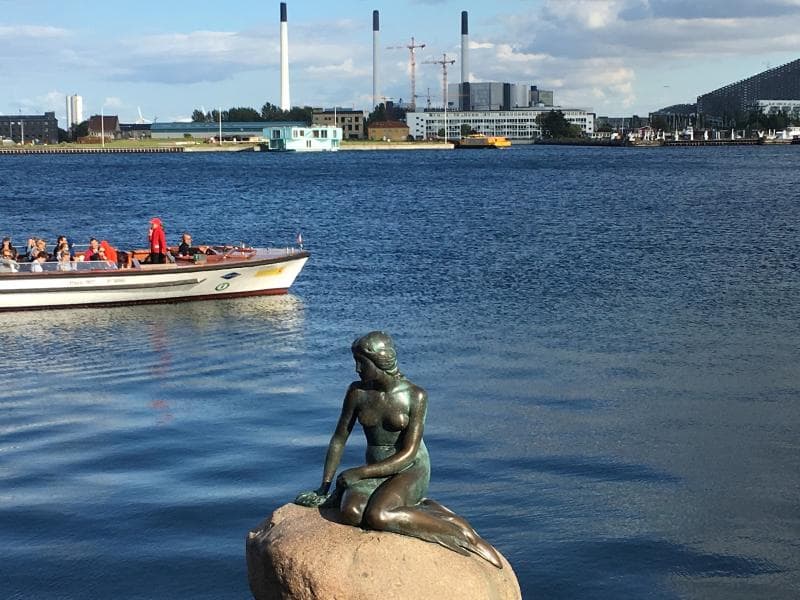
Explore Copenhagen's enchanting Waterfront Paths at The Little Mermaid and Langelinie Promenade, rich in history, culture, and scenic beauty.
Overview
The Waterfront Paths in Copenhagen, centered around the iconic Little Mermaid statue, are primarily embodied by the Langelinie Promenade. This picturesque area serves as a significant pier, a vibrant promenade, and a serene park, offering visitors and locals alike a cherished space for leisurely strolls and scenic views of the harbor. It is here, nestled on a rock by the water, that Hans Christian Andersen's 'Little Mermaid' perpetually gazes out to sea, making it one of Denmark's most famous landmarks. The Langelinie area is a bustling hub, especially when cruise ships dock at its pier, adding to the maritime charm and offering a unique spectacle of large ocean-going vessels.
Extending for approximately 2 kilometers, the Langelinie Promenade provides a pathway that beautifully combines natural beauty with historical and cultural points of interest. It stretches from the grand Gefion Fountain to the Dahlerup Warehouse, with The Little Mermaid statue positioned roughly midway. Beyond just a statue, the broader waterfront area encompasses green spaces, tree-lined paths, and various points for relaxation, making it an integral part of Copenhagen's appeal.
History & Cultural Background
The history of Langelinie dates back to the mid-17th century when it was first known as an idyllic path along the Øresund coast, tracing the edge of the Kastellet citadel. For a considerable period, this stretch remained a restricted military zone, with public access severely limited. An order from 1819 even mandated soldiers to 'cool their feet in the water' here.
Eventually, a beach promenade and a park were developed, but access was initially restricted to the affluent through a toll system. It was not until a public uprising in 1848 that the area finally became open to everyone, transforming it into a popular destination for all Copenhageners. The expansion of Copenhagen's harbor in the late 19th century led to significant changes; the modern Langelinie Pier was constructed in 1894. This development was partly spurred by Germany's construction of the Kiel Canal, which threatened Copenhagen's shipping dominance. The Langelinie Pavilion, a notable structure in the area, also carries a rich history, with its second iteration being destroyed during World War II due to German sabotage operations, before being rebuilt in a modernist style.
What Makes It Special
The Waterfront Paths, particularly the Langelinie Promenade, offer a unique blend of natural beauty and urban accessibility. The primary draw is undoubtedly The Little Mermaid statue, a bronze sculpture that has captivated visitors for over a century. Its modest size, at just 1.25 meters tall, often surprises first-time visitors, but its iconic status and picturesque setting make it an unmissable landmark.
Beyond the mermaid, the promenade is adorned with various statues and sculptures that reflect Danish history and maritime traditions, enriching the walking experience. The constant flow of large ocean vessels and cruise ships docking at Langelinie Pier provides a dynamic backdrop, making it a fascinating spot for maritime enthusiasts. The proximity to other significant landmarks, such as the star-shaped Kastellet fortress and the Gefion Fountain, further enhances the appeal, inviting exploration beyond just the waterfront.
Stories, Fun Facts & Local Details
The Little Mermaid's story is deeply rooted in Hans Christian Andersen's poignant fairy tale. The statue, commissioned by brewer Carl Jacobsen, was sculpted by Edvard Eriksen and unveiled in 1913. Interestingly, while ballet dancer Ellen Price inspired the mermaid's face, Eriksen's wife, Eline, modeled for the body after Price declined to pose nude.
Despite her gentle appearance, The Little Mermaid has faced a tumultuous history, becoming a frequent target for vandals and political activists since the 1960s. She has been decapitated twice, had an arm sawn off, and been painted over, but Copenhagen authorities have consistently restored her, highlighting her resilience and symbolic importance to the city. A lesser-known detail along the Langelinie Pier is a polar bear statue, which bears bullet holes—a stark reminder of a German soldier's actions during the Occupation of Denmark in World War II.
Visitor Perspective
For visitors, the Waterfront Paths offer a tranquil and immersive experience. The Langelinie Promenade is flat and well-paved, making it ideal for a relaxing walk or a bicycle ride, with benches conveniently placed for those wishing to simply sit and take in the harbor views. Many locals frequent the promenade for their Sunday walks, creating a pleasant, authentic atmosphere. To best experience the Little Mermaid and avoid the crowds, especially during peak cruise ship hours, it is often recommended to visit early in the morning or late in the evening.
The paths also connect seamlessly to other significant Copenhagen attractions. From Langelinie, one can easily walk to the historic Kastellet fortress with its peaceful ramparts, and Churchillparken, a beautiful green oasis named after Winston Churchill, featuring war memorials and scenic views. This interconnectedness allows for a broader exploration of Copenhagen's coastal heritage, blending literary wonder, historical depth, and serene natural beauty into a memorable journey.
Coordinates: 12.59926, 55.69286
View on Google Maps💬 How Travelers Describe This Place
Based on community votes
Unique
791Interesting
514Beautiful
457Must See
252Photogenic
207
Traveler Stories
Discover memorable experiences shared by travelers who have visited this place.
No traveler stories yet.
Be the first traveler to share what made this place memorable.

Tour
By
Spot
Discover amazing places around the world. Your journey starts here.
Explore
© 2026 TourBySpot. All rights reserved.