St. Stephen's Green
Dublin, Ireland
Explore St. Stephen's Green, Dublin's iconic Victorian park. Discover its rich history, beautiful gardens, and cultural significance in Ireland.
Overview
Nestled in the vibrant heart of Dublin, Ireland, St. Stephen's Green is a magnificent Victorian public park, offering a tranquil escape from the city's bustling pace. This iconic green space, encompassing approximately 22 acres (9 hectares), is a cherished landmark for both locals and visitors alike. Its rectangular shape is defined by four surrounding streets, collectively known as St. Stephen's Green North, South, East, and West, placing it directly adjacent to Grafton Street, one of Dublin's premier shopping districts. Maintained in its original Victorian layout, the park features extensive tree and shrub planting, vibrant flowerbeds, and ornate landscaping that provides beauty throughout the seasons.
St. Stephen's Green serves as a verdant oasis, a place for leisurely strolls, quiet contemplation, and enjoying the outdoors. From its shimmering lake, home to various waterfowl, to its meticulously cared-for pathways, every corner invites exploration. The park's design, rich with historical and cultural layers, makes it more than just a green space; it is a living testament to Dublin's past and present.
History & Cultural Background
The history of St. Stephen's Green stretches back centuries, long before its current picturesque form. Originally, it was a marshy common on the outskirts of Dublin, spanning about 60 acres, and primarily used for grazing livestock. Its name derives from a medieval leper hospital dedicated to Saint Stephen in the nearby area.
In 1663, the Dublin Corporation, seeking to generate revenue, made a pivotal decision: they enclosed a central area of 27 acres and sold plots around its perimeter for building. A wall was constructed in 1664 to define the park's boundary. By the 18th century, with the development of nearby Grafton Street and Dawson Street, the Green transformed into a fashionable locale. High society would 'promenade' along the 'Beaux Walk' on the northern perimeter, showcasing an elegant and tasteful scene.
However, access to the park remained restricted to local residents until 1877. It was then that Sir Arthur Guinness, later Lord Ardilaun, a generous member of the renowned Guinness brewing family, initiated a parliamentary act to reopen the Green to the public. He personally funded the extensive redesign and landscaping, which took place in 1880, and gifted it to the city. This act of philanthropy ensured that this beautiful space would be enjoyed by all.
St. Stephen's Green also holds a significant place in Ireland's struggle for independence. During the 1916 Easter Rising, a group of rebels, mainly from the Irish Citizen Army led by Commandant Michael Mallin and Countess Constance Markievicz, occupied the park. They dug trenches and used the glasshouse as a first-aid station, transforming the serene park into a battleground against British forces. Evidence of this intense period can still be seen in bullet holes on the Fusiliers' Arch.
What Makes It Special
What truly sets St. Stephen's Green apart is its meticulously preserved Victorian design, a testament to the vision of William Sheppard and Lord Ardilaun. The park features a beautiful three-acre lake on its northern side, complete with a picturesque waterfall and intricately arranged Pulham rockwork. This ornamental lake is a haven for a variety of waterfowl, attracting swans, ducks, and geese.
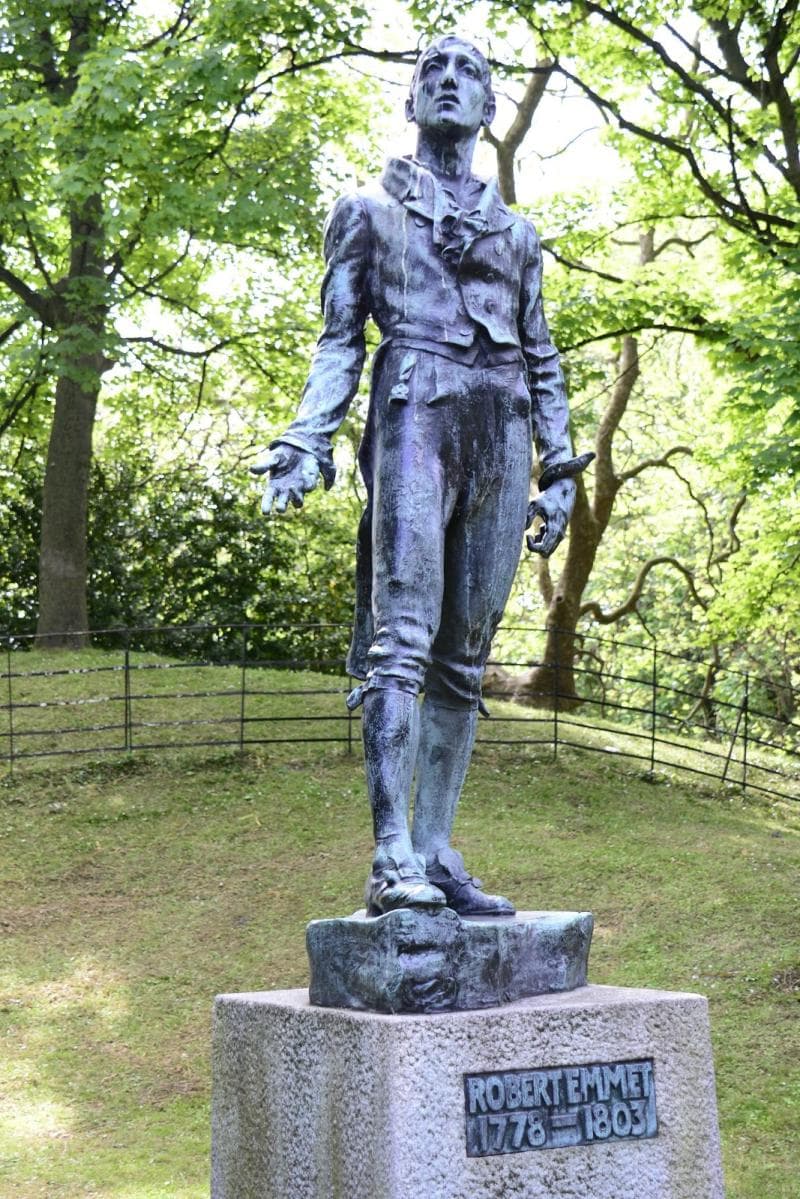
Beyond its natural beauty, the Green is dotted with numerous sculptures and monuments that narrate Ireland's rich history and cultural heritage. Visitors can discover tributes to literary giants like James Joyce and W.B. Yeats, a poignant Famine Memorial, and a bronze statue of Theobald Wolfe Tone, a leader of the 1798 rebellion. The Fusiliers' Arch, located at the Grafton Street entrance, commemorates the Royal Dublin Fusiliers who died in the Second Boer War. Additionally, a unique garden designed for the visually impaired offers a sensory experience with scented plants labeled in Braille.
Stories, Fun Facts & Local Details
The 'Beaux Walk' of the 18th century is a charming detail, highlighting the park's past as a social stage where Dublin's elite would gather and parade in their finest attire, creating a lively spectacle.
An intriguing historical anecdote involves Queen Victoria. After the death of Prince Albert in 1861, she suggested renaming the park 'Albert Green' and placing a statue of him at its center. However, this proposal was firmly rejected by the Dublin Corporation and the local populace, a decision that reportedly displeased the Queen.
The Fusiliers' Arch at the Grafton Street corner, while a striking monument, has a controversial local nickname: 'Traitors Gate'. This stems from the fact that the Royal Dublin Fusiliers, whom it commemorates, fought as part of the British Army, a contentious point during periods of Irish nationalism.
During the Easter Rising of 1916, rebels dug defensive positions within the park. Bullet holes from the intense fighting can still be observed on the Fusiliers' Arch, a stark and tangible reminder of its revolutionary past.
A thoughtful gift from Germany to the Irish people, in gratitude for assistance provided to German refugees after World War II, is a sculpture representing the 'Three Fates', located inside the Leeson Street gate. Today, the park remains a beloved local spot, where families feed the ducks, office workers enjoy their lunch breaks, and students relax, creating a constant tableau of Dublin life.
Visitor Perspective
For any curious traveler, St. Stephen's Green offers an accessible and enriching experience. Admission to the park is free, and it is open year-round during daylight hours, making it an ideal destination for a spontaneous visit. The park boasts over 3.5 kilometers of accessible pathways, perfect for leisurely walks or a peaceful retreat.
Its central location means it is incredibly convenient for visitors exploring Dublin. Situated at the top of Grafton Street, it is easily reached after a day of shopping or sightseeing. Public transport, including Dublin's Luas tram line, has a stop right at the Green. Facilities within the park include a children's playground, making it a family-friendly destination. During the summer months, the Victorian bandstand often hosts free lunchtime concerts, adding to the park's lively yet relaxing atmosphere.
Whether one seeks quiet reflection among the trees, an immersive dive into Irish history through its monuments, or simply a spot for people-watching, St. Stephen's Green provides a unique blend of natural beauty and cultural significance in the heart of Dublin.
Coordinates: -6.2592, 53.3381
View on Google Maps💬 How Travelers Describe This Place
Based on community votes
Unique
674Beautiful
503Photogenic
261Must See
92Interesting
49
Traveler Stories
Discover memorable experiences shared by travelers who have visited this place.
No traveler stories yet.
Be the first traveler to share what made this place memorable.
Things to see at St. Stephen's Green



Tour
By
Spot
Discover amazing places around the world. Your journey starts here.
Explore
© 2026 TourBySpot. All rights reserved.