Schlossberg Uhrturm
Graz, Austria
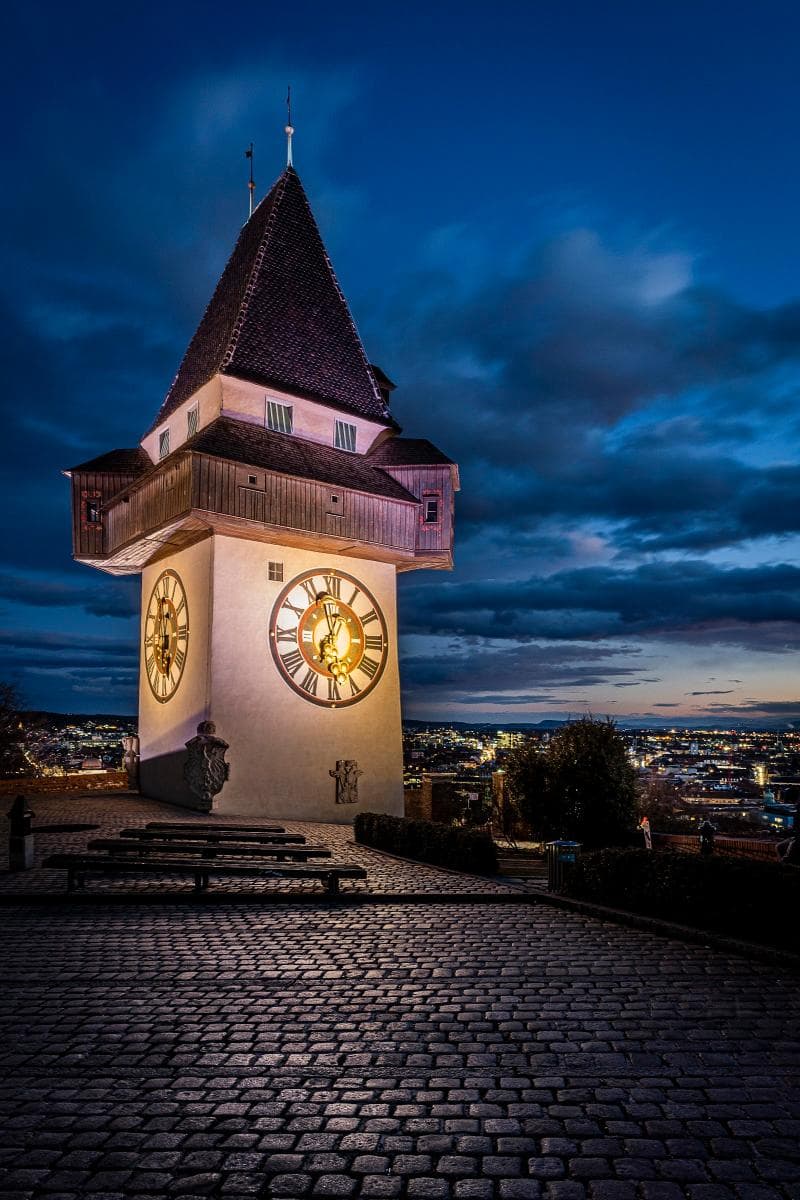
Discover Graz's iconic Schlossberg Uhrturm, the historic Clock Tower on Castle Hill. Explore its unique swapped clock hands, rich history, and panoramic views of Graz, Austria.
Overview
Perched majestically atop the Schlossberg hill, the Schlossberg Uhrturm, or Clock Tower, stands as an unmistakable emblem of Graz, Austria. This iconic landmark offers breathtaking 360-degree panoramic views over the city's charming red rooftops, the meandering Mur River, and the picturesque Styrian landscape stretching to the distant mountains. Standing approximately 28 to 29 meters (92 to 95 feet) tall, the Uhrturm is not merely a timepiece but a profound symbol of Graz's rich history and enduring spirit. It forms a central part of the Schlossberg, a former medieval fortress that has been transformed into a beloved public park, inviting locals and travelers alike to explore its verdant paths and historical treasures.
History & Cultural Background
The history of the Schlossberg Uhrturm is deeply intertwined with that of Graz itself. The name 'Graz' originates from the Slavic word 'Gradec', meaning 'little castle', a testament to the fort that stood on this rocky outcrop over a thousand years ago. The tower itself was first documented as a defensive structure as early as 1265. Its present form, featuring the distinctive wooden gallery, largely dates back to the mid-16th century, specifically around 1560-1569, when it was converted into a dedicated clock tower. The Schlossberg fortifications, which were among the strongest of their time, underwent significant expansion after 1544, guided by plans from the Italian architect Domenico dell'Allio.
Perhaps the most famous chapter in the Uhrturm's history unfolded in 1809. Following the Napoleonic Wars, French forces ordered the demolition of the formidable Schlossberg fortress. However, the citizens of Graz, deeply attached to their beloved Clock Tower and the nearby Bell Tower, collectively raised a substantial ransom of 2,987 florins and 11 farthings to spare these two structures from destruction. This act of civic pride and determination cemented the Uhrturm's status as the city's ultimate symbol of resilience. The tower houses three historic bells: the hourly bell, cast in 1382, which is the oldest bell in Graz; a fire alarm bell from 1645; and the 'Poor Sinners' Bell' from 1450, which once rang during executions and later signaled tavern closing times.
What Makes It Special
The Schlossberg Uhrturm possesses a charming peculiarity that often puzzles first-time visitors: its clock faces feature unusually swapped hands. The large hand indicates the hours, while the smaller hand denotes the minutes. This distinctive design is not an error but a historical relic. Originally, the tower only had one large hour hand, as this was sufficient to tell time from a distance in an era when minutes were less precisely measured. When minute hands were eventually added, the larger hour hand remained, leading to the unique arrangement seen today.
Another notable feature is the wooden watchman's gallery encircling the upper part of the tower. This covered walkway, supported by heavy timber corbels, once provided a vantage point for city watchmen to scan the horizon for fires or approaching threats, underscoring its original defensive purpose. The tower's rustic architecture, including its red-tiled roof and small corner turrets, adds to its fairy-tale appearance, making it a favorite subject for photographers and a truly unique architectural marvel.
Stories, Fun Facts & Local Details
Beyond the compelling tale of its rescue from Napoleon's demolition, the Uhrturm holds other fascinating stories and local details. The various bells within the tower each have a distinct history and purpose, from signaling the hour to warning of danger or marking significant civic events. The Schlossberg itself is a hub of activity and history, with features like the nearby Bell Tower housing 'Liesl', Graz's heaviest bell, and a cistern dating back to the 16th century. Romantic souls will appreciate that the area around the Uhrturm is considered a prime spot for couples, a long-standing tradition in Graz.
Adding to the Schlossberg's allure is the legend of a barking watchdog that, in 1481, reportedly saved Kunigunde, daughter of Emperor Frederick III, from attackers. A stone dog commemorating this heroic canine can be found near the tower, serving as a charming nod to local folklore. The Schlossberg also hosts modern attractions like the Schlossbergbahn funicular, the glass Schlossberglift, and the Slide Graz, the world's tallest underground slide, providing diverse experiences alongside the historical sites.
Visitor Perspective
Visiting the Schlossberg Uhrturm offers a memorable experience for any traveler to Graz. The climb to the top of the Schlossberg is an adventure in itself, with several scenic options available. Visitors can choose to ascend via the challenging 260 steps of the Schlossbergsteig, enjoy a comfortable ride on the panoramic Schlossbergbahn funicular, or take the modern, glass Schlossberglift, which travels through the mountain's interior. The exterior of the Uhrturm and access to the Schlossberg grounds are free of charge, allowing everyone to enjoy the stunning views and the historic ambiance.
For those interested in a deeper dive, guided tours are occasionally available, offering a rare glimpse inside the tower to view its historic clockwork and learn more about its construction and significance. Whether you're seeking panoramic city views, a leisurely stroll through historic gardens, or a connection to Graz's rich past, the Schlossberg Uhrturm provides a compelling and picturesque destination. It's a place where history comes alive against a backdrop of natural beauty, truly capturing the essence of this vibrant Austrian city.
Coordinates: 15.4377041, 47.0735697
View on Google Maps💬 How Travelers Describe This Place
Based on community votes
Interesting
995Must See
989Unique
603Beautiful
581Photogenic
388
Traveler Stories
Discover memorable experiences shared by travelers who have visited this place.
No traveler stories yet.
Be the first traveler to share what made this place memorable.
Things to see at Schlossberg Uhrturm



Tour
By
Spot
Discover amazing places around the world. Your journey starts here.
Explore
© 2026 TourBySpot. All rights reserved.