Bell Mechanism
Graz, Austria
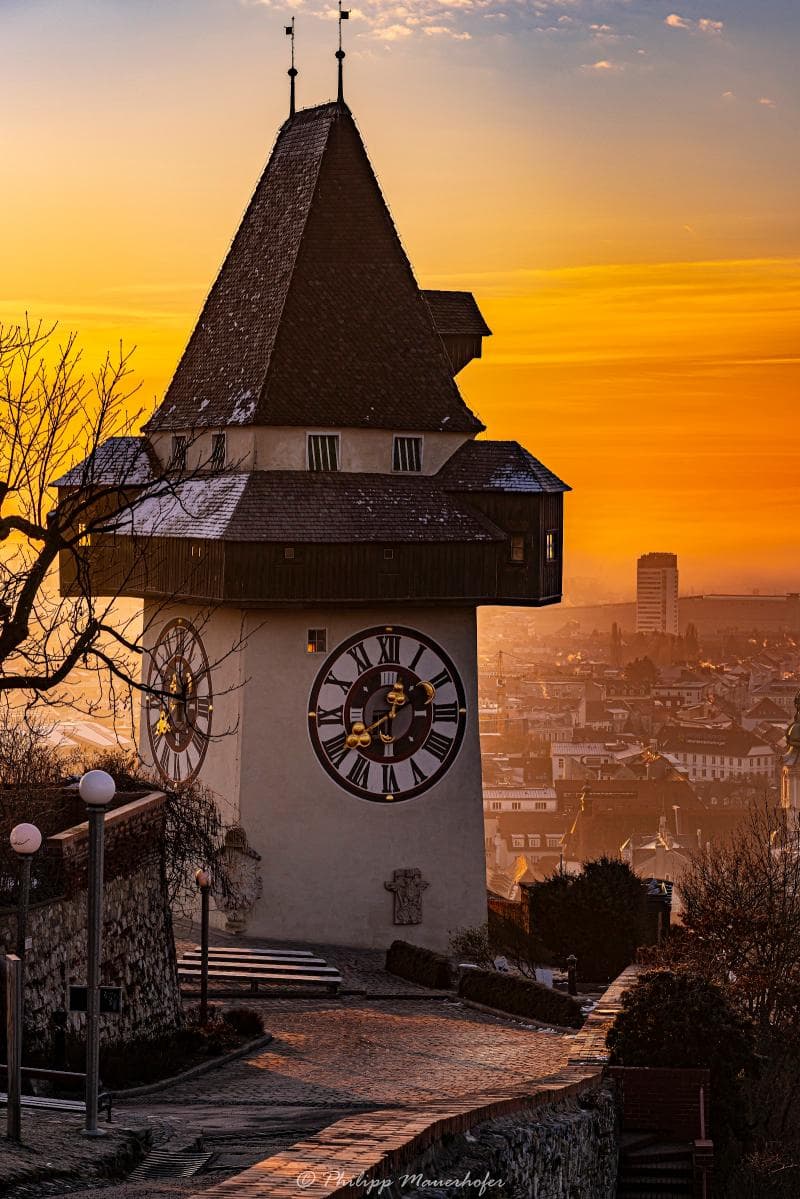
Discover the unique bell mechanism of the Schlossberg Uhrturm in Graz, Austria. Explore its history, fascinating clock hands, and three historic bells.
Overview
Perched majestically atop the Schlossberg hill, the Uhrturm, or Clock Tower, stands as the enduring emblem of Graz, Austria. More than just a time-keeper, this iconic landmark houses a fascinating bell mechanism that tells a rich tale of the city's past and its resilience. The tower's unique clock faces, with their distinctive hands, and the historical bells within, offer a glimpse into centuries of tradition and innovation.
History & Cultural Background
The origins of the Uhrturm date back to the 13th century, initially serving as a defensive tower within the Schlossberg fortress. Its current striking appearance largely took shape around 1560 or 1569 during significant reconstruction efforts. A prominent wooden gallery encircling the clock faces was integral to its function, as fire watchmen would patrol it, diligently scanning the city below for any signs of fire and using the fire bell to alert residents. A pivotal moment in its history occurred in 1809 during the Napoleonic Wars. While much of the Schlossberg fortress was demolished, the citizens of Graz collectively paid a substantial ransom to save both the Uhrturm and the nearby bell tower, preserving them as cherished symbols of their city's unwavering spirit.
What Makes It Special
The heart of the Uhrturm's charm lies in its intricate bell mechanism and unique time display. Unlike most clocks, the Uhrturm features a distinctive arrangement where the large hand indicates the hours, while the smaller hand marks the minutes. This peculiarity stems from historical necessity; when the clock was first installed in the 16th century, only a large hour hand was deemed necessary for visibility from afar. The minute hand was a later addition, incorporated in 1712 with a new clockwork crafted by Michael Sylvester Funck.
Inside the tower, three historic bells each resonate with centuries of stories:
- The Hour Bell: Cast in 1382, this is the oldest bell in Graz and dutifully chimes on the hour, marking the passage of time with its ancient voice.
- The Poor Sinner's Bell ('Armesünderglocke'): Dating from around 1450, this bell once tolled to announce executions. In later years, it adopted the role of signaling the city's curfew, earning it the evocative nickname 'Lumpenglocke' or 'Rogue's Bell,' warning late-night revelers that it was time to retire.
- The Fire Bell: From 1645, this bell played a crucial role in civic safety. It was rung by the fire watchmen to alert the city of fires, pinpointing the district in danger through a series of rings.
The original clockwork from 1712 by Michael Sylvester Funck continues to function today, a testament to its enduring craftsmanship, though it has been electrically operated since the mid-20th century.
Stories, Fun Facts & Local Details
The Uhrturm is rich with local lore and intriguing details. Beyond its 'Rogue's Bell' nickname, visitors might spot three coats of arms adorning the tower's corners. These historical shields represent the Styrian Panther, the single eagle of Emperor Ferdinand I, and the double eagle with Maria Theresa's initials, reflecting centuries of regional and imperial history. A charming legend tells of a 'Stone Dog' near the tower, said to have saved Emperor Frederick III's daughter Kunigunde from kidnapping in 1481 by barking loudly. The tower is not merely a monument; it is a beloved meeting point for locals and a constant reminder of Graz's resilience, having withstood sieges and societal changes to remain a beacon above the city.
Visitor Perspective
Reaching the Uhrturm is part of the experience, offering several picturesque options. Travelers can ascend the Schlossberg via a scenic funicular, a modern glass lift, or by taking the 260 steps of the Felsensteig walking path, each providing stunning panoramic views of Graz. While the exterior of the tower and access to the Schlossberg are generally free, exploring the interior and its historic clockwork is possible through guided tours or during specific opening hours, typically for a small fee. The magnificent vistas from the top, encompassing the red rooftops of the old town and the distant hills, make the journey well worth it, cementing the Uhrturm as a must-visit destination for anyone exploring Graz.
Coordinates: 15.43811, 47.07313
View on Google Maps💬 How Travelers Describe This Place
Based on community votes
Interesting
996Must See
658Unique
585Photogenic
143Beautiful
69
Traveler Stories
Discover memorable experiences shared by travelers who have visited this place.
No traveler stories yet.
Be the first traveler to share what made this place memorable.

Tour
By
Spot
Discover amazing places around the world. Your journey starts here.
Explore
© 2026 TourBySpot. All rights reserved.