Historic Walls
Graz, Austria
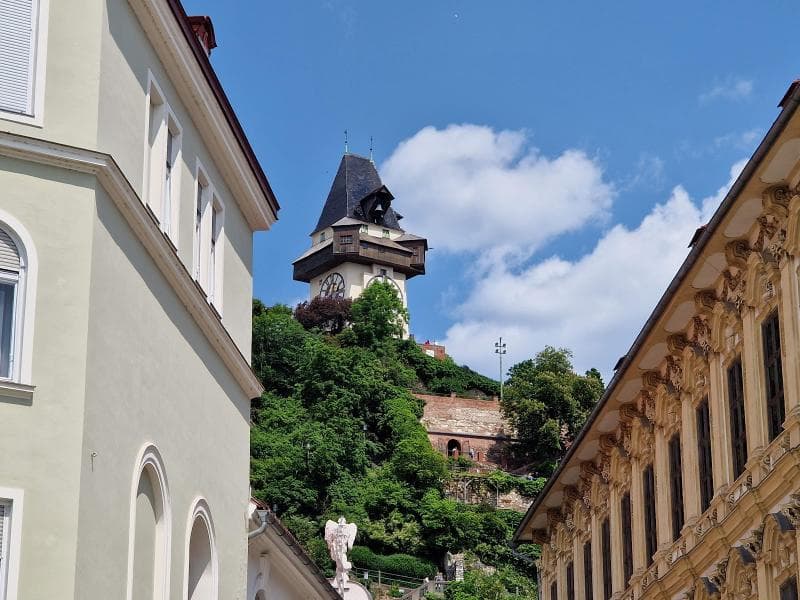
Explore the Historic Walls of Schlossberg Uhrturm in Graz, Austria. Discover centuries of history, stunning views, and unique cultural stories.
Overview
Perched majestically in the heart of Graz, Austria, the Schlossberg is a prominent, tree-clad hill that once housed an impregnable fortress. Today, this historic landmark serves as a vibrant public park, offering extensive panoramic views of the city's charming red rooftops and the surrounding Styrian landscape. At its summit stands the iconic Uhrturm, or Clock Tower, a beloved symbol of Graz that draws both locals and visitors. The very name of the city, Graz, derives from the Slavic word 'Gradec,' meaning 'little castle,' referring to the early fortifications that first graced this strategic hill over a thousand years ago.
History & Cultural Background
The history of the Schlossberg's fortifications dates back to at least the 10th century, with the earliest known fort established in the 12th century. By the mid-16th century, the hill was transformed into a formidable Renaissance fortress, masterfully extended by architects from Northern Italy, most notably Domenico dell'Allio. This impressive stronghold was recognized as one of the strongest fortifications of its era, even earning a mention in the Guinness Book of Records for its unparalleled impregnability. Its strategic importance was underscored during the 16th century when it played a pivotal role in defending Graz against the looming threat of the Ottoman Empire. Remarkably, the fortress was never conquered in battle.
However, its military might eventually met its match not on the battlefield, but at the negotiation table. In 1809, following Napoleon's victory over the Habsburgs and the occupation of Vienna, the French emperor demanded the demolition of the Schlossberg fortifications as part of the Treaty of Schönbrunn. In an extraordinary act of civic devotion, the citizens of Graz rallied together and paid a hefty ransom to spare the destruction of their cherished Uhrturm and the Glockenturm (Bell Tower). The remaining ruins of the castle were later transformed into a beautiful public park by Ludwig von Welden in 1839. Today, the historic center of Graz, including the Schlossberg, is proudly designated a UNESCO World Heritage site, celebrated for its exceptionally well-preserved architecture and the harmonious blend of various historical styles.
What Makes It Special
The Historic Walls of Schlossberg embody a profound narrative of resilience and community spirit. Their enduring presence, having never fallen to military might, speaks volumes about the strategic genius embedded in their design. The poignant story of the citizens ransoming the Uhrturm and Glockenturm from Napoleon highlights a deep-seated love for their city's heritage, a legacy that continues to resonate today. Beyond their historical weight, these walls offer visitors breathtaking panoramic vistas, stretching across the city and beyond, providing an unparalleled vantage point.
A standout feature is the Uhrturm's unique clock, whose hands are famously reversed: the large hand indicates the hours, while the small one tells the minutes. This peculiar design was practical for its time, allowing the hour to be easily read from a distance when minute precision was less critical. Adding another layer of intrigue are the extensive tunnels carved beneath the hill. Originally constructed during World War II as air-raid shelters for up to 40,000 people, parts of this subterranean network are now accessible to the public, hosting events and offering a unique experience. The Schlossberg masterfully combines its rich historical remnants with modern recreational spaces, creating a dynamic destination where the past and present coalesce.
Stories, Fun Facts & Local Details
- The Glockenturm houses the 'Liesl,' a massive bell weighing over 4,000 kg. Originally, 'Liesl' served to warn citizens of danger but now chimes on special occasions, echoing centuries of history across Graz.
- The Uhrturm itself holds another treasure: the oldest bell in Graz, dating back to between 1382 and 1385, which marks the hours.
- Among the Uhrturm's bells was also the 'Armesünderglocke,' or 'Poor Wretches Bell,' which historically rang during executions and later signaled the curfew, earning it the nickname 'Lumpenglocke' or 'Rogues Bell.'
- The distinctive wooden balcony encircling the Uhrturm's clock faces once provided a perch for fire watchmen, who kept a vigilant eye over the city for any signs of fire.
- Beneath the hill, the Schlossberg Tunnels, built during WWII, offered refuge to a staggering 40,000 people during air raids.
- For those curious to delve deeper, the Graz Museum Schlossberg provides comprehensive insights into the hill's fascinating past and its significance to the city.
- The Schlossberg remains a cherished meeting point for locals, a testament to its enduring role in the community's daily life and cultural identity.
- Adventure seekers can experience the 'Slide Graz,' the world's tallest underground slide, or take a ride on the 'Fairytale Express,' both utilizing parts of the old tunnel system.
Visitor Perspective
Exploring the Historic Walls of Schlossberg offers a captivating journey through time, appealing to history enthusiasts, nature lovers, and curious travelers alike. Accessing the summit is an adventure in itself, with several options: you can challenge yourself with a climb up the 260 steps of the Kriegssteig, enjoy a scenic ride on the Schlossberg Funicular, or opt for a unique ascent via the glass lift inside the mountain. Once atop, the Schlossberg provides a unique blend of historical exploration, natural beauty, and vibrant cultural experiences. Visitors can wander through beautifully maintained gardens, discover remnants of the ancient fortress, and take in the magnificent scenery from various viewpoints. Numerous cafes and restaurants are strategically placed, allowing guests to relax and savor a meal or drink while enjoying unparalleled panoramic views of Graz. The Schlossberg truly serves as a serene retreat, inviting contemplation of its rich past while offering a dynamic and engaging experience for all who visit.
Coordinates: 15.43722, 47.07611
View on Google Maps💬 How Travelers Describe This Place
Based on community votes
Must See
934Beautiful
276Photogenic
152Unique
30Interesting
16
Traveler Stories
Discover memorable experiences shared by travelers who have visited this place.
No traveler stories yet.
Be the first traveler to share what made this place memorable.

Tour
By
Spot
Discover amazing places around the world. Your journey starts here.
Explore
© 2026 TourBySpot. All rights reserved.