Reeperbahn
Hamburg, Germany
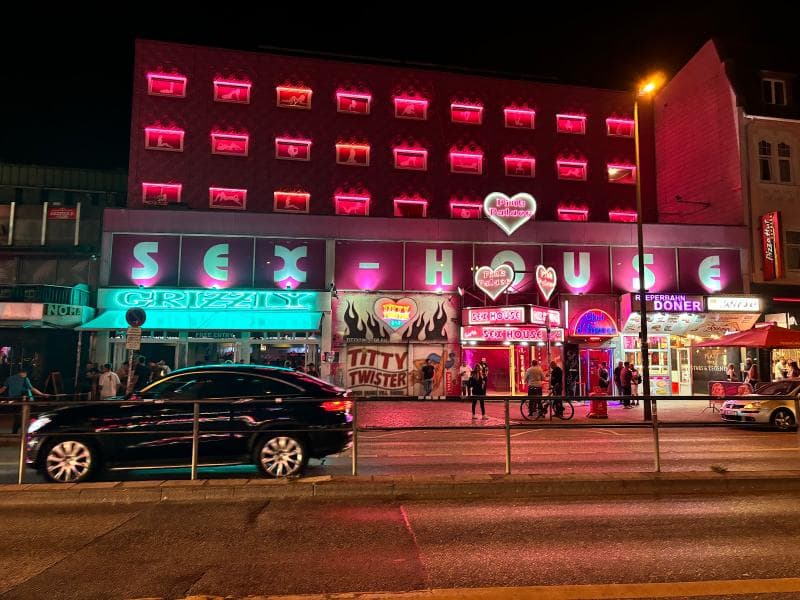
Explore Hamburg's legendary Reeperbahn in St. Pauli, Germany – a vibrant district famed for its nightlife, rich history, and unique cultural blend.
Overview
Nestled in Hamburg, Germany's vibrant St. Pauli district, the Reeperbahn is far more than just a street; it is a legendary entertainment hub, often dubbed 'die sündige Meile' (the sinful mile). Stretching approximately 930 meters, this iconic thoroughfare offers a kaleidoscope of experiences, blending pulsating nightlife with deep cultural roots. While it is renowned as a major red-light district, the Reeperbahn also thrives as a significant center for live music, theatre, and diverse culinary offerings, attracting over 25 million visitors annually.
By day, the Reeperbahn might seem deceptively calm, revealing its historical architecture and a more subdued atmosphere. However, as dusk settles, the street transforms, illuminating with neon lights and a vibrant energy that pulses until the early hours. It's a place where contrasting elements coexist, from historic establishments to modern clubs, creating an unforgettable atmosphere that is both chaotic and charming.
History & Cultural Background
The story of the Reeperbahn begins not with dazzling lights, but with ropes. Its name, 'Reeperbahn,' literally translates to 'ropewalk,' a nod to its origins in the 17th century. This area, then outside Hamburg's city walls, provided the long stretches of land necessary for rope makers ('Reepschläger') to produce rigging for the bustling port city's ships.
As Hamburg's maritime trade flourished, so did the need for services catering to sailors arriving in port. Taverns, inns, and other forms of entertainment began to emerge, gradually transforming the working-class district into an entertainment quarter by the 18th and 19th centuries. By the 1900s, the area had solidified its reputation, with countless entertainment venues, pubs, theatres, and brothels establishing it as the world-famous red-light and entertainment district it is known as today.
What Makes It Special
What truly sets the Reeperbahn apart is its unparalleled diversity and a unique ability to embrace its contradictions. It is a place where high culture meets subculture, where historic theatres stand alongside modern music clubs, and where a family-friendly wax museum can be found just steps from adult entertainment venues.
The street and its numerous side alleys are crammed with restaurants, discotheques, bars, and a variety of live music venues. It's a dynamic hub for Hamburg's nightlife, offering everything from intimate pubs to large clubs that host international DJs and live bands. The Reeperbahn Festival, held annually, is Europe's largest club festival, showcasing hundreds of new artists and drawing tens of thousands of music enthusiasts.
Stories, Fun Facts & Local Details
- The Beatles' Formative Years: Before they achieved global superstardom, The Beatles honed their craft in the Reeperbahn's gritty clubs. From August 1960 onwards, they played extensively at venues like the Indra Club, Kaiserkeller, Top Ten, and later the Star-Club, creating legendary stories that are woven into the district's fabric. John Lennon famously remarked, 'I might have been born in Liverpool – but I grew up in Hamburg.' A dedicated Beatles-Platz, designed to resemble a vinyl record, commemorates their time here.
- Davidwache: Europe's smallest police station, the Davidwache, is an iconic landmark on the Reeperbahn. Despite its diminutive size, it is one of the most famous police stations in Europe, having been featured in numerous films and television shows.
- Herbertstraße: A side street running parallel to the Reeperbahn, Herbertstraße is unique in that it remains one of the few streets in Europe where women and minors are officially restricted from entering. It is known for its shielded entrances and long history of prostitution.
- Spielbudenplatz: This central square on the Reeperbahn serves as a vibrant event space, hosting markets, fairs, and open-air concerts, adding another layer to the district's entertainment offerings.
Visitor Perspective
Visiting the Reeperbahn is an experience in immersion. During the day, it's possible to explore its historical aspects, admire street art, or enjoy a meal in one of its diverse restaurants. However, the true character of the Reeperbahn awakens after 9 PM, when the neon signs flicker to life and the streets fill with a lively, eclectic crowd.
Travelers should expect a sensory-rich environment – loud music, flashing lights, and a constant buzz of activity. It's a place for people-watching, enjoying live performances, or simply soaking in the unpredictable energy. While aspects of its red-light district history are still present, the area has evolved considerably to offer a broader range of cultural and entertainment options, making it appealing to curious travelers seeking an unconventional and memorable slice of Hamburg life.
Coordinates: 9.9608, 53.5494
View on Google Maps💬 How Travelers Describe This Place
Based on community votes
Interesting
799Must See
639Beautiful
526Unique
181Photogenic
30
Traveler Stories
Discover memorable experiences shared by travelers who have visited this place.
No traveler stories yet.
Be the first traveler to share what made this place memorable.
Things to see at Reeperbahn



Tour
By
Spot
Discover amazing places around the world. Your journey starts here.
Explore
© 2026 TourBySpot. All rights reserved.