St. Pauli Theater
Hamburg, Germany
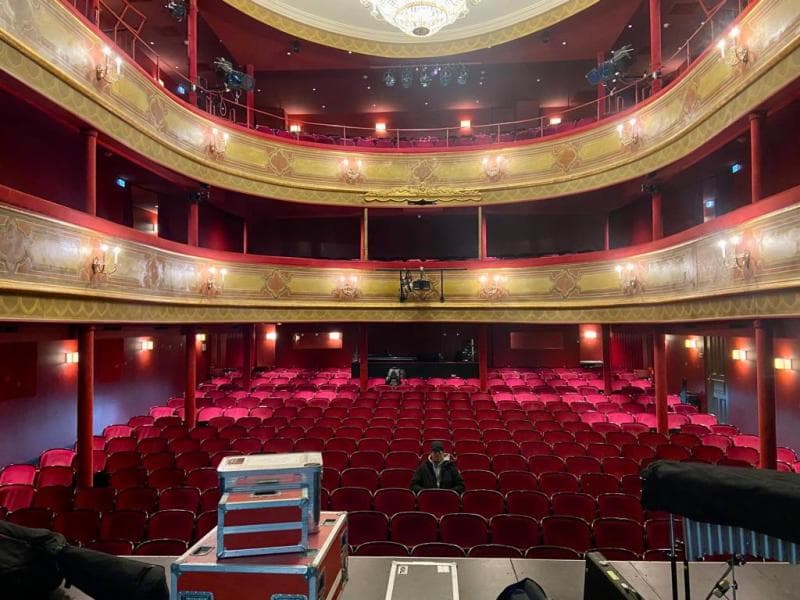
Explore St. Pauli Theater, Hamburg's oldest private theater on the Reeperbahn. Discover its rich history, diverse performances, and cultural significance in Germany.
Overview
Nestled in the vibrant heart of Hamburg's renowned Reeperbahn, the St. Pauli Theater stands as a beacon of cultural history and contemporary entertainment. It is distinguished as Hamburg's oldest private theater and one of the oldest in Germany, having first opened its doors in 1841 as the Urania Theater before adopting its current name in 1941. This historic venue, with its 533 seats, consistently offers a program described as 'intelligent entertainment of the highest standard,' featuring acclaimed actors, comedians, and musicians. Its programming often spotlights themes intrinsically linked to Hamburg, providing a unique local flavor within the broader German theater landscape.
Situated on Spielbudenplatz, the theater's unique position places it amidst the lively, often boisterous atmosphere of the Reeperbahn, famously known as the 'sinful mile.' This location has profoundly influenced its diverse repertoire, appealing to both local Hamburgers and visitors from around the globe.
History & Cultural Background
The story of the St. Pauli Theater is deeply interwoven with the colorful history of its surrounding district. The St. Pauli area itself began in the 17th century as 'Hamburger Berg,' a suburb outside Hamburg's city gates, designated for trades considered undesirable within the city walls, such as rope-making. This origin is even reflected in the name 'Reeperbahn,' which translates to 'ropewalk,' a path where ropes for sailing ships were once made.
As Hamburg thrived as a port city, the area attracted sailors and, consequently, a burgeoning entertainment scene. Spielbudenplatz, the square where the theater now stands, was a hub for showmen, tightrope walkers, and jugglers as early as 1795. Recognizing the growing need for organized entertainment, the Hamburg City Council began allocating plots for permanent performance venues in 1840. It was in this dynamic environment that the Urania Theater, later the St. Pauli Theater, was founded in 1841. Over the decades, the theater's program evolved, embracing dialect theater, operettas, and serious dramatic works, always reflecting the changing cultural tapestry of the Reeperbahn.
What Makes It Special
What sets the St. Pauli Theater apart is its enduring legacy and its ability to thrive in such an unconventional setting. As Hamburg's oldest private theater and one of Germany's most venerable stages, it carries a rich tradition while continuously reinventing itself. The contrast between the theater's sophisticated offerings and the 'rough surroundings' of the Reeperbahn creates a uniquely Hamburg experience.
The theater prides itself on being a 'modern folk theatre,' offering a diverse blend of in-house productions, co-productions, and carefully selected guest performances that encompass theater, cabaret, comedy, concerts, and readings. It is also notable for its commitment to families, regularly staging productions designed to bring stories to life for younger audiences. The building itself is a listed structure, a testament to its historical and architectural significance on Spielbudenplatz.
Stories, Fun Facts & Local Details
The St. Pauli Theater is more than just a building; it is a custodian of local stories and a reflection of the Reeperbahn's legendary character. The district's moniker, 'Kiez,' is a local term of endearment for this unique neighborhood. The Reeperbahn's allure as an entertainment hotspot also attracted musical legends, most notably The Beatles, who famously honed their craft in the local clubs before achieving global stardom.
The theater's programming often features prominent German stage personalities and has a history of successful shows, including the famous play 'Die Zitronenjette.' Another local landmark, the Davidwache police station, is situated nearby on the Reeperbahn and holds the distinction of being one of Europe's most recognized and busiest police stations, often appearing in films and television. The St. Pauli Theater continually explores how 'intelligent entertainment' can resonate and flourish on this bustling and historically rich street.
Visitor Perspective
Visiting the St. Pauli Theater offers an intimate and memorable cultural experience. Its central location on Spielbudenplatz makes it easily accessible, serving as an ideal starting point or a distinguished highlight of an evening out on the Reeperbahn. The theater is well-equipped to welcome all guests, offering wheelchair accessibility to ensure a comfortable visit.
Attending a performance at the St. Pauli Theater provides an opportunity to engage with high-quality German theater in a setting that perfectly balances historical grandeur with the electric energy of modern Hamburg. After the show, the vibrant nightlife of the Reeperbahn, with its array of other theaters, clubs, bars, and restaurants, is just steps away, allowing for a seamless transition from cultural immersion to urban exploration. The closest public transport, the U-Bahn and bus station 'St. Pauli,' ensures convenient travel to and from the venue.
Coordinates: 9.96333, 53.54917
View on Google Maps💬 How Travelers Describe This Place
Based on community votes
Unique
996Photogenic
673Beautiful
585Interesting
143Must See
69
Traveler Stories
Discover memorable experiences shared by travelers who have visited this place.
No traveler stories yet.
Be the first traveler to share what made this place memorable.

Tour
By
Spot
Discover amazing places around the world. Your journey starts here.
Explore
© 2026 TourBySpot. All rights reserved.