Ponte Vecchio
Florence, Italy
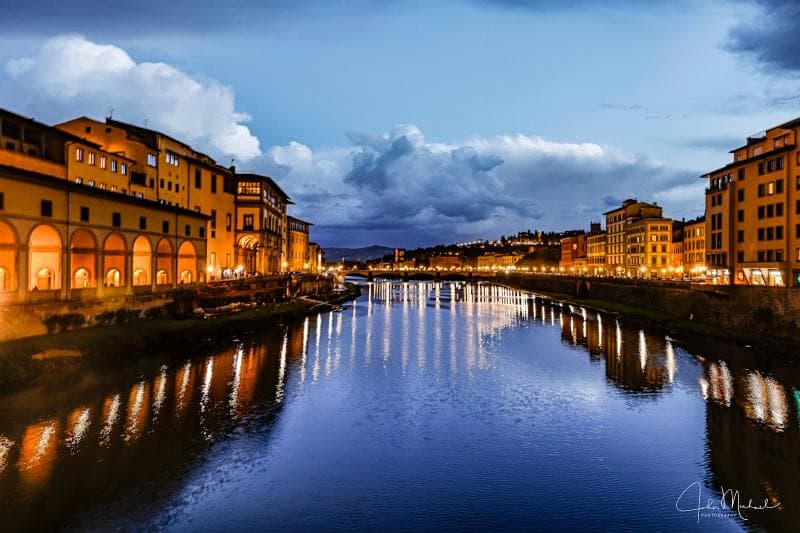
Explore Ponte Vecchio, Florence's iconic 'Old Bridge,' famed for its historic shops and the secret Vasari Corridor. Discover its rich history and charm.
Overview
The Ponte Vecchio, or 'Old Bridge,' stands as an enduring symbol of Florence, Italy, gracefully arching over the Arno River. More than just a crossing, it is a vibrant street lined with unique shops, making it one of the most distinctive and photographed landmarks in the city. Its ancient stone structure, adorned with artisan workshops that appear to dangle precariously over the water, offers a captivating glimpse into Florence's rich past and lively present.
Connecting the historic city center with the Oltrarno district, the Ponte Vecchio has served as a crucial thoroughfare for centuries, adapting through various historical eras while maintaining its singular character.
History & Cultural Background
The site of the Ponte Vecchio has hosted a bridge since Roman times, with the earliest documented mention dating back to 996 CE. However, the Arno River's powerful floods repeatedly destroyed earlier wooden and stone structures in 1117 and again in 1333.
The current bridge, an impressive feat of medieval engineering, was reconstructed in 1345. Its design, featuring three segmental arches, is often attributed to architects Taddeo Gaddi or Neri di Fioravanti, representing an architectural innovation for its time.
Initially, the shops lining the bridge housed various trades, including butchers, fishmongers, and tanners. This arrangement, while practical for disposing of waste directly into the river, led to unpleasant smells. In 1565, Grand Duke Cosimo I de' Medici commissioned Giorgio Vasari to construct the famous Vasari Corridor. This elevated, enclosed passageway allowed the Medici family to travel safely and privately between their residences, Palazzo Vecchio and Palazzo Pitti, passing directly above the shops on the Ponte Vecchio and through the Uffizi Gallery.
Due to the persistent odors, Cosimo I's successor, Grand Duke Ferdinando I de' Medici, decreed in 1593 that only goldsmiths and jewelers would be permitted to operate shops on the bridge. This pivotal decision transformed the Ponte Vecchio into the glittering marketplace of fine jewelry and gold it remains today.
What Makes It Special
The Ponte Vecchio's most striking feature is undoubtedly the shops built directly onto its structure, a practice once common but now a rarity in Europe. These shops, many with 'back-shops' or 'sporti' overhanging the river, create a unique, enclosed street experience. The bridge's three segmental arches were groundbreaking for their era, allowing for efficient water flow and providing stability against the Arno's currents.
Above these shops runs the Vasari Corridor, a testament to Renaissance ingenuity and the Medici family's desire for privacy and security. The corridor, now part of the Uffizi Gallery, features circular windows that offer discreet, stunning views of the river.
Another remarkable aspect of the Ponte Vecchio is its incredible resilience. It was the only bridge in Florence to be spared destruction by retreating German forces during World War II, a testament to its historical and architectural significance. It also withstood the devastating Arno flood of 1966, further cementing its status as a symbol of Florentine endurance.
Stories, Fun Facts & Local Details
One of the most compelling stories surrounding the Ponte Vecchio is its survival during World War II. While all other bridges in Florence were destroyed, the Ponte Vecchio remained intact. Legend often attributes this to an express order from Adolf Hitler, who was reportedly captivated by its beauty during a visit in 1938. However, historical accounts suggest that German diplomat Gerhard Wolf played a crucial role in advocating for its preservation, with a commemorative plaque on the bridge honoring his actions.
The bridge also features a bronze bust of Benvenuto Cellini, a renowned Florentine goldsmith, installed in 1901 to honor the bridge's long-standing connection to jewelry-making. For a time, 'love locks' were a common sight on the bust and railings, left by couples as a symbol of everlasting love, though the city has since removed them due to structural concerns. An ancient sundial can also be found on the roof of one of the shops, marking the hours.
At night, when the jewelry shops close their wooden shutters, they resemble antique chests, creating a magical and romantic atmosphere, particularly for an evening stroll.
Visitor Perspective
Walking across the Ponte Vecchio is an immersive experience, inviting visitors to step back in time. The cobbled thoroughfare is a pedestrian-only zone, always bustling with activity. Tourists and locals alike browse the glittering displays of high-end jewelry, watches, and goldsmiths, many of which are family-owned businesses continuing centuries-old traditions.
The central openings on the bridge offer breathtaking panoramic views of the Arno River, the surrounding Florentine architecture, and the distant hills of Fiesole. These vantage points are particularly popular at sunset, when the golden light bathes the bridge and the river, creating a truly unforgettable scene.
The Ponte Vecchio is accessible to pedestrians 24/7, though the shops typically operate between 9:00 AM and 7:30 PM. For a more serene experience, an early morning visit can offer peaceful moments, while evenings often feature street musicians, adding to the romantic ambiance. No ticket is required to cross the bridge or explore its shops, making it a freely accessible highlight of any visit to Florence.
Coordinates: 11.25318, 43.76803
View on Google Maps💬 How Travelers Describe This Place
Based on community votes
Photogenic
953Unique
695Beautiful
396Must See
286Interesting
22
Traveler Stories
Discover memorable experiences shared by travelers who have visited this place.
No traveler stories yet.
Be the first traveler to share what made this place memorable.
Things to see at Ponte Vecchio



Tour
By
Spot
Discover amazing places around the world. Your journey starts here.
Explore
© 2026 TourBySpot. All rights reserved.