Bridge Arches
Florence, Italy
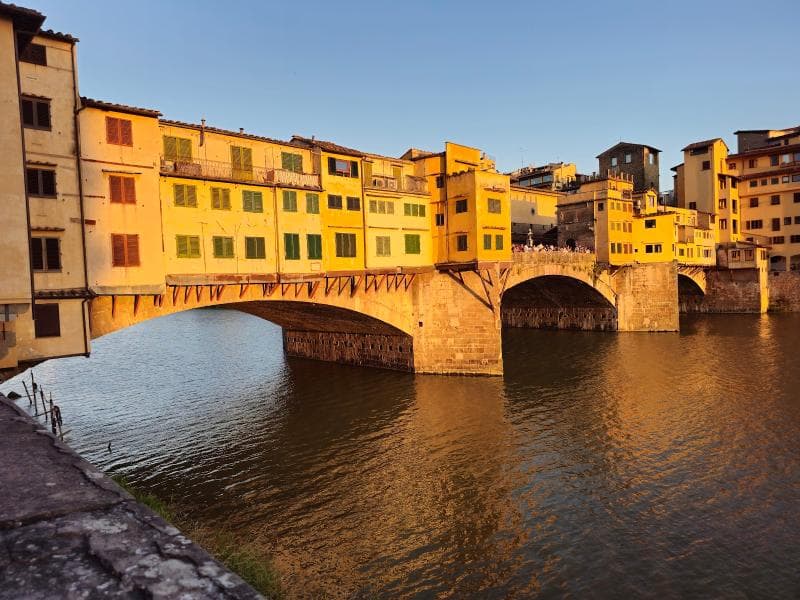
Explore the historic Bridge Arches of Ponte Vecchio in Florence, Italy, a medieval marvel adorned with shops and centuries of stories.
Overview
The Ponte Vecchio, Florence's iconic 'Old Bridge', is more than just a crossing over the Arno River; it is a vibrant testament to centuries of Florentine history and ingenuity. Renowned for its unique design featuring shops built directly along its length, this medieval stone arch bridge stands as a distinctive landmark in the heart of Florence, Italy. Unlike typical bridges, the Ponte Vecchio integrates commerce and daily life into its very structure, offering a unique blend of historical significance and lively atmosphere. A stroll across its ancient stones provides not only breathtaking views of the Arno but also a tangible connection to the city's rich past.
History & Cultural Background
The site where the Ponte Vecchio now stands has hosted a bridge since Roman times, with the earliest written mention dating back to 996 CE. However, earlier wooden structures were repeatedly destroyed by the Arno's powerful floods, notably in 1117 and 1333. The current iteration of the bridge, completed in 1345, was designed to withstand such natural disasters, a feat attributed to architects like Taddeo Gaddi or Neri di Fioravanti.
Initially, the bridge was a bustling marketplace for butchers, fishmongers, and tanners, who would often dispose of their waste directly into the river. This changed dramatically in 1593 when Grand Duke Ferdinando I de' Medici, bothered by the unpleasant smells, decreed that only goldsmiths and jewelers could occupy the shops. This pivotal decision transformed the bridge into the glittering hub of fine craftsmanship it largely remains today. Adding another layer of historical intrigue is the Vasari Corridor, an elevated, enclosed passageway built in 1565 by Giorgio Vasari above the shops. This private corridor allowed the Medici family to travel discreetly and safely between the Palazzo Vecchio and the Pitti Palace.
What Makes It Special
The bridge's most defining architectural feature is its system of arches. The Ponte Vecchio is classified as a closed-spandrel segmental arch bridge, a significant departure from the traditional Roman semi-circular arch design. It features three distinct segmental arches: a central main arch spanning approximately 30 meters (98 feet), flanked by two side arches, each measuring about 27 meters (89 feet). This innovative use of shallow, or 'depressed', arches was groundbreaking for its era. It allowed for a greater distance between the supporting piers and minimized the bridge's obstruction to the Arno's flow, making it more resilient to floods compared to its predecessors. Constructed primarily of stone, its robust foundation includes triangular prows designed to deflect the river's current, showcasing a sophisticated understanding of hydraulic engineering for the 14th century.
Stories, Fun Facts & Local Details
Among the most remarkable tales of the Ponte Vecchio is its survival during World War II. While all other bridges in Florence were destroyed by retreating German forces in 1944, the Ponte Vecchio was miraculously spared, a decision often attributed to a direct order from Hitler himself, who was reportedly captivated by its beauty. The bridge also famously withstood the catastrophic flood of 1966, further cementing its legendary resilience.
Another endearing detail is the bronze bust of Benvenuto Cellini, a renowned 16th-century Florentine goldsmith, located at the center of the bridge. For years, couples would affix 'love locks' to the railing around Cellini's bust as a symbol of eternal devotion, though this tradition has since been banned to protect the historic monument. Look closely at the shops, and you'll notice many extend precariously over the water, supported by wooden cantilevers known as 'sporti', a design element that adds to the bridge's distinctive charm. An ancient sundial, almost hidden on the roof of one of the central shops, also reminds visitors of the bridge's long passage through time.
Visitor Perspective
Today, the Ponte Vecchio remains a focal point for visitors to Florence, easily accessible to pedestrians 24/7, although the shops typically operate from morning until early evening. It offers an unparalleled experience, inviting travelers to wander through its unique array of jewelry shops, admire the dazzling displays of gold and precious stones, and absorb the vibrant atmosphere. The central opening provides picturesque views along the Arno River, particularly enchanting at sunset when the light bathes the bridge in a golden glow, creating a truly romantic setting. Located conveniently near other major Florentine attractions like the Uffizi Gallery and Palazzo Pitti, the Ponte Vecchio is an unmissable destination, offering a captivating glimpse into Florence's artistic, commercial, and engineering heritage.
Coordinates: 11.2519, 43.7675
View on Google Maps💬 How Travelers Describe This Place
Based on community votes
Must See
998Photogenic
897Beautiful
641Interesting
481Unique
196
Traveler Stories
Discover memorable experiences shared by travelers who have visited this place.
No traveler stories yet.
Be the first traveler to share what made this place memorable.

Tour
By
Spot
Discover amazing places around the world. Your journey starts here.
Explore
© 2026 TourBySpot. All rights reserved.