Plaza Mayor
Madrid, Spain
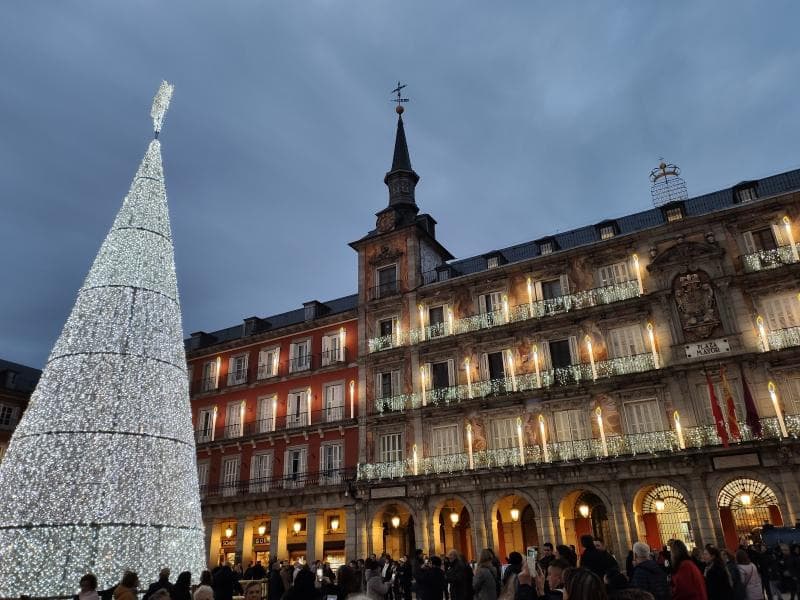
Discover Plaza Mayor in Madrid, Spain: a historic main square with rich history, stunning architecture, and vibrant cultural life.
Overview
Plaza Mayor, the grand Main Square, stands as a historic and cultural heart in the bustling center of Madrid, Spain. This iconic rectangular plaza, measuring 129 meters by 94 meters, is enveloped by uniform, three-story residential buildings featuring 237 balconies that overlook the lively square. Its elegant Baroque architecture, characterized by red bricks, slate roofs, and spires, offers a striking visual harmony. Today, it serves as a vibrant public space, a focal point for both locals and travelers, bustling with cafes, shops, and street performers.
Accessed through ten distinct entrances and nine gates, each bearing historical or geographical significance, Plaza Mayor seamlessly integrates into the city's ancient network of streets. It is not just a landmark but a living monument, reflecting centuries of Madrid's rich history and evolving identity.
History & Cultural Background
The origins of Plaza Mayor trace back to the 15th century when it was known as Plaza del Arrabal, serving as Madrid's primary marketplace outside the city walls. Its transformation began in 1561 when Philip II moved the Spanish court to Madrid and initiated plans for its redesign. While architect Juan de Herrera was commissioned to conceptualize the area in a classical style, the actual construction largely took place under Philip III, beginning in 1617 and completed by Juan Gómez de Mora in 1619.
Throughout its long history, the Plaza Mayor has been witness to myriad public events, both celebratory and solemn. It hosted royal coronations, theatrical productions, bullfights, and folk festivals. Tragically, it also served as the grim setting for trials of the Spanish Inquisition, known as 'auto-da-fés,' and public executions. The square endured three major fires, with the most devastating occurring in 1790. Architect Juan de Villanueva oversaw the reconstruction after this last fire, giving the plaza much of its current appearance and its iconic nine arched entrances. Over the centuries, its name changed several times, including Plaza de la Constitución and Plaza Real, before finally settling on Plaza Mayor after the Spanish Civil War.
What Makes It Special
The Plaza Mayor's enduring appeal lies in its striking architectural coherence and its profound sense of history. Its uniform Baroque style, with every building sharing a consistent aesthetic, creates a powerful sense of enclosure and grandeur. At its heart stands the bronze equestrian statue of King Philip III, a 17th-century masterpiece by Giambologna and Pietro Tacca, which was relocated to the square in 1848.
Perhaps the most distinctive building is the Casa de la Panadería, located on the north side. Originally the city's main bakery, its richly frescoed facade, adorned with mythological figures by Carlos Franco, is a captivating work of art. Today, it houses the Madrid Tourism Center. The entire square, with its characteristic arcades, functions as a timeless 'outdoor living room,' inviting visitors to stroll, dine, and soak in the atmosphere. It stands as the quintessential heart of Habsburg Madrid, embodying centuries of the city's evolution and spirit.
Stories, Fun Facts & Local Details
Many fascinating stories and local traditions are intertwined with Plaza Mayor. Before its formal construction, a lagoon once existed here, which served as a popular duck hunting spot for kings and a primitive farmers' market. The square's balconies were once highly coveted viewing platforms; during grand public events like bullfights or festivals, residents would rent out their balconies overlooking the plaza, effectively creating an early form of 'stadium seating.' The Casa de la Panadería earned its importance not only for supplying bread but also for regulating its price, ensuring even the poorest citizens could afford it.
One of the most famous of its nine entrances is the Arco de Cuchilleros, or 'Cutlers' Arch,' named after the knife makers' workshops that once lined the street it led to. A unique culinary tradition associated with the Plaza Mayor is the 'bocadillo de calamares,' a fried calamari sandwich, which has become a beloved symbol of the square and the city itself. Moreover, the plaza transforms into a magical wonderland each December, hosting Madrid's oldest and most famous Christmas market, filled with festive stalls and decorations.
Visitor Perspective
For any curious traveler, a visit to Plaza Mayor is an immersion into Madrid's soul. It's a place to pause and observe, to imagine the centuries of life that have unfolded within its walls. Early mornings and late afternoons are often the best times to visit, offering a more serene experience before the crowds gather. You can enjoy a coffee or a meal at one of the many outdoor cafes under the arcades, perhaps trying that famous calamari sandwich.
Beyond its culinary delights, the Plaza Mayor serves as an excellent starting point for exploring the historic 'Madrid de los Austrias' (Habsburg Madrid). Nearby attractions include the vibrant San Miguel Market, the iconic Puerta del Sol, and the majestic Royal Palace. Street musicians and artists often add to the lively ambiance, making it a perfect spot for people-watching and soaking up the authentic Madrilenian atmosphere. The Plaza Mayor Tourist Information Centre is conveniently located within the Casa de la Panadería, offering helpful advice and resources for your explorations.
Coordinates: -3.707391, 40.415364
View on Google Maps💬 How Travelers Describe This Place
Based on community votes
Unique
445Interesting
416Must See
289Beautiful
141Photogenic
33
Traveler Stories
Discover memorable experiences shared by travelers who have visited this place.
No traveler stories yet.
Be the first traveler to share what made this place memorable.
Things to see at Plaza Mayor



Tour
By
Spot
Discover amazing places around the world. Your journey starts here.
Explore
© 2026 TourBySpot. All rights reserved.