Central Statue of Philip III
Madrid, Spain
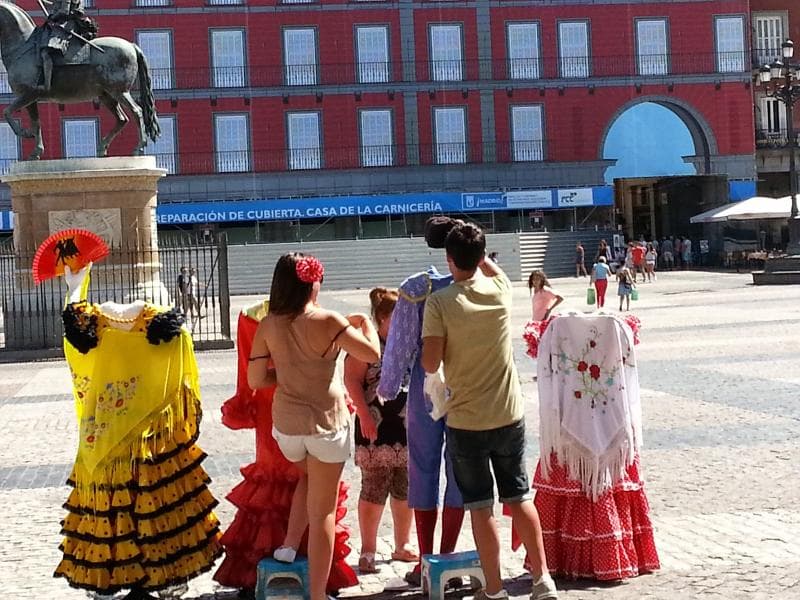
Discover the Central Statue of Philip III in Madrid's Plaza Mayor. Explore its rich history, artistic origins, and fascinating local stories in Spain.
Overview
At the heart of Madrid's magnificent Plaza Mayor stands the Central Statue of Philip III, a captivating bronze equestrian monument that serves as a focal point for visitors and a testament to centuries of Spanish history. This regal depiction of King Philip III, astride his horse, commands attention amidst the uniform architecture of the iconic square, inviting contemplation of Madrid's rich past and its royal heritage. It is a symbol of continuity, having witnessed countless events unfold in one of the city's most vibrant public spaces.
History & Cultural Background
The story of the Central Statue of Philip III begins long before its current placement. Commissioned by King Philip III himself, the statue was initiated by the renowned Flemish sculptor Giambologna (also known as Giovanni da Bologna or Jean Boulogne) and completed by his talented pupil, Pietro Tacca, in 1616. It was a grand gift from Cosimo II de' Medici, the Grand Duke of Tuscany, and was initially installed in the Casa de Campo, a large park on the outskirts of Madrid, within the gardens of the Palacio Real. Philip III's reign (1598–1621) was a significant period, during which the Plaza Mayor itself was completed in 1619, under the direction of architect Juan Gómez de Mora, becoming a central hub for the capital. However, it wasn't until 1848, at the instruction of Queen Isabella II, that the statue found its permanent home in the center of the Plaza Mayor, solidifying its place as an integral part of the square's identity.
What Makes It Special
What truly distinguishes this equestrian statue is not just its artistic excellence, a hallmark of Giambologna and Tacca's work, but its enduring presence through Madrid's tumultuous history. Crafted in bronze, it exemplifies the dynamic pose characteristic of equestrian monuments of the era, capturing the king in a triumphant posture. It has survived the major fires that repeatedly devastated the Plaza Mayor, necessitating rebuilds and redesigns, most notably by Juan de Villanueva after the 1790 blaze. Beyond its artistic merit, the statue's central position within the grand, arcaded Plaza Mayor makes it a natural focal point, anchoring the square's impressive architectural symmetry and historical gravitas. It stands as a silent observer of the plaza's evolution from a marketplace and venue for bullfights, public celebrations, and even executions, to the beloved gathering place it is today.
Stories, Fun Facts & Local Details
Perhaps the most fascinating and widely retold anecdote about the statue dates back to the early years of the Franco dictatorship. During a period when many royal statues were targeted for destruction, the Central Statue of Philip III was toppled from its pedestal. When the hollow bronze structure hit the cobblestones of the Plaza Mayor, hundreds of small bones tumbled out. The initial reaction of the vandals was superstitious fear, believing they had unearthed the king's spirit or some guardian entity, which reportedly halted further damage. Later investigation revealed a more mundane, yet poignant, truth: the bones were those of small birds, primarily sparrows. They had entered the statue through a small opening, likely the horse's mouth, but due to the internal angles and restricted space, they were unable to find their way out, becoming trapped and perishing inside over the centuries. When the statue was subsequently repaired and re-erected, this entry point was sealed, ensuring no more birds would suffer the same fate. This curious detail adds a unique layer of local lore to the monument, often shared with curious travelers.
Visitor Perspective
For any traveler exploring Madrid, the Central Statue of Philip III is more than just an old monument; it is an anchor in the vibrant tapestry of the Plaza Mayor. It serves as an unmistakable meeting point, a landmark for orientation within the bustling square, and a compelling subject for photography. Standing beneath its gaze, one can feel connected to the centuries of history that have unfolded in this very spot. It invites pause, encouraging visitors to imagine the markets, festivals, and grand events that have taken place around it. The statue offers a quiet moment of reflection on the grandeur of Spanish royalty and the artistic prowess of its creators, all while immersed in the lively atmosphere of one of Europe's most beautiful public squares.
Coordinates: -3.707391, 40.415364
View on Google Maps💬 How Travelers Describe This Place
Based on community votes
Interesting
886Photogenic
564Beautiful
443Must See
310Unique
233
Traveler Stories
Discover memorable experiences shared by travelers who have visited this place.
No traveler stories yet.
Be the first traveler to share what made this place memorable.

Tour
By
Spot
Discover amazing places around the world. Your journey starts here.
Explore
© 2026 TourBySpot. All rights reserved.