Arcades
Madrid, Spain
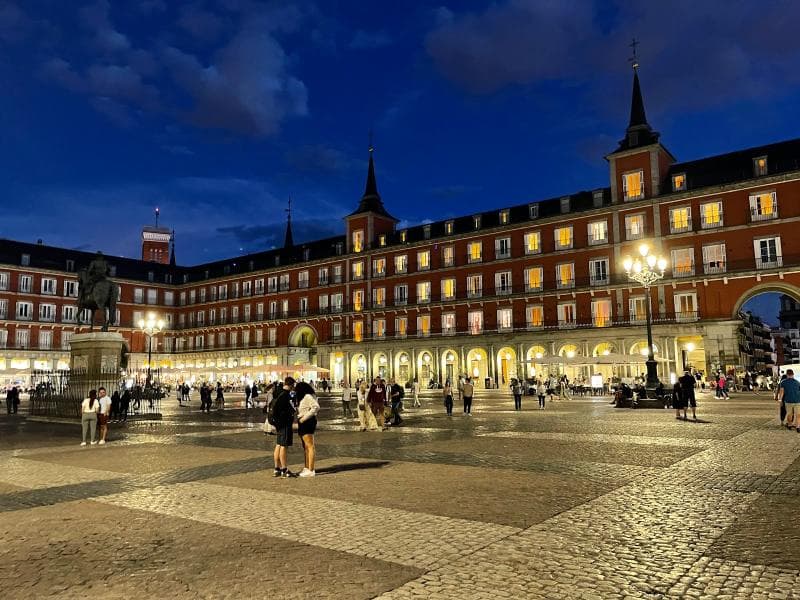
Explore the historic Arcades of Plaza Mayor in Madrid, Spain. Discover centuries of history, culture, and vibrant local life beneath its iconic arches.
Overview
Stepping into the Arcades of Plaza Mayor in Madrid is like walking through a living canvas of history and culture. These iconic porticoes, forming the base of the majestic buildings that enclose the square, are far more than mere architectural features; they are the veins through which the heart of old Madrid still pulses. As an integral part of the Plaza Mayor, these arcades define its Baroque grandeur and have witnessed centuries of dramatic events, from royal festivities to solemn ceremonies. Today, they provide a charming, sheltered pathway for visitors and locals alike, hosting a vibrant array of traditional shops, inviting cafes, and lively street performers, all beneath their historic arches. They offer an immediate immersion into the city's spirit, inviting curious travelers to explore and linger.
History & Cultural Background
The story of the Arcades is inextricably linked to the Plaza Mayor itself, a site that has been a public gathering space since the 14th century. The current square's monumental structure began to take shape under King Philip III, with construction largely completed by 1619. Spanish architect Juan Gómez de Mora played a pivotal role in giving the square its initial architectural uniformity, including the design of its original arcades. These early arcades, though later modified, established the distinctive enclosed, rectangular shape that defines the Plaza Mayor today.
Over the centuries, the Plaza Mayor, and thus its arcades, endured several devastating fires, notably in 1631, 1670, and the most severe in 1790. Each time, the square was meticulously reconstructed, often adapting and refining its design. It was architect Juan de Villanueva, renowned for his work on the Prado Museum, who was largely responsible for the Plaza Mayor's appearance after the 1790 fire, giving it the elegant and harmonious look we see today. Villanueva reduced the number of floors of the surrounding buildings and designed the nine grand arches that serve as entrances, effectively integrating the square with the surrounding urban fabric while preserving its distinctive arcade perimeter.
Culturally, the arcades have always been more than just architectural elements. They were the sheltered vantage points from which citizens observed everything from royal coronations and knightly tournaments to religious ceremonies, bullfights, and even the solemn autos-da-fé during the Spanish Inquisition. They provided spaces for markets, commerce, and public life, firmly embedding themselves into Madrid's social fabric throughout its rich history.
What Makes It Special
What truly distinguishes the Arcades of Plaza Mayor is their consistent Baroque design and their enduring role as a vibrant public space. The continuous stretch of arches that flank all four sides of the square creates a sense of elegant enclosure, yet offers an inviting transition to the outside world through its nine access points. The most famous of these is the Arco de Cuchilleros, or 'Arch of the Knife Makers,' particularly notable for its steep steps bridging the elevation difference between the square and Cava de San Miguel Street.
Beneath these majestic arches, the atmosphere shifts, offering a sheltered realm distinct from the open square. This unique space houses a myriad of traditional shops, from those selling stamps, coins, and collectibles on Sunday mornings to souvenir stalls and specialist shops. The arcades are also home to numerous cafes, restaurants, and bars, their outdoor terraces spilling out onto the square, creating perfect spots for people-watching and soaking in the ambiance. This blend of historical architecture with contemporary commerce and leisure makes the arcades a unique destination where past and present converge seamlessly.
Stories, Fun Facts & Local Details
The Arcades hold countless stories and reveal fascinating local details. Imagine the hustle and bustle under these arches during the elaborate Christmas market that has graced Plaza Mayor since the 17th century, now a beloved annual tradition. Or picture the Sunday morning ritual, where the arcades transform into an open-air market for philatelists and numismatists, drawing collectors from all walks of life.
A well-known culinary delight connected to the area, often enjoyed after a stroll through the arcades, is the famous 'bocadillo de calamares'—a simple yet iconic fried calamari sandwich. While Madrid is an inland city, this traditional bite has become synonymous with the local gastronomy around Plaza Mayor, often paired with a cool drink at one of the many establishments under the arches or in nearby streets. Furthermore, the buildings above the arcades are adorned with 237 balconies, providing unique vantage points, some of which historically allowed royalty and nobility to observe events below. The Casa de la Panadería, with its striking frescoes, once served as the city's main bakery and now houses the Madrid Tourist Information Center, providing a tangible link to the square's original commercial purpose.
Visitor Perspective
For the curious traveler, the Arcades of Plaza Mayor offer an intimate and engaging experience. Walking beneath their stone arches, one feels shielded yet connected to the grand square and its continuous narrative. It's a place to escape the sun or a light rain, to observe the ebb and flow of daily life, and to appreciate the intricate details of Baroque architecture up close. The consistent visual rhythm of the arches, the texture of the old stone, and the echoes of footsteps create a unique sensory experience.
Whether you're pausing for a coffee at a cafe terrace, browsing for a unique souvenir, or simply taking shelter while observing a street artist at work, the arcades provide a comforting embrace. They encourage a slower pace, inviting reflection on the centuries of human activity that have unfolded within their confines. They are not just passages but destinations in themselves, offering a window into Madrid's soul—a place where history is alive, and every archway seems to whisper tales of a vibrant past and a bustling present.
Coordinates: -3.70736, 40.41544
View on Google Maps💬 How Travelers Describe This Place
Based on community votes
Beautiful
836Unique
797Photogenic
396Interesting
286Must See
255
Traveler Stories
Discover memorable experiences shared by travelers who have visited this place.
No traveler stories yet.
Be the first traveler to share what made this place memorable.

Tour
By
Spot
Discover amazing places around the world. Your journey starts here.
Explore
© 2026 TourBySpot. All rights reserved.